- 0 Facebook
- 15 Pinterest
- 10 Email
- Copy Link
- 25 shares
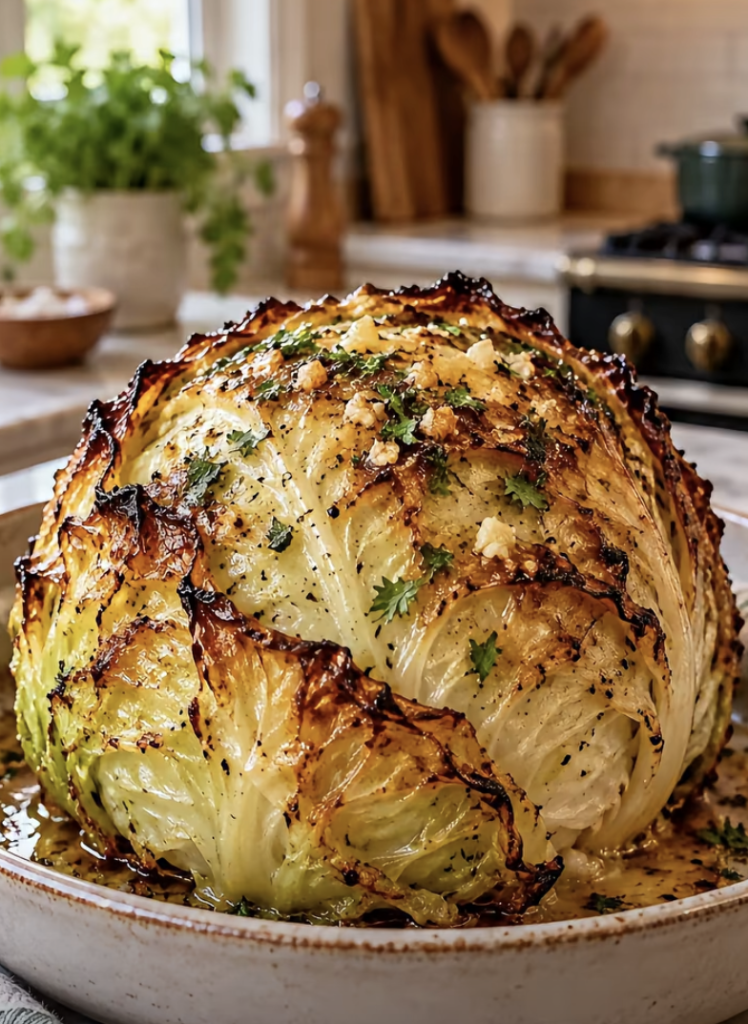
Golden, crisp-edged leaves give way to a silky, almost sweet center in this whole roasted cabbage, glossed with garlic butter and dusted with smoky paprika. A splash of broth in the pan keeps everything tender (no sad, soggy cabbage here), while the oven does the caramelizing work, leaving just 10 minutes of prep and a mostly hands-off cook. Slice it into wedges beside roasted chicken or spoon it over creamy grains, and a humble head of cabbage suddenly feels like the main event.
Why Make Whole Roasted Cabbage Tonight?
Because it delivers big flavor for very little effort. Leaving the core intact keeps the head together, so the outer leaves crisp and caramelize while the inside steams to a tender, almost buttery texture. Blending olive oil with the butter helps the garlic brown gently instead of scorching, and smoked paprika adds a campfire-like depth that makes plain cabbage taste far more complex than its short ingredient list suggests. Spooning the pan juices over the top halfway through keeps every layer glossy and seasoned. It also suits real weeknights: about 10 minutes of prep, then the oven does the work while you cook a protein or grains. Leftover wedges keep well in the fridge for up to 3 days, and they reheat nicely in a hot skillet , so this humble head of cabbage can cover more than one meal.
Ingredient Notes
A short ingredient list means every item has to pull its weight. Here is what each one does in this Whole Roasted Cabbage, plus a few tips to get the best results.
The Star
- Green cabbage (1 medium, 2-3 pounds) : The head should feel heavy for its size, with tight, crisp leaves and no cracks. Peel off any wilted outer leaves, but keep the core intact so the head holds together as it roasts. Savoy cabbage works as a tender substitute and may cook a little faster.
Fats and Aromatics
- Unsalted butter (4 tablespoons, melted) : Butter brings rich flavor and helps the outer leaves brown. Unsalted lets you control the seasoning. If you only have salted butter, cut the added salt to about ¾ teaspoon.
- Olive oil (2 tablespoons) : Blending oil with butter helps the garlic brown gently instead of scorching. A good everyday extra-virgin olive oil works well at roasting temperatures. Skip anything bitter or harsh, since the flavor concentrates in the oven .
- Garlic (4 cloves, minced) : Fresh garlic gives the sweet, savory backbone of the dish. Choose firm heads with no green sprouts, and mince finely so the pieces melt into the butter. Jarred garlic works in a pinch but tastes milder and slightly tangy.
Seasonings
- Salt (1 teaspoon) : Salt draws out the cabbage’s natural sweetness and seasons it between the layers. This amount assumes kosher salt. If using fine table salt, which is denser, use about ¾ teaspoon.
- Black pepper (½ teaspoon) : Freshly ground pepper adds a gentle bite that balances the buttery richness. Grind it right before using for the most aroma.
- Smoked paprika (1 teaspoon) : This adds the campfire-like warmth and deep red color. Look for Spanish pimentón, sweet (dulce) for mild smokiness or hot (picante) for a kick. If your jar has lost its smoky scent, replace it. For a substitute, mix sweet paprika with a tiny pinch of chipotle powder.
Liquid and Finish
- Vegetable broth (½ cup) : The broth creates just enough steam to keep the inside tender while the outside crisps. Low-sodium broth keeps the salt level in check. Pour it around the base rather than over the top to protect the browning. Chicken broth works if you aren’t keeping the dish vegetarian.
- Fresh parsley (2 tablespoons, chopped) : Parsley adds a bright, grassy contrast to the rich, smoky cabbage. Flat-leaf (Italian) parsley has the best flavor. Add it at the end, because heat dulls both its color and taste. Chives or fresh dill make good alternatives.
Step-by-Step Instructions
- Heat the oven to 400°F (200°C) with a rack in the center. Peel off any wilted outer leaves from the cabbage , then trim the stem end flat so it sits steady, leaving the core intact so the head holds together.
- Whisk the melted butter , olive oil , minced garlic , salt , black pepper , and smoked paprika in a small bowl until the mixture looks evenly speckled and glossy. I like to let it sit for a couple of minutes so the garlic can start to flavor the fat.
- Place the cabbage in a snug baking dish or oven -safe skillet . Spoon about half of the garlic butter over the top, gently nudging some between the outer leaves so the seasoning reaches beyond the surface.
- Pour the vegetable broth into the bottom of the dish, around the base rather than over the top, and cover loosely with foil. Roast for 30 minutes, until the cabbage begins to soften and the kitchen smells sweet and smoky.
- Remove the foil and spoon the pan juices over the cabbage, then drizzle on the remaining garlic butter. Roast uncovered for 30 to 40 more minutes, until the outer leaves are deep golden with crisp, browned edges.
- Check for doneness by sliding a paring knife into the center. It should meet little resistance, and I always give it a gentle press to make sure the core feels tender, not firm.
- Rest the cabbage for 10 minutes, which lets the juices settle and makes slicing cleaner. Cut it into wedges, spoon the buttery pan juices over each portion, and scatter the chopped parsley on top.
Tip: If the garlic or the top leaves darken too quickly, tent the cabbage loosely with foil and keep roasting. It’s normal for the pan juices to look thin at first, since they thicken slightly as they rest.
Reminder: Cabbage size and oven temperature vary, so start checking at 60 minutes and trust the knife test over the clock.
Make Ahead Options
This whole roasted cabbage is perfect for meal prep, so you can get dinner on the table with almost no effort. You can prep in advance by whisking the garlic butter (butter, oil, garlic, salt, pepper, and paprika) and refrigerating it in a covered jar for up to 2 days , then trimming the cabbage and storing it wrapped in the fridge for up to 24 hours (keeping the core intact so it holds together). Before roasting, let the garlic butter soften at room temperature, rewarm it briefly, and give it a quick stir. Then follow the roasting steps as written, adding the broth just before it goes in the oven. Finish with fresh parsley before serving, and it will taste just as delicious.
Variations & Substitutions
This whole roasted cabbage is forgiving, so feel free to adjust it to your pantry, your diet, or your mood. These tweaks keep the crisp edges and tender center intact.
- Make it vegan : Replace the butter with vegan butter sticks or an extra 4 tablespoons of olive oil, and keep the vegetable broth. Browning will be lighter.
- Add a cheesy finish : Sprinkle ¼ cup grated Parmesan or Pecorino over the cabbage during the last 10 minutes of roasting for a salty, nutty, golden crust.
- Turn up the heat : I whisk ½ teaspoon red pepper flakes into the garlic butter when I want gentle heat that plays well with the smoky paprika.
- Brighten with citrus : Squeeze half a lemon over the wedges after resting, or stir 1 teaspoon lemon zest into the butter, to cut the richness.
- Roast wedges for speed : Cut into 6 wedges through the core, brush with garlic butter, and roast at 425°F for 30 to 35 minutes, flipping once.
Expert Tips
These small techniques help your whole roasted cabbage come out crisp-edged outside and silky inside every time.
- Work butter between leaves : Nudge the garlic butter into the outer layers with a spoon so seasoning reaches beyond the surface instead of pooling in the pan.
- Let garlic bloom first : I whisk the garlic into the warm melted butter and oil and wait a couple of minutes, which mellows its raw bite.
- Pour broth at the base : Pouring the vegetable broth around the bottom, not over the top, keeps the paprika-dusted leaves dry enough to brown while the inside steams.
- Tent if browning fast : Smoked paprika and garlic darken quickly, so loosely tent foil over the top if edges look deep brown before the center softens.
- Test the core : I slide a paring knife into the center and press gently. It should glide in with little resistance, even if the outside looks done.
- Rest before slicing : Give it 10 minutes so the juices settle, then cut wedges with a sharp serrated knife and spoon the buttery pan juices over each portion.
Storage & Freezing
- Refrigerator (up to 3 days): Let the wedges cool for 30 minutes or so, then refrigerate within 2 hours of cooking. Pack them in an airtight container with a few spoonfuls of the pan juices, which keep the leaves from drying out. The butter in those juices will set into a pale, spreadable layer, which is normal. The crisp edges soften in the fridge, but the garlic and smoked paprika flavors deepen overnight. Parsley wilts and darkens, so I keep it out until serving.
- Freezer (up to 2 months): Leftover Whole Roasted Cabbage freezes acceptably, but not perfectly. Cabbage is mostly water, so the texture turns softer and silkier after thawing, closer to a braise than a roast. Freeze cooled wedges in a single layer on a tray for an hour, then transfer them to a freezer-safe container or bag with the pan juices, pressing out the air. Thaw overnight in the fridge. Skip freezing the parsley and add it fresh after reheating. I wouldn’t freeze this dish for a crisp-edged result. I save the freezer for portions I’ll tuck into soups, grain bowls, or egg scrambles.
- Reheating: For the best texture, reheat in a 400°F (200°C) oven or a hot skillet , not the microwave, which steams the leaves limp. Place the wedges in a baking dish with a splash of vegetable broth or water, cover loosely with foil for 10 minutes, then uncover for 5 to 8 minutes to re-crisp the edges. In a skillet , 3 to 4 minutes per side over medium-high heat works, and the butter in the pan juices helps the edges brown again. Spoon the melted juices over the top and finish with fresh parsley. Reheat only until hot, since extra time makes the cabbage mushy.
How I Love to Serve It
- Plate it like a centerpiece: Bring the rested head to the table whole, then cut it into thick wedges with a serrated knife so the crisp outer leaves stay intact. Spoon the buttery pan juices over each portion and scatter on the parsley right at the end so it stays bright green. I like to add a few lemon zest curls or a squeeze of fresh lemon, since a little acidity cuts through the butter and lifts the smoked paprika.
- Pair it with something hearty: The smoky, garlicky flavor suits roasted chicken, pork tenderloin, seared sausages, or a simple pan-fried steak. For a vegetarian meal, set a wedge on creamy polenta, buttery mashed potatoes, or nutty farro so the grains soak up the pan juices. Warm white beans or lentils on the side make it filling, and a soft fried egg on top turns it into a satisfying dinner.
- Add contrast on the side: Because the cabbage is soft and rich, I like to serve it with something crisp or tangy, such as a sharp mustard vinaigrette on peppery arugula, quick-pickled red onions, or a spoonful of garlicky yogurt. Crusty bread is also useful for mopping up the juices, which are the best part.
- Choose a drink that refreshes: A dry Riesling or a crisp Grüner Veltliner complements the sweetness of the cabbage and balances the butter. If you prefer beer or something non-alcoholic, a cold pilsner, dry cider, or sparkling water with lemon all keep each bite tasting fresh. For a casual weeknight, one wedge per person is plenty beside a protein. For guests, I serve the whole head family-style on a board with extra parsley and lemon wedges.
Common Questions About Whole Roasted Cabbage with Garlic Butter and Smoky Paprika
- Can I use salted butter instead of unsalted? Yes, reduce the added salt to ¾ teaspoon.
- Why pour the broth around the base? It steams the center while the top crisps.
- How do I know the cabbage is done? I trust the knife test: little resistance.
- Can I swap savoy for green cabbage? Yes, it’s tender and cooks slightly faster.
- How do I reheat leftovers without sogginess? Use a hot oven or skillet , not the microwave.
- 0 Facebook
- 15 Pinterest
- 10 Email
- Copy Link
- 25 shares
Whole Roasted Cabbage with Garlic Butter and Smoky Paprika
Ingredients
Instructions
Heat the oven to 400°F (200°C) with a rack in the center. Peel off any wilted outer leaves from the cabbage, then trim the stem end flat so it sits steady, leaving the core intact so the head holds together.
Whisk the melted butter, olive oil, minced garlic, salt, black pepper, and smoked paprika in a small bowl until the mixture looks evenly speckled and glossy. Let it sit a couple of minutes so the garlic can start to flavor the fat.
Place the cabbage in a snug baking dish or oven-safe skillet. Spoon about half of the garlic butter over the top, gently nudging some between the outer leaves so the seasoning reaches beyond the surface.
Pour the vegetable broth into the bottom of the dish, around the base rather than over the top, and cover loosely with foil. Roast for 30 minutes, until the cabbage begins to soften and the kitchen smells sweet and smoky.
Remove the foil and spoon the pan juices over the cabbage, then drizzle on the remaining garlic butter. Roast uncovered for 30 to 40 more minutes, until the outer leaves are deep golden with crisp, browned edges.
Check for doneness by sliding a paring knife into the center. It should meet little resistance; give it a gentle press to make sure the core feels tender, not firm.
Rest the cabbage for 10 minutes, which lets the juices settle and makes slicing cleaner. Cut it into wedges, spoon the buttery pan juices over each portion, and scatter the chopped parsley on top.
Tip: If the garlic or the top leaves darken too quickly, tent the cabbage loosely with foil and keep roasting. It’s normal for the pan juices to look thin at first, since they thicken slightly as they rest.
Reminder: Cabbage size and oven temperature vary, so start checking at 60 minutes and trust the knife test over the clock.
Notes
Work the garlic butter between the outer leaves with a spoon so seasoning reaches beyond the surface instead of pooling in the pan.
Let the garlic bloom in the warm butter and oil for a couple of minutes to mellow its raw bite before spooning onto the cabbage.
Pour broth around the base, not over the top, to keep the paprika-dusted leaves dry enough to brown while the inside steams.
Tent loosely with foil if the top browns too quickly before the center is tender.
Test doneness by sliding a paring knife into the center and pressing gently; it should glide in with little resistance.
Rest for 10 minutes before slicing so juices settle and slicing is cleaner; spoon pan juices over wedges before serving.
Storage – Refrigerator (up to 3 days): Cool for about 30 minutes, refrigerate in an airtight container with a few spoonfuls of pan juices to keep wedges from drying out. Parsley should be kept separate until serving.
Storage – Freezer (up to 2 months): Freeze cooled wedges in a single layer, then transfer to a freezer-safe container with pan juices. Thaw overnight in the fridge; texture will be softer after freezing.
Reheating: Best in a 400°F (200°C) oven or a hot skillet. For oven reheating, cover loosely with foil for 10 minutes with a splash of broth, then uncover 5–8 minutes to re-crisp. In a skillet, 3–4 minutes per side over medium-high heat works well.
Nutrition
| Serving Size | 1 wedge (about 1/4 head) |
|---|---|
| Calories | 232 kcal |
| Sugar Content | 9 g |
| Sodium Content | 660 mg |
| Fat Content | 18 g |
| Saturated Fat Content | 8 g |
| Unsaturated Fat Content | 10 g |
| Trans Fat Content | 0 g |
| Carbohydrate Content | 16 g |
| Fiber Content | 7 g |
| Protein Content | 4 g |
| Cholesterol Content | 31 mg |