- 0 Facebook
- 11 Pinterest
- 12 Email
- Copy Link
- 23 shares
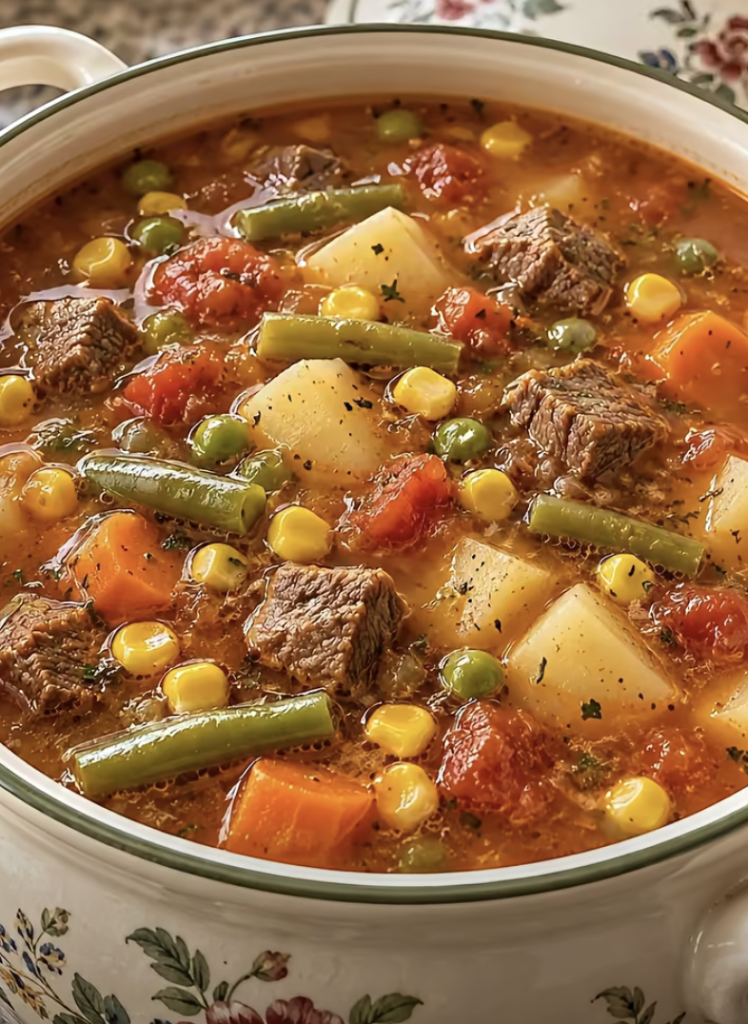
Tender cubes of beef chuck and a garden’s worth of vegetables simmer together here until the whole kitchen smells like Sunday supper. The broth turns deep and savory from browned beef and a spoonful of tomato paste, while carrots, potatoes, green beans, corn, and peas bring sweetness and bite to every spoonful. It all happens in one pot, with mostly easy simmering, and it’s best ladled into big bowls beside a hunk of warm, crusty bread.
Why You’ll Love This Recipe
Why Make Vegetable Beef Soup at Home?
Hearty Vegetable Beef Soup That Tastes Like Home delivers slow-simmered comfort without any fuss, using simple ingredients and a few smart techniques. Here’s what makes it a keeper for busy weeknights and lazy Sundays alike.
- Deeply Savory Broth : Browning the beef first and toasting the tomato paste builds a rich, roasted base that store-bought soups can’t match.
- Tender, Never Chewy : Small cubes of beef chuck simmer gently for an hour until fork-tender, and their collagen gives the broth a silky body.
- One-Pot Simplicity : Just 15 minutes of prep and one pot mean easy cleanup, while the stove handles the rest.
- Smart Vegetable Timing : Frozen peas stirred in near the end keep their color and sweetness, while potatoes and carrots soften into the broth.
- Meal-Prep Friendly : Leftovers keep three days in the fridge and freeze up to three months, and the flavors often deepen overnight.
- Flexible Family Favorite : Swap in celery, turnips, or zucchini based on what’s in the fridge, then serve with crusty bread to win over picky eaters.
Ingredient Notes
The right ingredients, prepped the right way, are what turn a good Vegetable Beef Soup into one that tastes like it simmered all day. Here is what each ingredient brings to the pot, plus a few quick tips for getting the best results.
The Savory Base
- Beef chuck : This well-marbled cut gives the soup its rich flavor, and its collagen melts during the hour-long simmer into tender bites and a silky broth. Pat the cubes dry and brown them in batches so they sear instead of steam. Boneless short rib or packaged stew meat can stand in, but lean cuts like round tend to turn dry.
- Olive oil : It provides the fat for browning the beef and softening the onion, and it carries flavor through the base. Regular olive oil works well here, and avocado oil is a good swap if you prefer a higher smoke point.
- Onion : A medium yellow onion melts into the broth and adds a gentle, rounded sweetness. Dice it evenly so the pieces cook at the same pace, and use a sweet onion or shallots if that’s what you have.
- Garlic : Freshly minced garlic adds the aromatic backbone of the soup. Stir it in after the onion softens and cook it for about 30 to 60 seconds, since browned garlic turns bitter.
- Tomato paste : This concentrated ingredient adds deep umami and a touch of natural sweetness. Cook it for a minute or two until it darkens to a brick red, which mellows its raw edge and builds a roasted flavor. Tubes store easily in the fridge for later use.
- Beef broth : The broth is the soup’s foundation, so quality matters. Low-sodium broth or stock gives you control over the final seasoning, and chicken broth is a workable substitute in a pinch.
- Diced tomatoes (14.5 oz can, undrained) : The juices add brightness and a touch of acidity that balances the richness of the beef. Keep the liquid in the pot, and try fire-roasted tomatoes for a subtle smoky twist.
The Vegetables
- Potatoes : Diced potatoes make the soup filling and slightly thicken the broth as they cook. Yukon Golds hold their shape and turn creamy, while russets break down more and give a heartier body. Cut them into even ½-inch pieces so they cook through at the same time.
- Carrots : They contribute sweetness, color, and a pleasant bite. Slice them to a uniform thickness of about ¼ inch so they soften evenly alongside the potatoes.
- Green beans : They add a fresh, slightly crisp-tender contrast to the softer vegetables. Trim the ends and cut them into bite-size pieces, and note that frozen green beans work well and can go straight into the pot.
- Corn kernels : Corn adds pops of sweetness and a cheerful golden color. Frozen kernels are convenient, and drained canned corn or fresh kernels cut from the cob work just as well.
- Frozen peas : Peas bring bright color and a delicate sweetness, but they turn dull and mushy if overcooked. Stir them in straight from the freezer during the last few minutes, with no thawing needed.
Herbs & Seasoning
- Dried thyme : It lends a warm, earthy note that pairs naturally with beef. Crush it between your fingers as you add it to release more aroma, and use about 1 tablespoon of fresh leaves if you’d rather skip the dried.
- Dried parsley : It adds a mild, grassy background note that rounds out the broth. For a fresher finish, sprinkle chopped fresh parsley over each bowl just before serving.
- Bay leaf : This single leaf adds subtle, savory depth that’s hard to pinpoint but easy to miss if left out. Remove it before serving, since the leaf stays tough and unpleasant to bite into.
- Salt and black pepper : Seasoning is what makes the flavors pop, but broth and canned tomatoes already contain sodium, so taste before adding more. Season gradually near the end of cooking, and use freshly ground pepper for the best aroma.
How to Make Hearty Vegetable Beef Soup That Tastes Like Home
- Pat the beef chuck cubes dry and season them lightly with salt and pepper. Heat the olive oil in a large Dutch oven over medium-high heat, then brown the beef in two batches for 3 to 4 minutes per side, until deeply golden, and transfer it to a plate.
- Reduce the heat to medium and add the diced onion to the same pot, scraping up the browned bits as it cooks. Sauté for 4 to 5 minutes until soft and translucent, then stir in the garlic for 30 to 60 seconds, just until fragrant.
- Stir in the tomato paste and cook for 1 to 2 minutes, until it darkens to a brick red. I like to let it sizzle against the bottom of the pot for a moment, since that toasting builds a rich, roasted flavor.
- Return the beef and any juices to the pot, then pour in the beef broth and the diced tomatoes with their juices. Add the thyme, parsley, and bay leaf, bring to a boil, then lower the heat and simmer, partially covered, for 25 to 30 minutes.
- Add the diced potatoes and sliced carrots, and simmer for about 15 minutes. They’re ready when a knife slips easily into a potato cube, and it’s normal if the broth looks thin at first, since it thickens as the potatoes release their starch.
- Stir in the green beans and corn, and simmer for 8 to 10 minutes, until the green beans are crisp-tender. I usually give the pot a gentle stir every few minutes so nothing sticks to the bottom.
- Fold in the frozen peas straight from the freezer and cook for 3 to 5 minutes, until they turn bright green and the soup returns to a gentle simmer.
- Fish out the bay leaf, then taste and season with salt and black pepper. I always let the soup rest off the heat for 5 minutes before ladling it into bowls, because the flavors settle and the broth turns silkier.
Tip: If you have a Parmesan rind in the fridge, drop it in with the broth in step 4 for extra savory depth, and remove it along with the bay leaf.
Remember: taste before adding salt, since the broth and canned tomatoes already bring plenty of sodium, and always remove the bay leaf before serving.
Tips for the Best Hearty Vegetable Beef Soup That Tastes Like Home
- Dry beef thoroughly : Damp chuck steams instead of sears. Pat the cubes dry and brown them in two batches so each piece gets a deep golden crust.
- Scrape up browned bits : Those caramelized bits stuck to the pot are concentrated flavor. I loosen them with the onion’s moisture, then let the broth finish the job.
- Cut vegetables evenly : Dice potatoes about ½ inch and slice carrots ¼ inch thick so they soften together, without hard centers or crumbling edges.
- Add peas last : Frozen peas go in straight from the freezer for the final minutes, keeping them bright green and sweet rather than dull and mushy.
- Fix thin broth : If the soup seems watery, mash a few potato cubes against the side of the pot and simmer two minutes to thicken it naturally.
- Let it rest : I take the pot off the heat for five minutes before serving. The flavors settle and the broth turns silkier.
Serving Suggestions
- Bowls and garnish: Ladle this Vegetable Beef Soup into warmed, wide bowls so each serving gets a good mix of beef, potatoes, and the bright green beans and peas. Finish with a crack of black pepper, a pinch of chopped fresh parsley, and a little shaved Parmesan. The cheese echoes the savory depth from the optional rind in step 4. For a Sunday supper, bring the Dutch oven to the table and let everyone serve themselves.
- Bread for dunking: The broth is rich and tomato-forward, so it begs for something to soak it up. I love a thick slice of crusty bread or sourdough, toasted and rubbed with a cut garlic clove. Skillet cornbread or a grilled cheese cut into strips also work well, especially with kids at the table.
- A crisp, tangy side: Beef and potatoes are rich and filling, so a sharp salad balances the meal. Try peppery arugula or crisp romaine tossed with a lemon or red wine vinaigrette. The acidity cuts through the beef and makes each spoonful taste fresh. Skip creamy dressings, which pile richness on richness.
- Drinks and occasions: A medium-bodied red like Chianti or Côtes du Rhône suits the thyme and tomato, and an amber ale works just as well. For a non-alcoholic option, sparkling water with lemon keeps things light. Since the recipe serves six, one bowl with bread is a full weeknight dinner, and smaller cups with a sandwich make an easy lunch or a cozy first course.
Make Ahead Options
This Vegetable Beef Soup is a meal prep dream for busy weeknights! You can prep in advance by dicing the onion, potatoes, and carrots and trimming the green beans up to 24 hours ahead , then refrigerating them in separate airtight containers (submerge the potatoes in cold water to prevent browning). Even better, you can make the soup through step 5 up to 3 days ahead, cool it quickly, and refrigerate it overnight so the flavors deepen. Before serving, simply reheat gently on the stove, stir in the green beans, corn, and frozen peas, and simmer 8 to 10 minutes so the vegetables stay bright and tender.
Variations & Substitutions
This Vegetable Beef Soup is forgiving, so feel free to adjust it to your pantry, your diet, or your mood. These tested swaps keep the soup hearty and balanced.
- Use ground beef : No chuck? Brown 1½ pounds lean ground beef, drain excess fat, and shorten the first simmer to 15 minutes, since it needs no tenderizing.
- Make it meatless : Skip the beef, use vegetable broth, and brown 8 ounces sliced cremini mushrooms with the onion, then add a can of drained white beans.
- Lower-carb swap : Replace the potatoes with diced turnips or cauliflower florets, and add them with the green beans, since they cook faster than potatoes.
- Add hearty pasta : I stir in ½ cup ditalini or small shells with the green beans, plus an extra cup of broth because pasta drinks up liquid.
- Gluten-free check : The soup is naturally gluten-free, but check the broth and tomato paste labels, and serve it with gluten-free bread instead of a crusty loaf.
- Smoky, spicy twist : I add ½ teaspoon smoked paprika with the tomato paste and a pinch of red pepper flakes for gentle warmth without overpowering the beef.
Storage & Freezing
- Refrigerate: Cool leftover Vegetable Beef Soup for no more than 2 hours, then pour it into shallow airtight containers so it chills quickly. It keeps for up to 3 days in the fridge. The potatoes keep absorbing broth as it sits, so the soup will be thicker the next day. The flavors usually deepen overnight, too.
- Freeze: Ladle cooled soup into freezer-safe containers, leaving about 1 inch of headspace for expansion, and freeze for up to 3 months. The beef, carrots, corn, and broth freeze beautifully. Potatoes can turn slightly grainy, and green beans and peas lose some of their snap and bright color. If I know I’m freezing a batch, I pull the pot off the heat when the potatoes are just tender, not soft. Take out the bay leaf (and the Parmesan rind, if you used one) before storing.
- Thaw and reheat: Thaw frozen soup overnight in the fridge, then warm it in a pot over medium-low heat, stirring gently, until it’s steaming hot and reaches 165°F. Avoid a hard boil, which can break down the vegetables and toughen the beef. A microwave works for single bowls if you heat in 60-to-90-second bursts and stir between each one.
- Revive the flavor: Thickened or thawed soup often needs a splash of beef broth or water to loosen it. Taste before adding salt, since freezing can mute seasoning, then finish with a crack of black pepper and a pinch of fresh parsley. Don’t refreeze soup that has already been thawed.
Recipe FAQs
- Can I freeze this Vegetable Beef Soup? Yes, up to 3 months; potatoes soften slightly.
- What can I substitute for beef chuck? Boneless short rib or stew meat works.
- Why add the frozen peas at the end? They stay bright green and sweet.
- How do I fix thin broth? I mash a few potato cubes against the pot.
- 0 Facebook
- 11 Pinterest
- 12 Email
- Copy Link
- 23 shares
Hearty Vegetable Beef Soup That Tastes Like Home
Ingredients
Instructions
Pat the beef chuck cubes dry and season them lightly with salt and pepper. Heat the olive oil in a large Dutch oven over medium-high heat, then brown the beef in two batches for 3 to 4 minutes per side, until deeply golden, and transfer it to a plate.
Reduce the heat to medium and add the diced onion to the same pot, scraping up the browned bits as it cooks. Sauté for 4 to 5 minutes until soft and translucent, then stir in the garlic for 30 to 60 seconds, just until fragrant.
Stir in the tomato paste and cook for 1 to 2 minutes, until it darkens to a brick red. Let it sizzle against the bottom of the pot for a moment to build a rich, roasted flavor.
Return the beef and any juices to the pot, then pour in the beef broth and the diced tomatoes with their juices. Add the thyme, parsley, and bay leaf, bring to a boil, then lower the heat and simmer, partially covered, for 25 to 30 minutes.
Add the diced potatoes and sliced carrots, and simmer for about 15 minutes, until a knife slips easily into a potato cube.
Stir in the green beans and corn, and simmer for 8 to 10 minutes, until the green beans are crisp-tender, stirring occasionally so nothing sticks to the bottom.
Fold in the frozen peas straight from the freezer and cook for 3 to 5 minutes, until they turn bright green and the soup returns to a gentle simmer.
Fish out the bay leaf, then taste and season with salt and black pepper. Let the soup rest off the heat for 5 minutes before ladling into bowls so the flavors settle and the broth turns silkier.
Notes
Dry beef thoroughly : Pat cubes dry and brown in two batches so each piece gets a deep golden crust and avoids steaming.
Scrape up browned bits : Use the onion to loosen caramelized bits for concentrated flavor, then let the broth finish the job.
Cut vegetables evenly : Dice potatoes about 1/2 inch and slice carrots 1/4 inch thick so they soften together without crumbling.
Add peas last : Stir frozen peas in at the end to keep them bright and sweet rather than dull and mushy.
Fix thin broth : Mash a few potato cubes against the pot side and simmer two minutes to thicken naturally.
Let it rest : Remove from heat and rest five minutes for silkier broth and settled flavors.
Parmesan rind option : Drop a Parmesan rind into the pot with the broth in step 4 for extra savory depth, removing it with the bay leaf before serving.
Storage : Cool leftovers within 2 hours and refrigerate in shallow airtight containers for up to 3 days. Freeze cooled soup in freezer-safe containers with 1 inch headspace for up to 3 months; thaw overnight and reheat gently.
Revive : Thawed or thickened soup may need a splash of beef broth or water and a final crack of black pepper and fresh parsley before serving.
Nutrition
| Serving Size | 1 generous bowl (about 1 1/2 cups) |
|---|---|
| Calories | Approximately 360 kcal per serving |
| Sugar Content | About 6 g |
| Sodium Content | Approximately 800 mg |
| Fat Content | Approximately 18 g |
| Saturated Fat Content | About 6 g |
| Unsaturated Fat Content | About 10 g |
| Trans Fat Content | About 0.5 g |
| Carbohydrate Content | About 28 g |
| Fiber Content | About 5 g |
| Protein Content | About 28 g |
| Cholesterol Content | About 80 mg |