- 0 Facebook
- 0 Pinterest
- 17 Email
- Copy Link
- 17 shares
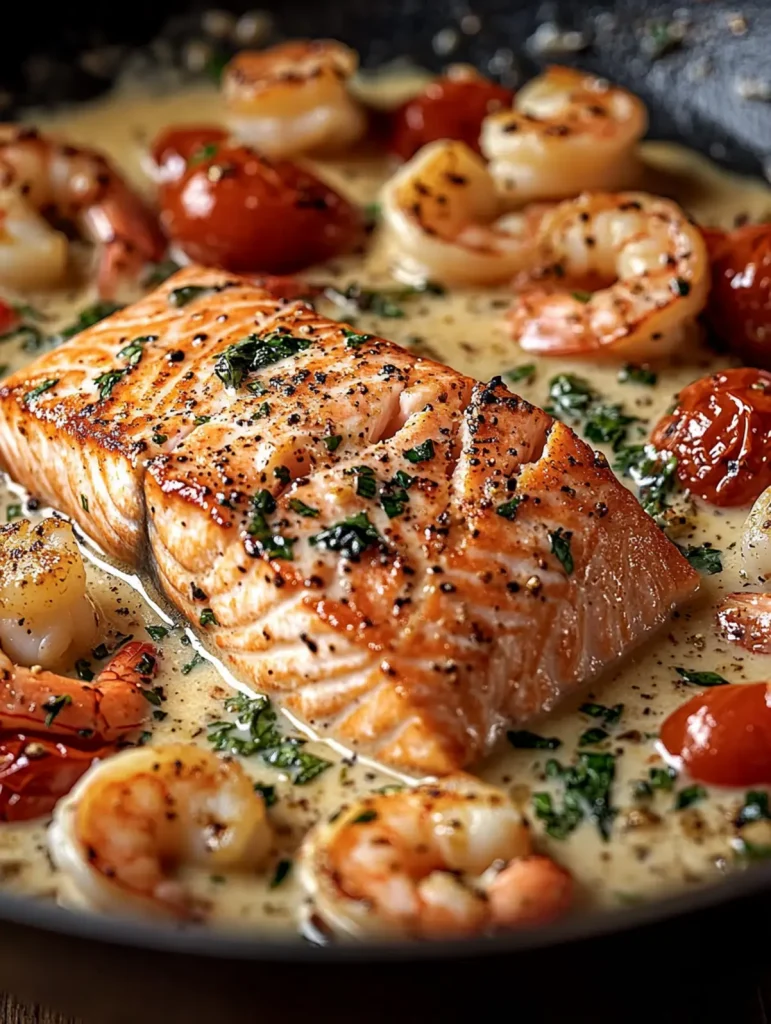
Creamy, garlicky, and loaded with tender seafood, this Tuscan skillet turns salmon and shrimp into something that feels downright restaurant-worthy (without leaving your own kitchen). Flaky salmon and juicy shrimp simmer in a velvety Parmesan cream sauce, brightened by sun-dried tomatoes, sweet cherry tomatoes, and wilted spinach. Everything comes together in one pan in about 35 minutes, so a spoonful over buttery pasta or fluffy rice is a sweet break from takeout.
What Is Tuscan Salmon and Shrimp Cream Skillet ?
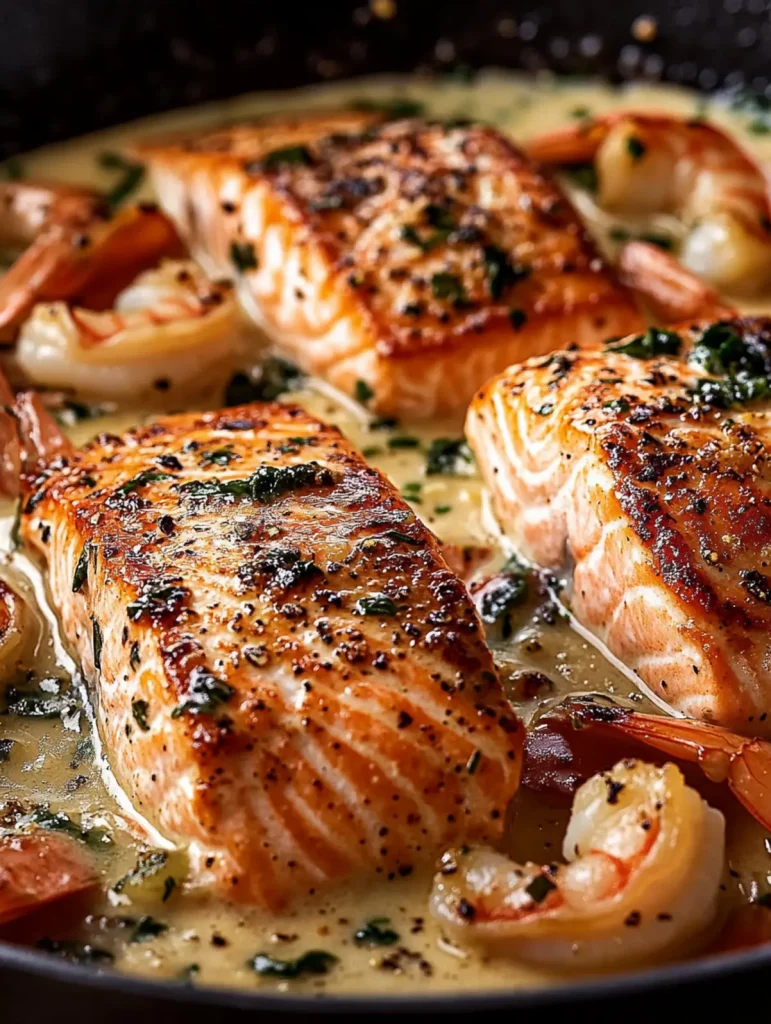
Think of it as Tuscan-style comfort food with a seafood upgrade: flaky salmon fillets and plump shrimp cooked in one skillet and finished in a garlicky Parmesan cream sauce. The “Tuscan” part comes from the classic flavor trio of sun-dried tomatoes, wilted spinach, and Italian seasoning, while a pinch of paprika and optional red pepper flakes add gentle warmth. It’s a forgiving dish for home cooks, since the shrimp cook in just a few minutes and the salmon needs only a short simmer to turn tender and flaky. Searing the seafood in olive oil and butter first builds a flavorful base, and the cream, broth, and cheese then melt into a silky sauce that clings to every bite. Spoon it over pasta, rice, or even crusty bread, and you have a cozy, restaurant-style dinner that feels special enough for guests but is easy enough for a weeknight.
Ingredient Notes
A great Tuscan Salmon and Shrimp Cream Skillet starts with good ingredients, and each one has a job, from the seafood to the silky sauce. Here’s what to look for, how to use it, and what to swap if your pantry needs a little flexibility.
The Seafood
- Salmon fillets (3, about 6 oz each) : Salmon gives the dish its tender, flaky centerpiece and rich flavor. Choose evenly thick fillets so they cook at the same pace, and pat them very dry before searing for better browning. Skin-on or skinless both work, and the salmon is done when it flakes easily and reaches 145°F (63°C).
- Large shrimp (1 lb, peeled and deveined) : Shrimp add a sweet, briny bite and a satisfying snap against the soft salmon. Look for shrimp labeled 21–25 count per pound, and thaw frozen ones fully in the fridge or in cold water. Cook just until pink and curled into a loose “C,” since a tight “O” shape means overcooked.
The Flavor Base
- Olive oil (2 tablespoons) : Olive oil provides a high enough smoke point for searing and adds a subtle fruity note. Extra virgin is fine here, and there’s no need to use your most expensive bottle.
- Butter (2 tablespoons) : Butter adds richness and helps the seafood brown beautifully. Unsalted gives you more control over the final seasoning, but salted works if you go lighter on added salt.
- Garlic (4 cloves, minced) : Fresh garlic delivers the aroma that defines this dish. Mince it just before cooking and add it briefly, for about 30 seconds, so it turns fragrant instead of bitter. Jarred minced garlic works in a pinch, though it’s milder.
The Tuscan Vegetables
- Cherry tomatoes (1 cup, halved) : Cherry tomatoes add sweetness, juicy bursts, and a pop of color. Choose firm, ripe ones, and halve them so they soften into the sauce without falling apart completely. Grape tomatoes are a great substitute.
- Sun-dried tomatoes (½ cup, chopped) : These bring the tangy, concentrated, savory depth that makes the dish taste “Tuscan.” Oil-packed tomatoes are softer and ready to use, while dry-packed ones should be soaked in hot water for about 10 minutes first. Drain and pat them lightly to avoid an oily sauce.
- Fresh spinach (2 cups) : Spinach adds freshness, color, and a gentle earthy balance to the creamy sauce. Add it at the end and stir just until wilted so it stays vibrant. Baby spinach is the easiest option, and baby kale can step in if you’d like something a bit heartier.
The Creamy Sauce
- Heavy cream (1½ cups) : Heavy cream makes the sauce luxurious and helps it resist curdling when simmered. Choose a cream with at least 36% fat, and skip milk or half-and-half, which can turn thin or split. Keep the heat at a gentle simmer for the smoothest texture.
- Grated Parmesan cheese (½ cup) : Parmesan adds salty, nutty umami and helps thicken the sauce as it melts. Freshly grating a block of Parmigiano-Reggiano gives the smoothest, most flavorful result, since pre-shredded cheese often contains anti-caking agents that can make the sauce grainy. Stir it in off the high heat for a silky finish.
- Chicken broth (½ cup) : Broth loosens the sauce and lifts the flavors without adding heaviness. Low-sodium broth is the best choice here, since the Parmesan and sun-dried tomatoes already bring plenty of salt. Vegetable broth or seafood stock also work.
The Seasonings
- Italian seasoning (1 teaspoon) : This blend of dried herbs, usually basil, oregano, and thyme, gives the sauce its classic Tuscan-style character. Rub it between your fingers as you add it to wake up the aroma. If you’re out, equal parts dried basil and oregano make a simple stand-in.
- Paprika (1 teaspoon) : Paprika adds warm color and a mild, sweet flavor that flatters both the salmon and the shrimp. Sweet paprika keeps things gentle, while smoked paprika adds a deeper, grill-like note.
- Garlic powder (½ teaspoon) : Garlic powder spreads a mellow, even garlic flavor through the sauce, backing up the fresh cloves. Use fresh, fragrant powder rather than a jar that’s been sitting for years, and don’t swap in garlic salt without cutting back on added salt.
- Red pepper flakes (½ teaspoon, optional) : A little heat balances the richness of the cream and makes the flavors pop. Start with ¼ teaspoon if you prefer a subtle warmth, or leave it out for a family-friendly version.
- Salt and black pepper (to taste) : Seasoning in stages builds better flavor, but wait to adjust the final salt level until the Parmesan, broth, and sun-dried tomatoes have all gone in. Freshly cracked pepper adds a more aromatic bite than pre-ground.
The Finishing Touch
- Fresh parsley (2 tablespoons, chopped) : Parsley adds a clean, grassy brightness that cuts through the creamy sauce, along with a pop of color. Flat-leaf (Italian) parsley has more flavor than curly, so use it if you can. Chop it right before serving to keep it fresh and vibrant.
How to Make Irresistible Tuscan Salmon and Shrimp Cream Skillet
- Pat the salmon and shrimp very dry with paper towels, then season both with salt, black pepper, and the paprika. Dry seafood sears to a golden crust instead of steaming in the pan.
- Heat the olive oil and 1 tablespoon of the butter in a large, deep skillet over medium-high heat until the butter foams. Sear the salmon for 3 to 4 minutes per side (skin side down first, if using skin-on) until golden outside and still slightly translucent in the center, then move it to a plate.
- Sear the shrimp in the same skillet for about 1 minute per side, just until pink and curled into a loose “C.” Transfer them to the plate with the salmon, since they’ll finish cooking at the end.
- Melt the remaining tablespoon of butter in the skillet over medium heat, then add the garlic and sauté for about 30 seconds. I like to pull the pan off the heat the moment the garlic smells fragrant, because even a little browning turns it bitter.
- Stir in the cherry tomatoes and sun-dried tomatoes and cook for 2 to 3 minutes, until the cherry tomatoes just begin to soften. Pour in the chicken broth and scrape up the browned bits from the bottom of the pan, since that’s where much of the flavor lives.
- Reduce the heat to medium-low, then pour in the heavy cream along with the Italian seasoning, garlic powder, and red pepper flakes. Simmer gently for 3 to 4 minutes, then sprinkle in the Parmesan a handful at a time, stirring constantly so it melts smoothly without clumping.
- Fold in the spinach and stir for about 1 minute, until just wilted and still bright green. Nestle the salmon back into the sauce, spoon some over the top, and simmer for 3 to 4 minutes until it flakes easily and reaches 145°F (63°C), adding the shrimp for the final minute to warm through.
- Taste the sauce and adjust with salt and pepper, remembering the Parmesan and sun-dried tomatoes already add saltiness. It’s normal if the sauce looks a little thin at first; it thickens as it rests for 3 to 5 minutes off the heat. I usually finish with the chopped parsley right before serving over pasta or rice.
Tip: If the sauce thickens too much while resting, stir in a splash of warm broth or a spoonful of pasta water to loosen it to a silky, spoonable consistency.
Reminder: Cool leftovers quickly and store them in an airtight container in the refrigerator for up to 3 days. Reheat gently over low heat so the cream sauce stays smooth and the seafood stays tender.
Variations & Substitutions
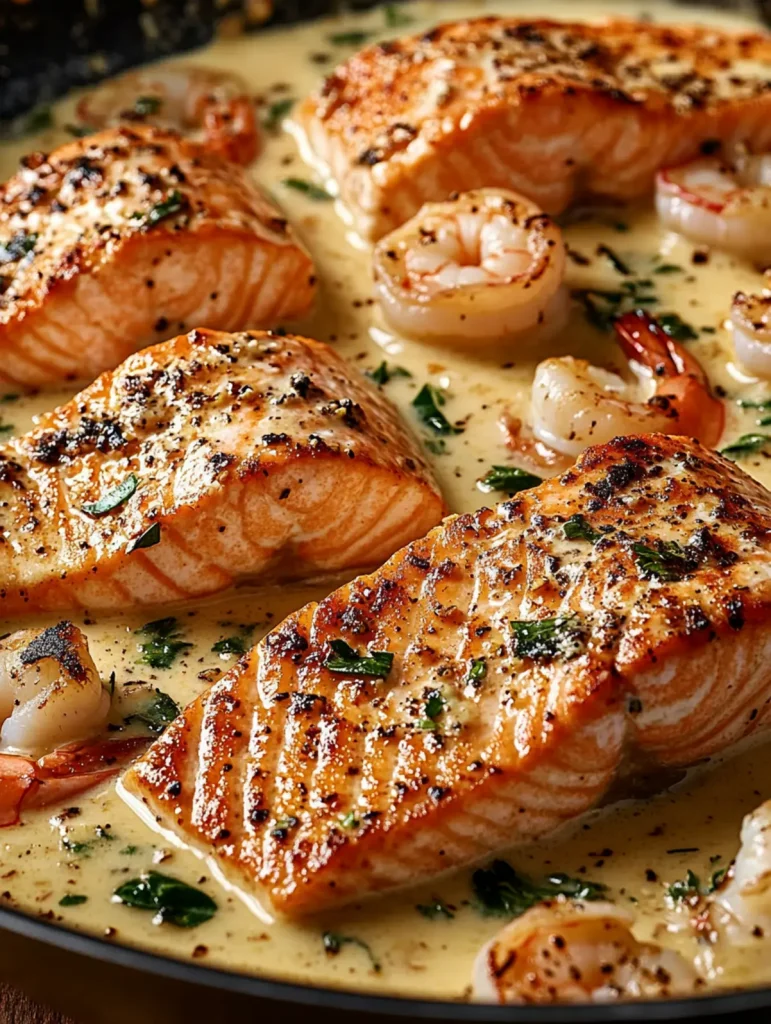
This skillet is flexible, so feel free to adjust it to your pantry, your diet, or your mood. These swaps are all easy and reliable, and they keep the creamy Tuscan flavor intact.
- Switch up the seafood : Out of shrimp or salmon? Firm white fish like cod or halibut, or sea scallops, work well; sear until just opaque.
- Dairy-free creamy swap : Replace heavy cream with full-fat canned coconut cream and the Parmesan with 2 tablespoons nutritional yeast; the sauce turns slightly sweeter but stays silky.
- Use Pecorino instead : If I’m out of Parmesan, Pecorino Romano works beautifully; it’s saltier and sharper, so I use a little less and taste before adding salt.
- Gluten-free or low-carb : Serve over gluten-free pasta or rice, or go low-carb with zucchini noodles or cauliflower rice; sauté zucchini briefly so it doesn’t turn watery.
- Brighten with lemon : Finish with a squeeze of lemon juice and a little zest off the heat; the acidity cuts through the cream without changing the recipe.
- Try heartier greens : I find baby kale holds up better than spinach when reheating; stir it in after the Parmesan melts and simmer 2 to 3 minutes.
Expert Tips
A few small techniques make this Tuscan Salmon and Shrimp Cream Skillet taste like it came from a restaurant kitchen.
- Blot seafood until tacky : Blot salmon and shrimp with paper towels until tacky, then season right before searing so the olive oil and butter brown them instead of steaming.
- Grate your own Parmesan : Pre-shredded cheese has anti-caking agents that turn the sauce grainy. Freshly grated Parmesan, added by handfuls over medium-low heat, melts into silky cream.
- Drain sun-dried tomatoes : Oil-packed ones can make the sauce greasy, so I blot them on a paper towel before chopping. Dry-packed ones need a 10-minute hot water soak.
- Scrape the skillet : After the tomatoes soften, pour in the chicken broth and scrape the pan. Those caramelized salmon and shrimp bits dissolve into the sauce for deeper flavor.
- Add spinach last : Fold in the spinach only when the sauce is ready, and stir for about a minute. It stays bright green instead of turning dull and watery.
- Season after the cheese : Parmesan, sun-dried tomatoes, and broth all bring salt, so I taste only after the cheese melts and choose low-sodium broth.
Make-Ahead Tips for Tuscan Salmon and Shrimp Cream Skillet
Short on time on busy weeknights? This Tuscan Salmon and Shrimp Cream Skillet is easy to prep in advance! You can halve the cherry tomatoes, chop the sun-dried tomatoes, mince the garlic, and grate the Parmesan up to 24 hours ahead , then refrigerate them in separate airtight containers (this keeps the flavors fresh and the cheese from clumping). Pat the seafood dry and store it covered in the coldest part of the fridge for up to 24 hours . When dinner time arrives, simply sear the salmon and shrimp, build the sauce, and fold in the spinach. You’ll get a creamy, restaurant-quality meal in about 20 minutes, with far less stress.
Storage & Freezing
- Refrigerate within 2 hours: Cool leftover Tuscan Salmon and Shrimp Cream Skillet quickly, then store it in a shallow airtight container for up to 3 days. The Parmesan and cream will firm up into a thick, almost spreadable sauce in the fridge, which is normal. The cherry tomatoes will be softer and the spinach darker, but the garlic, paprika, and sun-dried tomatoes taste even deeper the next day. I keep pasta or rice in a separate container so it doesn’t soak up the sauce and turn mushy.
- Freeze with realistic expectations: For the best texture, freeze only the sauce and salmon in portion-sized, freezer-safe containers for up to 2 months. Heavy cream holds up better than milk, but it can still separate a little as it thaws. Shrimp turn rubbery after freezing and reheating, so I leave them out and add fresh or freshly thawed shrimp when serving. Skip freezing the parsley and add it fresh at the end.
- Thaw slowly: Move frozen portions to the fridge overnight rather than thawing them on the counter or in the microwave. If the sauce looks grainy or split, whisk it vigorously as it warms, and the cream and Parmesan will usually come back together.
- Reheat low and slow: Warm leftovers in a skillet over low heat, covered, stirring gently, until the salmon reaches 165°F (74°C), the safe temperature for reheated leftovers. Loosen the thickened sauce with a splash of warm chicken broth or cream, a tablespoon at a time. Avoid the high heat that makes cream sauces break and seafood turn tough. If you’re using the microwave, use 50% power in 30-second bursts and stir between rounds.
Serving Suggestions
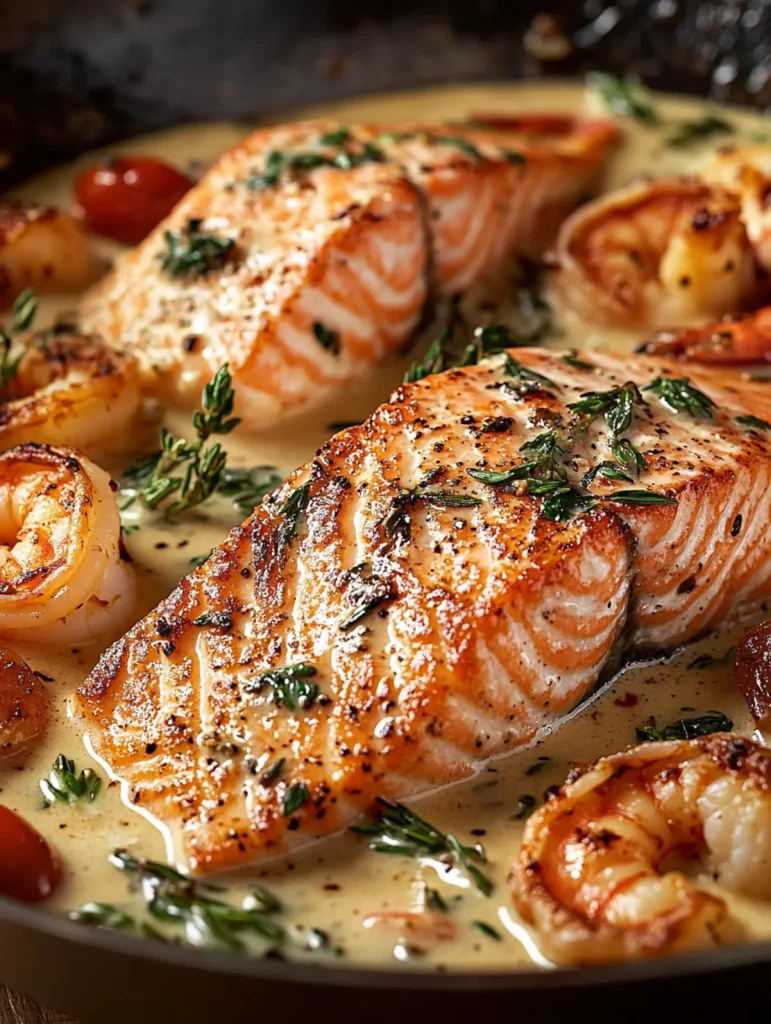
- Plate it in wide, shallow bowls: Because the sauce is rich, I like to build each bowl on a bed of linguine, fettuccine, or fluffy rice, then spoon the sauce over the top. Since three fillets serve four people, cut the salmon into generous portions and give each bowl a few shrimp. Rest the skillet off the heat for 3 to 5 minutes first so the sauce thickens enough to cling to the pasta rather than pool at the bottom. Finish with chopped parsley and a little extra Parmesan right before serving. This Tuscan Salmon and Shrimp Cream Skillet looks best when you don’t overdo the sauce, so start with a ladleful and let people add more at the table.
- Add something crisp and acidic on the side: A creamy dish like this needs contrast. A peppery arugula salad dressed with lemon juice and olive oil cuts through the richness. Roasted asparagus or broccolini with a squeeze of lemon works just as well. For soaking up every last drop of sauce, serve warm crusty bread or garlic toast. Spinach is already in the skillet, so I usually skip a second leafy green cooked in cream and choose something bright and crunchy.
- Pour a bright, chilled drink: The cream and Parmesan pair well with crisp white wines such as Pinot Grigio, Vermentino, or an unoaked Chardonnay, whose acidity refreshes the palate between bites. If you’re skipping alcohol, sparkling water with lemon and a few fresh basil leaves does the same job.
- Match the serving style to the occasion: For a weeknight, set the skillet in the middle of the table over a trivet and let everyone help themselves family-style. For a date night or a dinner party, plate individual bowls with the seafood arranged on top. Add a small salad and a bottle of wine, and the meal feels like restaurant fare with very little extra effort.
Common Questions About Irresistible Tuscan Salmon and Shrimp Cream Skillet
- How do I know the salmon is done? It flakes easily and reaches 145°F (63°C).
- Can I use half-and-half instead of heavy cream? No, it thins out and may split.
- Why does my sauce look thin at first? Normal; it thickens while resting 3–5 minutes.
- How do I keep the sauce from turning greasy? I blot oil-packed sun-dried tomatoes before chopping them.
- 0 Facebook
- 0 Pinterest
- 17 Email
- Copy Link
- 17 shares
Irresistible Tuscan Salmon and Shrimp Cream Skillet
Ingredients
Instructions
Pat the salmon and shrimp very dry with paper towels, then season both with salt, black pepper, and the paprika. Dry seafood sears to a golden crust instead of steaming in the pan.
Heat the olive oil and 1 tablespoon of the butter in a large, deep skillet over medium-high heat until the butter foams. Sear the salmon for 3 to 4 minutes per side (skin side down first, if using skin-on) until golden outside and still slightly translucent in the center, then move it to a plate.
Sear the shrimp in the same skillet for about 1 minute per side, just until pink and curled into a loose C. Transfer them to the plate with the salmon, since they’ll finish cooking at the end.
Melt the remaining tablespoon of butter in the skillet over medium heat, then add the garlic and sauté for about 30 seconds. Pull the pan off the heat the moment the garlic smells fragrant to avoid bitterness.
Stir in the cherry tomatoes and sun-dried tomatoes and cook for 2 to 3 minutes, until the cherry tomatoes just begin to soften. Pour in the chicken broth and scrape up the browned bits from the bottom of the pan.
Reduce the heat to medium-low, then pour in the heavy cream along with the Italian seasoning, garlic powder, and red pepper flakes. Simmer gently for 3 to 4 minutes, then sprinkle in the Parmesan a handful at a time, stirring constantly so it melts smoothly without clumping.
Fold in the spinach and stir for about 1 minute, until just wilted and still bright green. Nestle the salmon back into the sauce, spoon some over the top, and simmer for 3 to 4 minutes until it flakes easily and reaches 145°F (63°C), adding the shrimp for the final minute to warm through.
Taste the sauce and adjust with salt and pepper, remembering the Parmesan and sun-dried tomatoes already add saltiness. Let the dish rest off the heat for 3 to 5 minutes so the sauce thickens slightly, and finish with the chopped parsley before serving over pasta or rice.
Notes
Blot seafood until tacky: Blot salmon and shrimp with paper towels until tacky, then season right before searing so the olive oil and butter brown them instead of steaming.
Grate your own Parmesan: Pre-shredded cheese can make the sauce grainy. Freshly grated Parmesan added by handfuls melts into silky cream.
Drain sun-dried tomatoes: Oil-packed ones can make the sauce greasy; blot them before chopping. Dry-packed ones benefit from a 10-minute hot water soak.
Scrape the skillet: After the tomatoes soften, pour in the chicken broth and scrape the pan to release caramelized bits for deeper flavor.
Add spinach last: Fold in the spinach only when the sauce is ready and stir about a minute so it stays bright green.
Season after the cheese: Parmesan and sun-dried tomatoes add salt, so taste and adjust at the end.
Storage: Refrigerate leftovers within 2 hours in a shallow airtight container for up to 3 days. For freezing, freeze sauce and salmon only for up to 2 months; omit shrimp. Thaw overnight in the fridge and reheat low and slow, loosening the sauce with warm broth or cream if it firms up. Microwave on 50% power in short bursts if needed.
Nutrition
| Serving Size | 1 serving (1 salmon fillet with shrimp and sauce) |
|---|---|
| Calories | approx. 1100 kcal per serving |
| Sugar Content | about 5 g |
| Sodium Content | about 1000 mg |
| Fat Content | approx. 85 g |
| Saturated Fat Content | approx. 38 g |
| Unsaturated Fat Content | approx. 47 g |
| Trans Fat Content | approx. 0.5 g |
| Carbohydrate Content | approx. 12 g |
| Fiber Content | approx. 2 g |
| Protein Content | approx. 65 g |
| Cholesterol Content | approx. 400 mg |