- 0 Facebook
- 2 Pinterest
- 0 Email
- Copy Link
- 2 shares
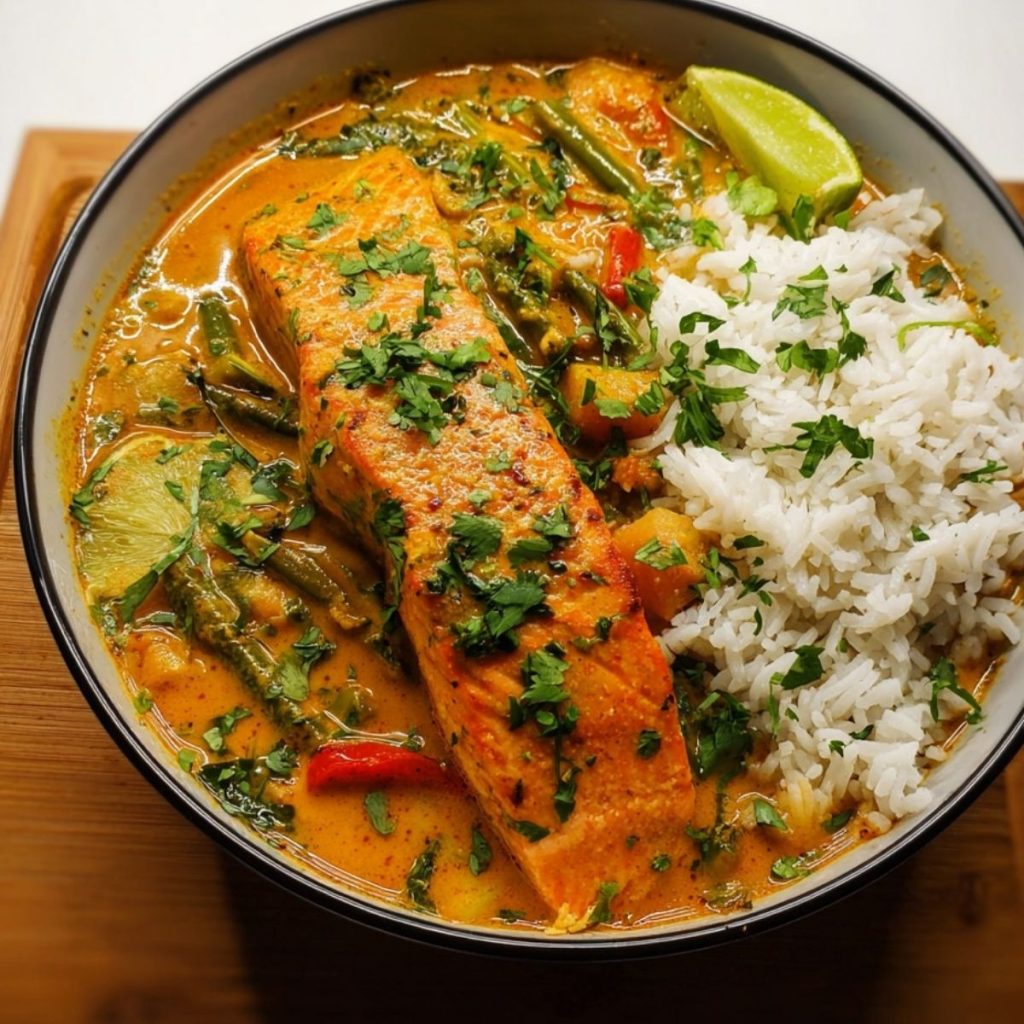
I’m excited to share a recipe that’s as simple to make as it is delicious. Thai Coconut Curry with Salmon combines tender salmon, creamy coconut milk, and fragrant spices into a dish that’s bursting with flavor!
When I first stumbled upon the concept of Thai Coconut Curry with Salmon, I was immediately intrigued. It was during a travel adventure in Thailand that I discovered this delightful fusion of flavors. Wandering the vibrant markets, I encountered a local chef who graciously revealed the harmonious blend of coconut and spices fundamental to this dish. Since then, it’s become a cherished part of my culinary repertoire.
This recipe is special not only because it’s healthy and incredibly easy to prepare but also because it brings back fond memories of a cultural adventure. The balanced, unique flavors of this curry make it perfect for impressing dinner guests or enjoying a quiet meal at home. Plus, it’s a budget-friendly way to bring a taste of Thailand to your table without needing exotic ingredients, offering you a delightful experience without breaking the bank!
Why You’ll Love Thai Coconut Curry with Salmon?
- Simplicity: You don’t need to be a master chef to succeed with this recipe. It’s designed for cooks of all levels, ensuring that you get consistent, delicious results every time.
- Rich Flavor: The combination of creamy coconut milk and savory spices creates a rich, exotic flavor profile that’s hard to resist. The salmon adds a buttery texture, making every bite an indulgence.
- Expert Techniques: Searing the salmon locks in the moisture, enhancing the overall texture of the dish. Adding fresh herbs at the end ensures a burst of freshness.
- Consistency: Using trusted, easy-to-follow steps, this recipe delivers the same delightful taste with every preparation, it making a reliable go-to for any occasion.
- Versatility: This curry can be adjusted to your liking, whether you prefer it more or less spicy, making it adaptable to different taste preferences.
“The secret behind the success of Thai Coconut Curry with Salmon lies in its ability to blend simplicity with gourmet flavors, providing an effortless yet rewarding cooking experience.” — A culinary enthusiast
Ingredients Notes
- Skinless Salmon Fillets: I always go for sustainably sourced fillets for a fresher taste, ensuring a succulent texture that soaks up the curry’s flavors beautifully.
- Red Bell Peppers: Select firm, vibrant peppers; their sweetness and crunch elevate the dish’s texture while adding a burst of color.
- Baby Pak Choi: Fresh, crisp greens provide balance and bite; they soak up the curry’s richness and add a subtle, earthy flavor.
- Coconut Milk: Choose full-fat for a creamy consistency; its sweetness mellows the heat and adds a tropical depth to the curry.
- Vegetable Broth: I prefer homemade for its rich undertones; it complements the curry paste without overpowering the main flavors.
- Small Onion: Adds sweetness and depth; dice finely for even cooking and a smoother sauce texture.
- Red Curry Paste: Authentic paste elevates the dish with complex heat; adjust to your taste for a truly personalized spice level.
- Tomato Paste: Intensifies the curry’s color and thickness whilst boosting its umami character; a little goes a long way.
- Peanut Butter: Smooth, high-quality peanut butter adds a nutty depth and luxurious texture, harmonizing with the coconut milk.
- Garlic: Use fresh cloves for potent flavor; its aromatic nature melds beautifully with ginger and spices.
- Ginger: Freshly grated ginger offers a zesty warmth, perfect for balancing the richness of the curry sauce.
- Lemon Juice: Adds a bright, citrusy kick; fresh lemons ensure the tang is vibrant and not overpowering.
- Fish Sauce: A splash of fish sauce infuses a deep savory note, enhancing the umami in every bite.
- Oil: Use a neutral oil for cooking to let the curry’s flavors shine without interference.
- Butter: Opt for unsalted to control seasoning; enriches the curry’s texture and brings out the salmon’s flavors.
- Red Pepper Flakes: Adjust to taste; adds an extra layer of heat for spice enthusiasts.
- Ground Coriander Seeds: Imparts a gentle, nutty flavor, subtly enhancing the curry’s aromatic profile.
- Ground Cumin: Toast slightly to release its earthy aroma, complementing the curry’s other spices.
- Sweet Paprika, Ground: Adds mild warmth and a hint of sweetness, enriching the curry’s color without heat.
- Brown Sugar: Balances out the spicy and acidic elements with a touch of sweetness.
- Salt and Pepper: Season judiciously throughout cooking to enhance and unify the overall flavor profile.
How to Make Thai Coconut Curry with Salmon?
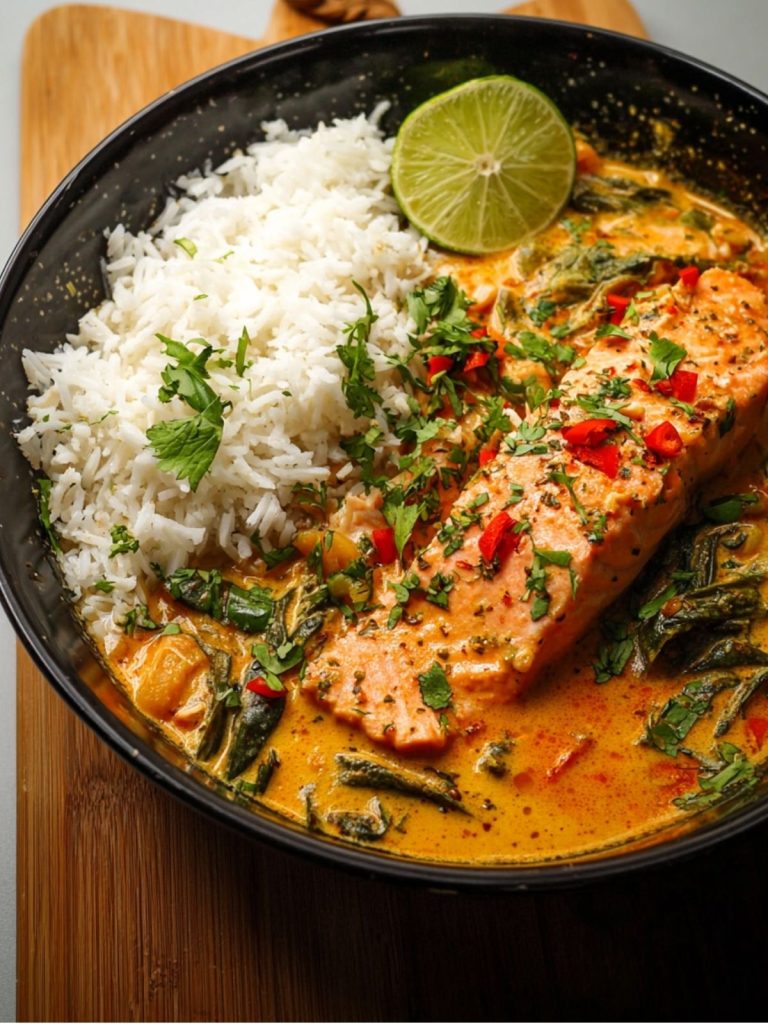
- Prepare the Ingredients: Begin by dicing the onion finely, mincing the garlic , and grating the ginger . Cube the red bell peppers and roughly chop the baby pak choi . Ensure your salmon fillets are patted dry and seasoned with salt and pepper.
- Sauté Aromatics: In a large pan, heat the oil and butter over medium heat until melted and fragrant. Add the onions, stirring until they become translucent. Introduce garlic and ginger, enjoying the warm, aromatic blend they create.
- Build the Flavor Base: Stir in the red curry paste and tomato paste . Let them cook for a minute until the mixture becomes intensely fragrant, a sign that the spices are releasing their essential oils.
- Add Liquids: Pour in the coconut milk and vegetable broth . The creamy consistency will envelop the spices, creating a smooth curry base. Stir in the peanut butter until fully incorporated.
- Simmer and Season: Add the bell peppers, letting them soften slightly in the broth. Season with red pepper flakes , ground cumin , ground coriander seeds , sweet paprika , brown sugar , and a dash of salt and pepper. The aroma should be punchy and inviting.
- Cook the Salmon: Nestle the seasoned salmon fillets into the sauce, ensuring they’re submerged. Simmer on low heat, allowing the salmon to po gentlyach and soak up the curry’s flavors, resulting in a tender, flaky texture.
- Finish with Greens: Add the baby pak choi, stirring to cover in the rich sauce. The greens should remain slightly crisp for added texture.
- Final Touches: Stir in lemon juice and fish sauce to balance the flavors with a bright, tangy kick. Taste and adjust seasoning if necessary. Serve your Thai Kokos Curry Mit Lachs hot, garnished with fresh herbs if desired.
Expert Cooking Tips
- Sauté onions over low heat to develop natural sweetness while avoiding burning them.
- I use fresh ginger root for a more vibrant flavor instead of powdered ginger.
- Gently pat dry salmon with a paper towel for even cooking and improved spice adherence.
- Measure curry paste using a level teaspoon to maintain consistent spiciness.
- Stir coconut milk before using to incorporate the separated cream and water.
- Add peanut butter gradually to prevent clumps and create a smoother sauce.
- Cook salmon skin-side down first for a crisp texture, if not removed.
- Adjust heat levels by controlling red pepper flakes for your personal spice preference.
Storage Tips
- Refrigerate leftovers in airtight containers within two hours to maintain freshness.
- Store in the refrigerator for up to three days, ensuring optimal food safety.
- For freezing, portion into individual containers to avoid repeated thawing.
- Use freezer-safe bags and remove excess air to prevent freezer burn.
- Reheat gently on the stovetop over low heat, stirring occasionally for even warming.
- Add a splash of coconut milk when reheating to retain creamy consistency.
- Ensure internal temperature reaches 165°F during reheating for safe consumption.
- Mark storage dates to use the curry within recommended timeframes.
- Freeze up to two months for best quality, with gradual thawing in the refrigerator .
Variations and Substitutions
- Substitute salmon with tofu for a vegetarian version, maintaining the protein balance.
- Opt for light coconut milk to reduce calorie content without affecting creaminess.
- Use almond butter instead of peanut for a nutty twist and allergy-friendly alternative.
- Try adding mango chunks for a fruity burst complementing the savory curry.
- Replace fish sauce with soy sauce to maintain umami in a vegan dish.
- Incorporate kale or spinach if Pak Choi is unavailable, still ensuring crisp texture.
- For a gluten-free version, ensure all sauces and pastes are certified gluten-free.
- Add cashew nuts for a richer texture and additional protein, maintaining crunch.
What to Serve with Thai Coconut Curry with Salmon?
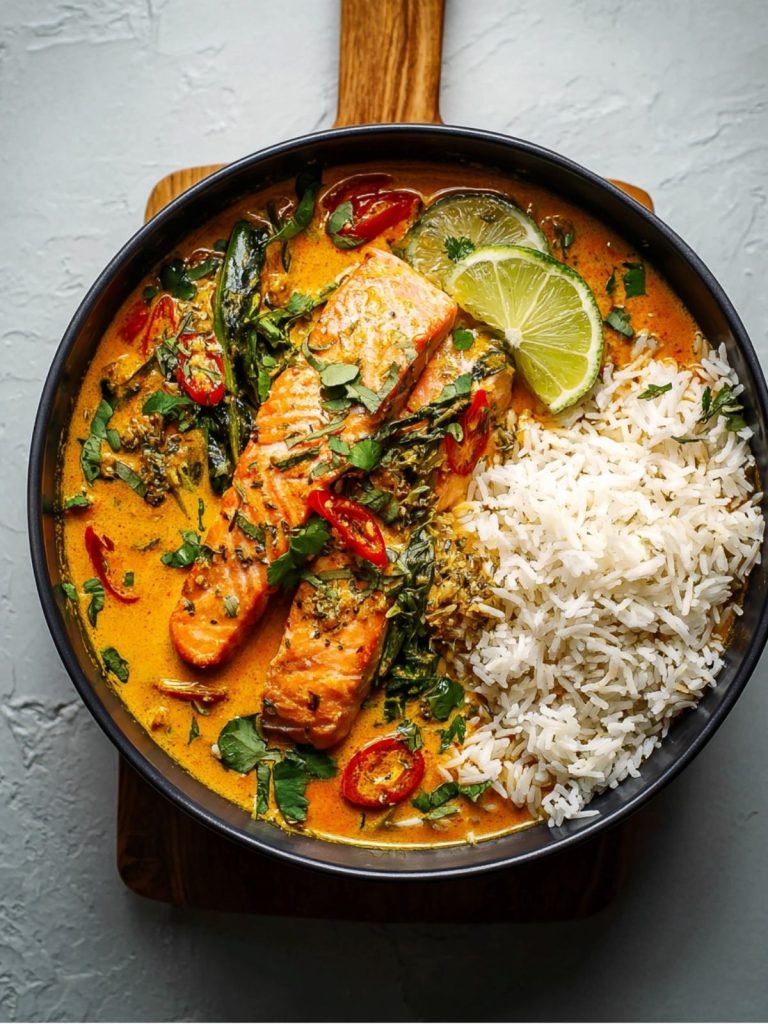
- Jasmine Rice: The fragrant jasmine rice perfectly complements the creamy and spicy nature of the curry, enhancing its exotic flavors.
- Basmati Rice: Its light and fluffy texture soaks up the rich coconut curry sauce, offering a subtle aromatic contrast.
- Quinoa: A high-protein alternative with a nutty flavor that balances the creaminess of the coconut curries.
- Steamed Broccoli: Adds a crunchy texture and freshness, contrasting beautifully with the rich curry sauce.
- Mango Salad: This sweet and tangy salad provides a refreshing counterpoint to the spicy flavors of the curry.
- Cucumber Raita: A cooling yogurt-based side that mellows out the heat while adding a creamy element to the meal.
- Sauteed Spinach: Offers an iron-rich, earthy note that pairs well with the savory sauce and tender salmon.
- Cherry Tomato and Basil Salad: The fresh acidity of tomatoes and the aromatics of basil elevate the curry’s vibrant flavors.
- Garlic Naan: Provides a chewy, flavorful bread option to mop up every bit of delicious curry sauce.
- Roasted Sweet Potatoes: Enhance the sweetness in the curry and add a hearty texture alongside the fish.
FAQs
Pat dry salmon thoroughly before cooking; use high heat for a crisp, seared texture.
Yes, reduce or increase curry paste according to your preferred level of heat.
Add acidity with lime juice or a splash of vinegar to balance excessive sweetness.
Simmer open to reduce liquid or add cornstarch mixed with cold water gradually.
Ensure coconut milk isn’t boiled vigorously; maintain medium heat to preserve its creaminess.
- 0 Facebook
- 2 Pinterest
- 0 Email
- Copy Link
- 2 shares
Authentic Thai Coconut Curry with Salmon: A Delicious Seafood Twist
Ingredients
Instructions
- Start by prepping your ingredients
finely dice the onion, mince the garlic, and grate the ginger. Cube the red bell peppers and roughly chop the baby pak choi. Ensure your salmon fillets are patted dry and seasoned with salt and pepper.
To sauté the aromatics, heat some oil and butter in a large pan over medium heat until melted and fragrant. Add the onions, stirring until they turn translucent, then introduce the garlic and ginger for a warm, aromatic blend.
Next, stir in the red curry paste and tomato paste. Cook for about a minute until they are intensely fragrant, signaling that the spices are active. Pour in the coconut milk and vegetable broth, creating a smooth curry base, then stir in the peanut butter until fully blended.
Add the bell peppers, allowing them to soften in the broth. Season with red pepper flakes, ground cumin, ground coriander seeds, sweet paprika, brown sugar, and a pinch of salt and pepper for an inviting aroma.
Now, place the seasoned salmon fillets into the sauce, ensuring they are submerged, and simmer on low heat so the salmon can soak up the curry flavors, turning tender and flaky.
Finish by adding the baby pak choi, stirring to coat in the sauce while keeping the greens slightly crisp. For the final touches, stir in lemon juice and fish sauce to add a bright, tangy kick. Taste and adjust seasoning as needed.
Serve your Thai Kokos Curry Mit Lachs hot, and feel free to garnish with fresh herbs if you like.