- 0 Facebook
- 1 Pinterest
- 0 Email
- Copy Link
- 1 share
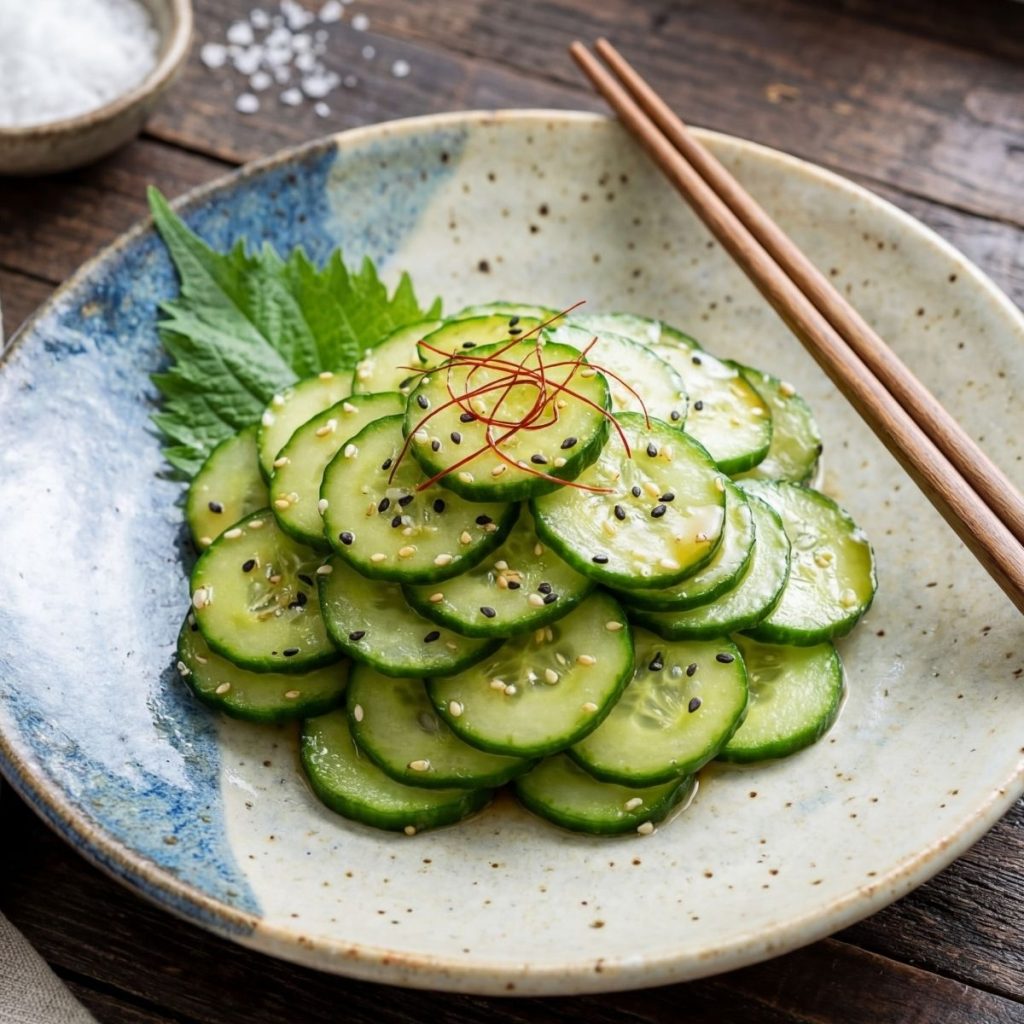
There is something quietly wonderful about a Japanese cucumber. Slender, thin-skinned, and barely seeded, it carries a clean, cool crispness that most cucumbers never quite achieve. I have been reaching for it in my kitchen for years, and Aunt Anne was the one who first insisted I seek it out specifically — she said that for certain dishes, nothing else would do. She was absolutely right.
Sunomono is the purest expression of this ingredient. A classic Japanese cucumber salad dressed in rice wine vinegar, sugar, and soy sauce — it is bright, refreshing, and ready in about 20 minutes with zero cooking required. If you enjoy a bold spicy Asian cucumber salad or the clean, vinegar-forward bite of a Din Tai Fung cucumber salad , this recipe belongs in your regular rotation. The dressing takes seconds to whisk together and makes 2 to 3 side servings from a single cucumber — the result feels far more elegant than the effort involved. I hope you love it as much as my family does — let’s make it together.
You Might Also Love
If you’re drawn to crisp, refreshing salads with bright, clean flavors, these recipes will feel right at home alongside this one.
- Spicy Asian Cucumber Salad — Cool cucumber with a bold, chili-spiked dressing that wakes up every bite.
- Din Tai Fung Cucumber Salad — A garlic-forward copycat that rivals the restaurant version, made right at home.
- Shaved Rainbow Carrot Sesame Salad — Colorful, crunchy, and finished with toasted sesame for a beautifully satisfying crunch.
- Thai Green Papaya Salad Som Tam — A vibrant Southeast Asian salad with a punchy lime and fish sauce dressing.
Why You’ll Love This Recipe?
- Crisp, cool, and genuinely refreshing. The salted cucumber stays tender-firm, never limp, delivering a satisfying crunch in every bite that holds up beautifully on the plate.
- Bright, perfectly balanced dressing. Rice wine vinegar brings gentle acidity, sugar softens the sharpness, and soy sauce adds a quiet, lingering umami depth that ties everything together.
- Clean and light on the palate. This salad feels cleansing and nourishing — the kind of dish you crave alongside rich, savory mains rather than feeling like an afterthought.
- Ready in about 20 minutes with no cooking required. Slice, salt, whisk, and toss — that’s the whole process, using just a handful of pantry staples you likely already have.
- Makes 2 to 3 side servings from one cucumber. A reliable, wholesome portion for a weeknight dinner alongside your favourite Japanese-inspired main.
- Naturally vegan and easily gluten-free. Swap the soy sauce for tamari and the recipe suits almost every dietary need without sacrificing a single bit of flavour.
Ingredient Notes
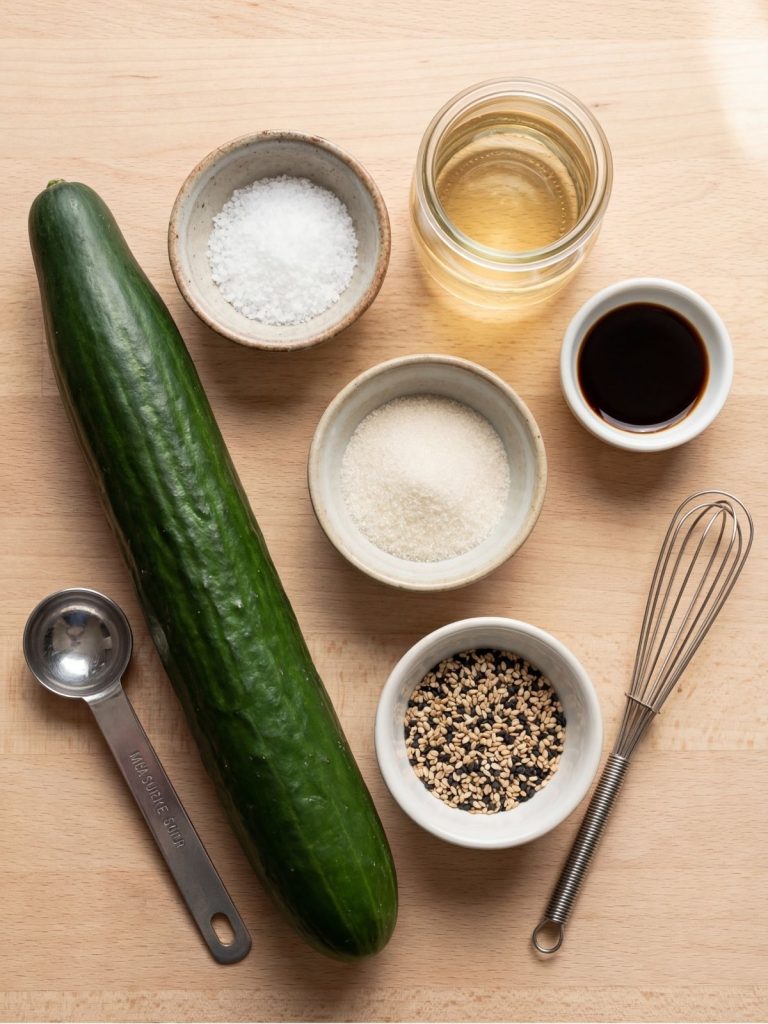
- Japanese cucumber — Thin-skinned, seedless, and firm; look for one that feels dense and heavy in your hand. Regular English cucumber can substitute but requires longer salting — about 20 minutes — to remove excess water.
- Sea salt — Fine sea salt draws moisture out of the cucumber evenly and cleanly. Avoid iodized table salt — it can leave a faint metallic note in delicate recipes like this one.
- Rice wine vinegar — Mild, slightly sweet, and essential to sunomono’s character; choose unseasoned for full control. Seasoned rice vinegar already contains sugar and salt, which will throw off the dressing balance.
- Sugar — Plain white sugar dissolves quickly and keeps the dressing clean and bright. I use exactly the amount called for — no more, no less.
- Soy sauce — Adds savory depth and a gentle amber colour to the dressing. Low-sodium soy sauce works well if you prefer a lighter finish.
- Toasted sesame seeds — Nutty, golden, and aromatic; buy pre-toasted or dry-toast raw seeds in a small dry pan for 1–2 minutes until fragrant. Pre-toasted seeds are ready to use straight from the jar.
How to Make Sunomono Japanese Cucumber Salad?
- Toast sesame seeds if needed — If using raw sesame seeds, dry-toast in a small pan over medium heat for 1–2 minutes until golden and fragrant. Set aside to cool.
- Slice the cucumber — Using a mandoline or sharp knife , cut cucumber into very thin, even rounds.
- Salt and rest — Place cucumber slices in a bowl, add sea salt, toss well, and rest for 10 minutes to draw out moisture.
- Squeeze out moisture — Gather cucumber in your hands and squeeze firmly several times until minimal liquid comes out.
- Rinse if needed — If the cucumber tastes too salty after squeezing, briefly rinse under cold water and pat dry with a clean kitchen towel. With 1 tsp salt, this step is usually unnecessary.
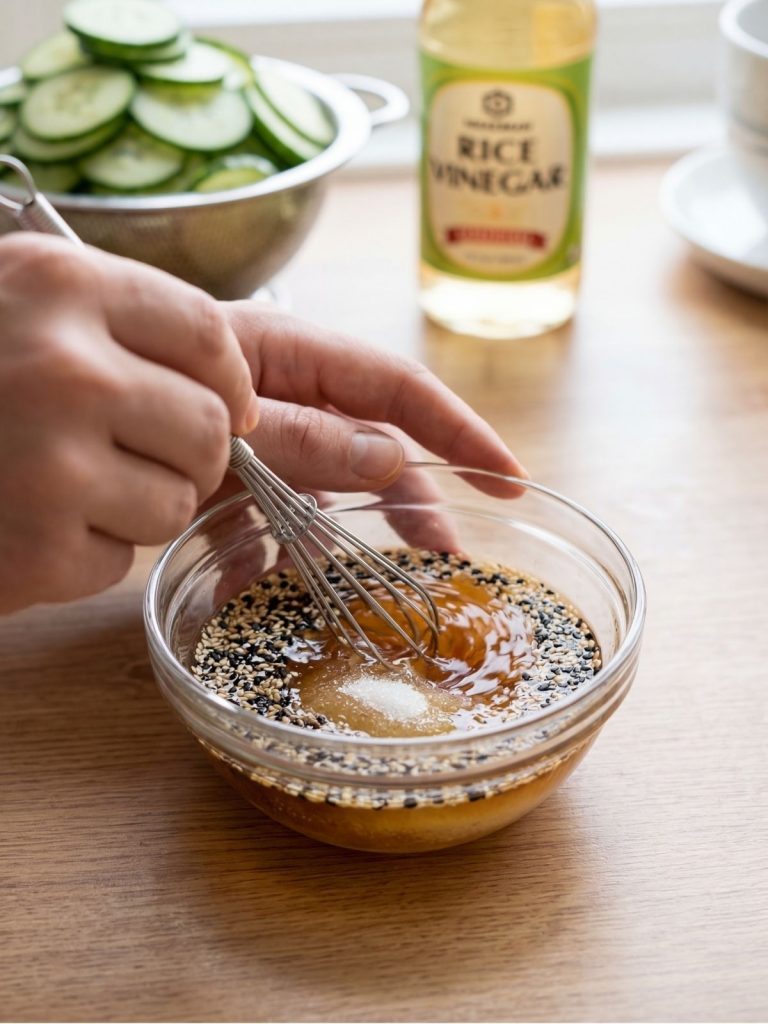
- Mix the dressing — Whisk together rice wine vinegar, sugar, and soy sauce in a bowl until the sugar fully dissolves.
- Toss and coat — Add squeezed cucumber to the dressing and toss until every slice is evenly coated and glistening.
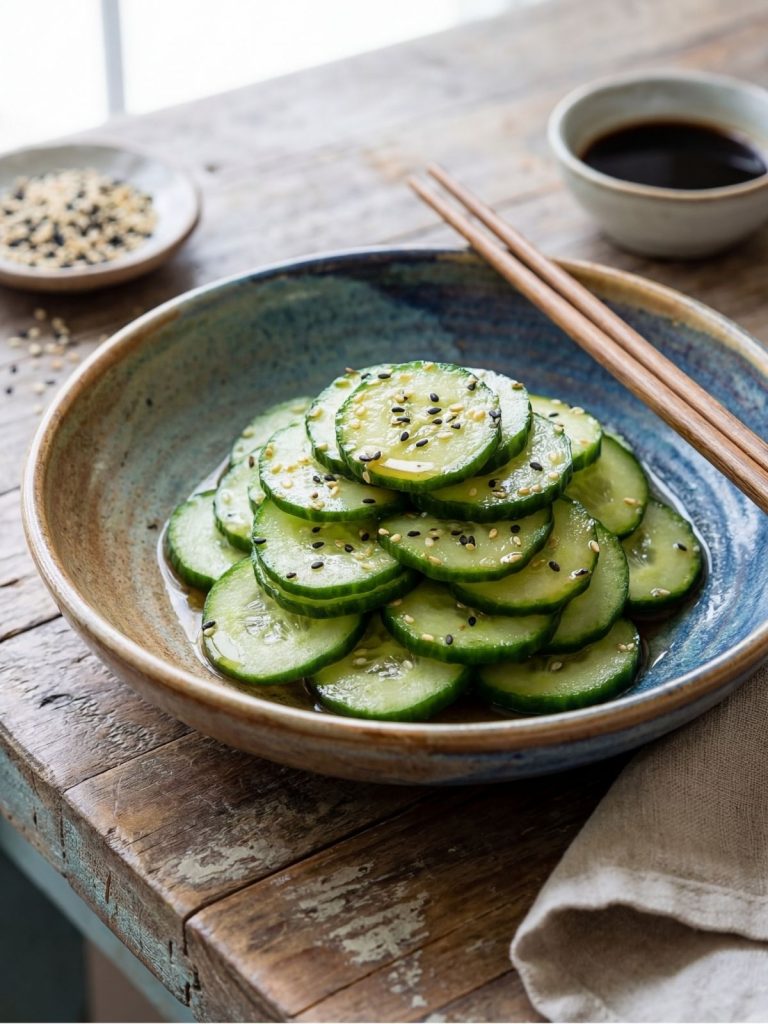
- Garnish and serve — Scatter toasted sesame seeds over the top and serve immediately, or refrigerate for 10 minutes before serving for a colder, crisper result.
Emily’s Expert Tips
- Don’t rush the salting step. I always give the cucumber the full 10 minutes — it draws out excess water so the dressing stays concentrated and vibrant rather than watery and diluted.
- Squeeze more than you think is necessary. I press the cucumber firmly between both palms multiple times until almost no liquid comes out — the drier it is, the more the dressing clings to every slice.
- A mandoline is worth pulling out here. Thin, even slices absorb the dressing at the same rate and give sunomono its signature silky, tender bite. Thick slices from a knife won’t marinate evenly.
- Taste the dressing before tossing. The balance should feel bright and lively — not sharp or flat. Add a tiny pinch more sugar if the vinegar tastes too pronounced, or a drop more soy sauce for added depth.
- Serve it cold. I refrigerate the dressed salad for 10 minutes before serving — the chill pulls the flavours together and makes every bite noticeably crisper and more refreshing.
Storage Tips
- Refrigerate — Store in an airtight container for up to two days maximum.
- Drain before storing — Pour off excess liquid before sealing to slow sogginess and preserve texture.
- Dress close to serving time — For the crispest bite, toss with dressing no more than one hour before eating.
- Do not freeze — Freezing destroys the cucumber’s crisp texture completely and cannot be reversed.
Variations & Substitutions
- Add wakame seaweed — Rehydrate dried wakame and fold in for authentic, traditional oceanic flavour.
- Swap for English cucumber — Salt for 20 minutes to draw out more moisture; for a Western-style take, my marinated cucumber salad uses this same approach beautifully.
- Make it spicy — Add a pinch of shichimi togarashi or a drizzle of chili oil for a warming kick.
- Add protein — Toss in cooked, chilled shrimp or imitation crab for a heartier, more substantial side.
- Try a fruity twist — Fresh pineapple chunks add bright tropical sweetness; my pineapple cucumber salad explores this combination in full.
- Use honey instead of sugar — Swap for a slightly floral, richer sweetness that works beautifully with the vinegar.
- Make it gluten-free — Replace soy sauce with tamari or coconut aminos — the flavour stays clean and deeply savory.
What to Serve With Sunomono?
- Teriyaki chicken — The sweet-savory glaze pairs perfectly with sunomono’s cool, bright acidity.
- Steamed white rice — Simple, neutral, and the most natural pairing for a Japanese-inspired spread.
- Miso soup — Warm and umami-rich; a comforting contrast to this crisp, refreshing salad.
- Edamame — Lightly salted and fuss-free; keeps the whole meal wholesome and satisfying.
- Grilled salmon or fish — The clean vinegar dressing cuts beautifully through rich, fatty fish.
Frequently Asked Questions
Can I make sunomono ahead of time? Yes — prepare up to a day ahead and refrigerate; drain any excess liquid before serving.
How long does Japanese cucumber salad last? Up to two days in a sealed container in the refrigerator .
Can I use regular cucumbers for sunomono? Yes. Salt for 20 minutes and squeeze very thoroughly to remove the extra water.
Is sunomono gluten-free? Not as written. Swap soy sauce for tamari or coconut aminos to make it gluten-free.
What does sunomono taste like? Cool, crisp, and lightly tangy with gentle sweetness and a quiet umami finish.
Can I reduce the sugar in the dressing? You can halve it, but some sugar is needed to balance the vinegar’s sharpness.
- 0 Facebook
- 1 Pinterest
- 0 Email
- Copy Link
- 1 share
Sunomono japanese Cucumber Salad
Ingredients
Instructions
If using raw sesame seeds, dry-toast them in a small pan over medium heat for 1 to 2 minutes, stirring frequently, until golden and fragrant. Remove from heat and set aside to cool.
Using a mandoline or sharp knife, slice the Japanese cucumber into very thin, even rounds.
Place the cucumber slices in a bowl, add the sea salt, and toss well to coat. Let the cucumber rest for 10 minutes to draw out excess moisture.
Gather the cucumber slices in your hands and squeeze firmly several times until minimal liquid comes out. The drier the cucumber, the better the dressing will cling to each slice.
If the cucumber tastes too salty after squeezing, briefly rinse under cold water and pat dry with a clean kitchen towel. With 1 teaspoon of salt, this step is usually unnecessary.
In a small bowl, whisk together the rice wine vinegar, sugar, and soy sauce until the sugar fully dissolves.
Add the squeezed cucumber slices to the dressing and toss until every slice is evenly coated and glistening.
Transfer to a serving dish and scatter the toasted sesame seeds over the top. Serve immediately or refrigerate for 10 minutes for a colder, crisper result.
Notes
Do not skip the salting step — it draws out excess water from the cucumber so the dressing stays concentrated and vibrant rather than watery and diluted.
Use unseasoned rice wine vinegar for full control over the dressing balance. Seasoned rice vinegar already contains added sugar and salt, which will throw off the ratios.
For a gluten-free version, swap the soy sauce for tamari or coconut aminos. To add a traditional touch, fold in rehydrated dried wakame seaweed before serving.
Store leftovers in an airtight container in the refrigerator for up to 2 days. Drain any excess liquid before sealing to slow sogginess.