- 0 Facebook
- 6 Pinterest
- 5 Email
- Copy Link
- 11 shares
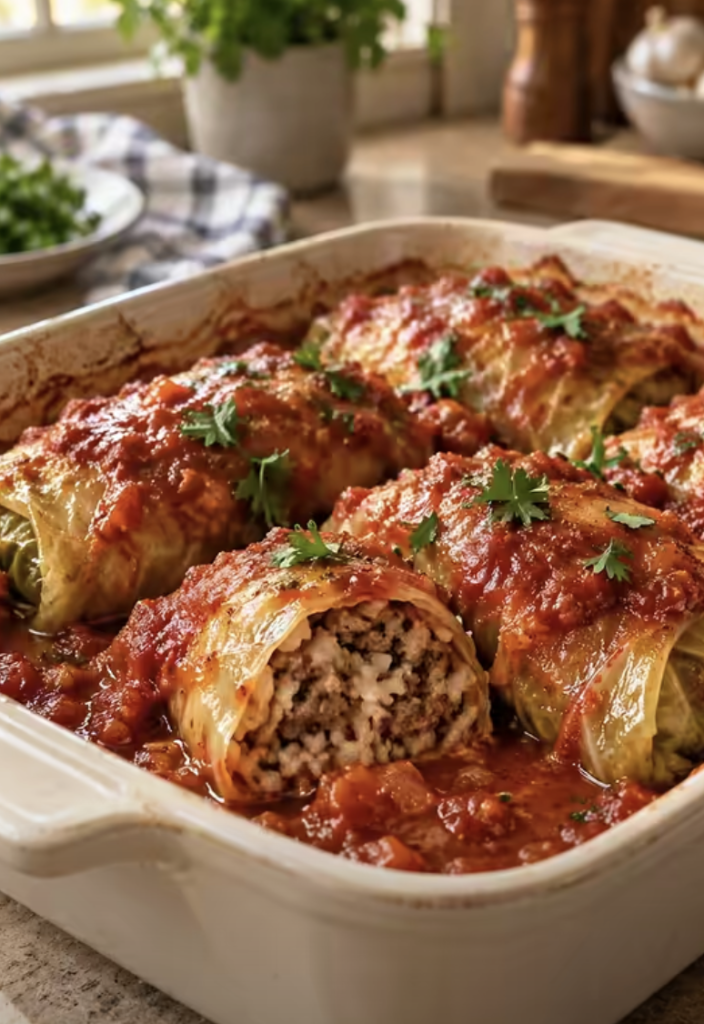
Tender cabbage leaves wrapped around a savory beef-and-rice filling, then baked low and slow in a rich, brick-red tomato sauce, these rolls are the kind of homemade food that makes drive-thru dinners feel like a distant memory. The sauce turns sweet and tangy (a little brown sugar and lemon do the quiet work), while the filling stays juicy and gently spiced with paprika and garlic. Spoon it all over a slice of crusty bread, or keep things light with a crisp green salad on the side.
Why Make Stuffed Cabbage Rolls Tonight?
Because this Cozy Stuffed Cabbage Rolls with Rich Tomato Sauce recipe delivers slow-simmered comfort with surprisingly simple steps, and it’s the kind of meal families end up requesting on repeat. Cooled rice and an egg keep the beef filling juicy instead of dense, while paprika and garlic add warmth without overpowering it. Softening the cabbage leaves first makes them easy to roll and silky once baked, and a spoonful of brown sugar plus a squeeze of lemon balances the tomato sauce so it tastes bright, never flat or harsh. It’s also a smart make-ahead meal. The rolls reheat beautifully, keep in the fridge for up to 3 days, and freeze well for up to 2 months, so one cooking session can cover several dinners. Serve with crusty bread to mop up the sauce, or a crisp green salad, for a homemade meal that beats fast food.
The Ingredients That Make It Work
Great Stuffed Cabbage Rolls come down to a handful of humble ingredients, each doing a specific job. Here’s what each one contributes and how to get the best results from it.
The Rolls and Filling
- Green cabbage : Choose a large, heavy head with tightly packed, pale green leaves. Freezing the whole head overnight and thawing it, or simmering it briefly in hot water, softens the leaves so they peel off without tearing. Savoy cabbage works in a pinch, but its crinkly leaves are harder to roll neatly.
- Ground beef : This gives the filling its savory, meaty backbone. An 80/20 or 85/15 blend stays juicy through the long bake, while very lean beef can turn dry. Mix gently, because overworking the meat makes the rolls tough.
- Cooked white rice : Rice stretches the filling and soaks up juices so the rolls stay tender. Cooled rice mixes in evenly without partially cooking the meat, and day-old rice works well. Long-grain is ideal, and leftover brown rice is a fine swap (the texture will be a bit chewier).
- Onion : A small, finely diced onion adds sweetness and moisture, and the fine dice means no crunchy bits after baking. Yellow onion is the classic choice, though white onion works too.
- Garlic : Fresh minced cloves bring a mellow, aromatic warmth as they bake. Jarred minced garlic works if needed, but it’s milder, so add a little extra.
- Egg : The egg binds the filling so the rolls hold together when sliced and served. Use a large egg at room temperature, which blends in more smoothly. Omit it only if you’re comfortable with a looser, more crumbly filling.
The Seasonings
- Salt : Seasoning the filling directly makes the whole roll taste balanced, not just the sauce. This recipe assumes fine table salt. If using coarse kosher salt, add a little extra, since it’s less dense by volume.
- Black pepper : Pepper adds gentle heat and depth. Freshly ground has a brighter, more aromatic bite than pre-ground, so crack it right before mixing.
- Paprika : Paprika gives the filling a warm, subtly sweet flavor and a rosy color. Sweet paprika keeps things classic, while smoked paprika adds a campfire note. Check the date on the jar, since old paprika tastes dusty and flat.
- Parsley : Fresh parsley adds a clean, green note that cuts through the richness. Flat-leaf (Italian) parsley has more flavor than curly. Save a little for sprinkling on top, since the fresh color makes the finished dish look inviting.
The Sauce
- Crushed tomatoes : This is the base of the sauce, delivering body and bright tomato flavor. Look for cans labeled “no salt added” for more control, or choose a good-quality brand with just tomatoes and maybe a little citric acid. In a pinch, hand-crush canned whole tomatoes.
- Tomato sauce : The smooth tomato sauce thins the crushed tomatoes just enough to coat the rolls evenly. Choose plain tomato sauce, not pizza or pasta sauce, so the seasoning stays under your control.
- Beef broth : Broth adds savory depth and keeps the rolls moist during the long, slow bake. Low-sodium broth keeps the salt level in check. Chicken or vegetable broth can stand in if needed.
- Brown sugar : Just a spoonful rounds out the tomatoes’ acidity and adds a hint of caramel sweetness. White sugar or a drizzle of honey can fill in, though brown sugar offers the most depth.
- Lemon juice : A squeeze at the end brightens the whole sauce so it tastes lively and not heavy. Fresh juice has a cleaner flavor than bottled. If you’re out of lemons, a teaspoon of red wine vinegar works as a backup.
Step-by-Step Instructions
- Preheat the oven to 350°F, then cut out the cabbage core and simmer the whole head in a large pot of boiling water for 5 to 8 minutes, until the outer leaves turn bright green and pliable. Peel each leaf away with tongs as it loosens, returning the head to the pot as needed, until you have about 12 leaves.
- Drain the leaves on clean kitchen towels and shave down the thick center ribs with a paring knife so they bend without cracking. Chop any torn or tiny leaves and scatter them across the bottom of a 9×13-inch baking dish to cushion the rolls.
- Combine the ground beef, cooled rice, diced onion, garlic, egg, salt, pepper, paprika, and 1 tablespoon parsley in a large bowl. I mix with my hands for just 30 to 45 seconds, until everything looks evenly blended, because overworking the meat makes the rolls dense.
- Whisk the crushed tomatoes, tomato sauce, beef broth, and brown sugar in a separate bowl until the sugar dissolves completely. Spread about 1 cup of this sauce over the chopped cabbage in the baking dish .
- Place about ⅓ cup of filling near the stem end of each leaf, fold in the sides, and roll up snugly, like a small burrito. Nestle the rolls seam-side down in the dish, packed close together so they hold their shape.
- Pour the remaining sauce over the rolls until they’re mostly covered, then seal the dish tightly with foil. Bake for about 1 hour, until the cabbage is fork-tender and the filling reaches 160°F; I always check the center of one roll with a thermometer to be sure.
- Remove the foil and drizzle the lemon juice over the sauce, spooning it around the rolls. I let the dish rest for 10 minutes before serving, and it’s normal if the sauce looks thin at first, because it thickens as it cools.
- Garnish with the remaining chopped parsley and serve hot, spooning extra sauce over each roll. Crusty bread on the side is ideal for soaking up every last drop.
Tip: If a cabbage leaf tears while rolling, overlap two small pieces to patch it. Once the roll bakes in the sauce, no one will notice.
Storage reminder: Cool leftovers completely, then refrigerate in an airtight container for up to 3 days, or freeze for up to 2 months. Reheat gently, covered, with a splash of broth if the sauce has thickened.
Expert Tips
- Shave the ribs : For Stuffed Cabbage Rolls that fold without cracking, drain the leaves on towels and shave the thick center ribs flat with a paring knife .
- Cool the rice : Warm rice starts cooking the beef and turns the filling gummy. Cooled rice blends evenly, and I mix by hand for just 30 to 45 seconds.
- Cushion the bottom : Scatter chopped torn leaves and about 1 cup of sauce across the baking dish first, so the rolls don’t scorch or stick.
- Pack rolls snugly : Nestle them seam-side down, tight against each other, then cover with sauce and seal with foil so trapped steam softens the cabbage.
- Probe the center : I always check one roll for 160°F, because the cabbage can feel fork-tender before the beef filling is fully cooked.
- Add lemon late : Drizzle the lemon juice after baking, since long heat dulls its brightness, then rest the dish 10 minutes so the thin sauce thickens.
Serving Suggestions
- Plating: Plan on two rolls per person, since the recipe makes about 12 and serves 6. Set them in a shallow bowl, spoon extra sauce over the top, and finish with fresh chopped parsley for a pop of green against the brick-red sauce. For a crowd, bring the 9×13 dish straight to the table after its 10-minute rest and let everyone serve themselves family-style. The sauce thickens as it cools, so waiting keeps it from running all over the plate.
- Bread and starches: Crusty bread is my go-to for mopping up the sauce, and a baguette or rustic sourdough holds up best. If you want something heartier for a cold night, buttery egg noodles or creamy mashed potatoes soak up the tomato sauce beautifully. Since the rolls already contain rice, I keep the starch on the side light.
- Fresh sides: The sauce and beef are rich, so a crisp green salad with a sharp lemon or red wine vinaigrette balances them. Cucumber and dill salad or simple roasted green beans with a little garlic work too, adding crunch and acidity without competing with the paprika.
- Drinks and occasions: A medium-bodied red like Pinot Noir or Zinfandel pairs well with the sweet-tangy sauce, and sparkling water with a lemon wedge is a refreshing alcohol-free choice. These rolls suit a relaxed weeknight dinner, but they’re also impressive enough for Sunday supper with friends. I’ve even made them a day ahead for company, because the flavors deepen overnight.
Storage & Freezing
- Refrigerating: Let the rolls cool completely, then pack them snugly in an airtight container with plenty of sauce spooned over the top, which keeps the cabbage from drying out. They keep for up to 3 days. The tomato sauce will thicken and the rice will absorb some liquid, so the rolls turn a bit firmer, but the paprika and garlic taste even better on day two.
- Freezing: These Stuffed Cabbage Rolls freeze well for up to 2 months, thanks to the egg-bound filling and the sauce that protects the cabbage. I freeze them in single-serving portions, with the rolls tucked into freezer-safe containers and covered in sauce, leaving about ½ inch of headspace. The cabbage turns slightly softer after thawing, and the rice a touch more tender, but the flavor holds up. I skip the lemon juice and fresh parsley garnish before freezing, since both lose their brightness in the freezer.
- Thawing and reheating: Thaw frozen rolls overnight in the refrigerator , then warm them covered in a 325°F oven for 25 to 30 minutes, until the center reaches 165°F. For a quick single portion, use a covered skillet over low heat or the microwave at 50% power. If the sauce has thickened, stir in a splash of beef broth to loosen it. Avoid high heat, which can make the beef filling tough and the sauce stick.
- Reviving the flavor: Reheated tomato sauce can taste a little flat, so I finish each portion with a fresh squeeze of lemon juice and a sprinkle of chopped parsley. Don’t refreeze rolls that have already been thawed.
Variations & Substitutions
Stuffed cabbage rolls are wonderfully forgiving, so adjust them to fit your pantry, your diet, or whatever you’re craving. These swaps bake up well and keep the rolls tender.
- Swap the meat : Ground pork blended half-and-half with beef adds richness. Dark-meat turkey keeps things lighter, but bake it to 165°F.
- Make it vegetarian : Replace the beef with 1½ cups sautéed chopped mushrooms and 1 cup cooked lentils, then use vegetable broth; keep the egg as binder.
- Go lower carb : I sometimes replace the cooked rice with cauliflower rice, squeezed dry in a towel, so the filling stays tender without turning watery.
- Add gentle warmth : Stir ¼ teaspoon allspice or a pinch of red pepper flakes into the filling for subtle warmth that complements the paprika.
- Add tangy sauerkraut : Scatter ½ cup rinsed, drained sauerkraut over the chopped cabbage before adding the rolls for a tangy, old-world flavor.
- Keep it gluten-free : The recipe is naturally gluten-free, but check labels on broth and tomato sauce, since some brands add gluten-containing flavorings or thickeners.
Make Ahead Options
Stuffed cabbage rolls are perfect for meal prep, so you can do the fiddly work on a quiet afternoon and bake on a busy night. Can you make them ahead of time? Yes! Blanch and trim the cabbage leaves, then refrigerate them wrapped in a clean towel inside a zip-top bag for up to 2 days (the towel absorbs moisture so they don’t turn soggy). Better yet, assemble the rolls in the baking dish with sauce, cover tightly with foil, and refrigerate for up to 24 hours . Bake straight from the fridge, adding 10 to 15 minutes, until the filling reaches 160°F, then finish with lemon juice before serving.
Recipe FAQs
Can I freeze Stuffed Cabbage Rolls? Yes, up to 2 months, covered in sauce.
Why does the rice need to be cooled? Warm rice starts cooking the beef too early.
How do I keep cabbage leaves from tearing? Simmer 5 to 8 minutes, then shave thick ribs.
How do I know the rolls are done? I always check one center for 160°F.
When should I add the lemon juice? After baking, since long heat dulls its brightness.
Why does my sauce look thin? It thickens during the 10-minute rest.
- 0 Facebook
- 6 Pinterest
- 5 Email
- Copy Link
- 11 shares
Cozy Stuffed Cabbage Rolls with Rich Tomato Sauce
Ingredients
Instructions
Preheat the oven to 350°F. Cut out the cabbage core and simmer the whole head in a large pot of boiling water for 5 to 8 minutes, until the outer leaves turn bright green and pliable. As leaves loosen, peel them away with tongs and continue until you have about 12 leaves.
Drain the leaves on clean kitchen towels and shave down the thick center ribs with a paring knife so they bend without cracking. Chop any torn or tiny leaves and scatter them across the bottom of a 9×13-inch baking dish to cushion the rolls.
In a large bowl combine the ground beef, cooled rice, diced onion, garlic, egg, salt, pepper, paprika, and 1 tablespoon chopped parsley. Mix by hand about 30 to 45 seconds, just until evenly blended to avoid a dense filling.
Whisk the crushed tomatoes, tomato sauce, beef broth, and brown sugar in a separate bowl until the sugar dissolves. Spread about 1 cup of this sauce over the chopped cabbage in the baking dish.
Place about 1/3 cup of filling near the stem end of each leaf, fold in the sides, and roll up snugly. Nestle the rolls seam-side down in the dish, packed close together so they hold their shape.
Pour the remaining sauce over the rolls until they’re mostly covered, then seal the dish tightly with foil. Bake for about 1 hour, until the cabbage is fork-tender and the filling reaches 160°F; check the center of one roll with a thermometer to be sure.
Remove the foil and drizzle the lemon juice over the sauce, spooning it around the rolls. Let the dish rest for 10 minutes before serving so the sauce thickens as it cools.
Garnish with the remaining chopped parsley and serve hot, spooning extra sauce over each roll. Serve with crusty bread or a crisp green salad to complete the meal.
Notes
Shave the thick center ribs of cabbage leaves to prevent cracking when rolling.
Use cooled rice so the filling stays tender and not gummy; mix by hand briefly to avoid overworking the meat.
Scatter chopped torn leaves and about 1 cup of sauce across the bottom of the baking dish to prevent scorching and sticking.
Pack rolls snugly, seam-side down, and seal with foil so trapped steam softens the cabbage during baking.
Probe the center of a roll to be sure the filling reaches 160°F; cabbage may feel done before the beef is fully cooked.
Add lemon juice after baking to preserve brightness; rest 10 minutes so the sauce thickens.
If a leaf tears, overlap two small pieces to patch it — once baked in sauce the repair is invisible.
Storage: refrigerate up to 3 days or freeze up to 2 months. Thaw overnight and reheat covered at 325°F until 165°F, or reheat gently on the stovetop or microwave. Finish reheated portions with a squeeze of lemon and chopped parsley.
Nutrition
| Serving Size | 1 roll |
|---|---|
| Calories | 220 kcal |
| Sugar Content | 6 g |
| Sodium Content | 550 mg |
| Fat Content | 11 g |
| Saturated Fat Content | 4 g |
| Unsaturated Fat Content | 6 g |
| Trans Fat Content | 0.4 g |
| Carbohydrate Content | 18 g |
| Fiber Content | 3 g |
| Protein Content | 14 g |
| Cholesterol Content | 60 mg |