- 0 Facebook
- 4 Pinterest
- 2 Email
- Copy Link
- 6 shares
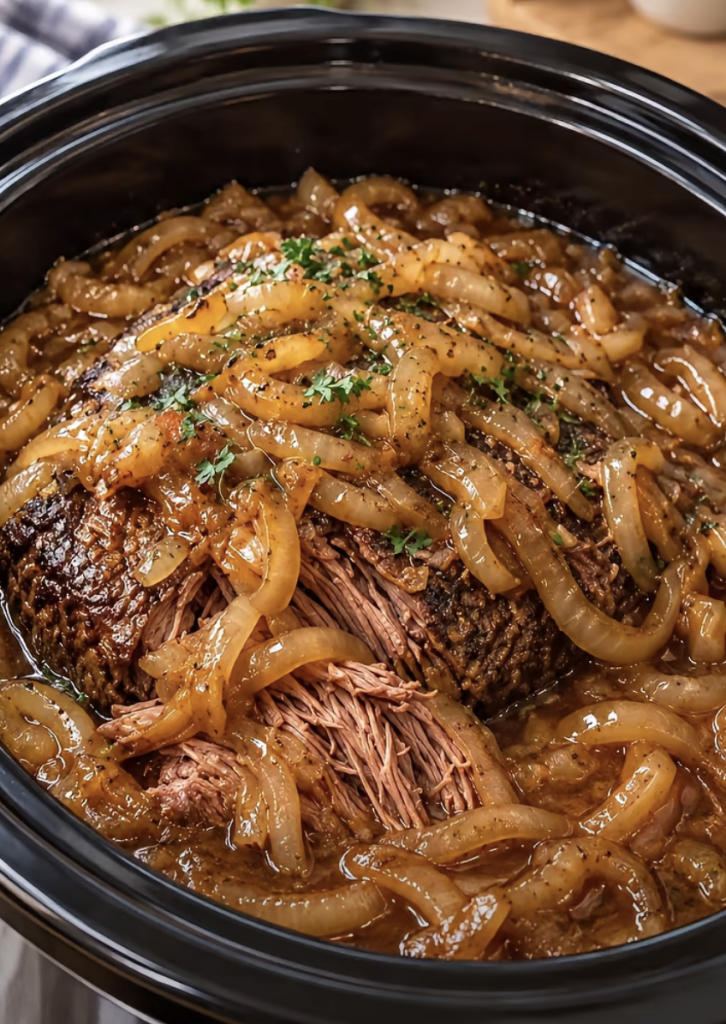
Fork-tender beef swimming in a glossy, onion-sweet gravy is what this slow cooker pot roast is all about. A quick sear in butter and olive oil builds deep, savory flavor, then the cooker takes over, melting heaps of golden onions, garlic, and thyme into a rich sauce while the chuck roast turns spoon-soft (and the whole kitchen smells incredible). Ladle it over creamy mashed potatoes, or tear into rustic bread to catch every last drop.
Why You’ll Love This Recipe
Why Make Slow Cooker French Onion Pot Roast?
Some dinners earn their spot in the rotation by being both effortless and unforgettable, and this Slow Cooker French Onion Pot Roast So Tender It Melts is one of them. Here’s what sets it apart.
- Sear-Built Flavor : Browning the chuck in butter and olive oil creates a deep, caramelized crust that gives the gravy a savory backbone slow cooking alone can’t deliver.
- Melt-Away Texture : Chuck roast is rich in collagen, so eight low, slow hours transform it into spoon-tender strands that shred with the gentlest nudge.
- Onions Do the Work : Three sliced yellow onions soften into sweet, jammy ribbons, and a splash of Worcestershire adds the savory tang that echoes classic French onion soup.
- Glossy Gravy Control : A cold cornstarch slurry stirred in at the end thickens the juices in minutes, with no lumps and no floury aftertaste.
- Hands-Off Weeknight Win : Twenty minutes of prep leaves the cooker in charge, so dinner is ready when everyone walks in, and leftovers keep for three days.
- Bright Finishing Touch : A sprinkle of fresh parsley cuts through the richness and makes every plate look as good as it tastes.
The Ingredients That Make It Work
A great pot roast starts with choosing the right ingredients, and each one in this Slow Cooker French Onion Pot Roast has a clear job, from building flavor to creating that spoon-tender texture. Here’s what each one does and how to get the best results.
The Star of the Show
- Boneless beef chuck roast (3-4 lb, fully thawed) : Chuck is well marbled and rich in collagen, which breaks down during long, slow cooking into tender, juicy beef. Thaw it completely in the fridge first so it sears evenly and cooks through, and pat it dry before browning. If chuck isn’t available, a bottom round or brisket flat works, though the texture will be slightly leaner.
The Flavor Base
- Yellow onions (3 large, thinly sliced) : Yellow onions have the ideal balance of sweetness and bite, softening into jammy ribbons that flavor the whole gravy. Slice them evenly, about ¼ inch thick, so they cook down at the same rate. Sweet onions work too, but the gravy will taste noticeably sweeter.
- Garlic (4 cloves, minced) : Fresh garlic adds a mellow, savory depth that deepens over the long cook. Mince it just before using for the most aroma, and skip the jarred kind if you can, since it can taste flat or slightly sour.
- Olive oil (2 tablespoons) : Oil handles the high heat of searing and keeps the butter from scorching. Regular olive oil is the better pick here, because extra-virgin can turn bitter at high temperatures. Avocado oil is a fine swap.
- Butter (2 tablespoons) : Butter brings a nutty richness and helps the roast brown to a deep mahogany. Unsalted gives you better control over the final seasoning, but salted works if you go lighter on the added salt.
The Braising Liquid and Seasonings
- Low-sodium beef broth (1½ cups) : This is the base of the gravy, so choose a good-quality broth with a deep, savory flavor. Low-sodium matters because the sauce concentrates as it cooks, and it lets you season to taste at the end. Beef stock or bone broth makes a richer substitute.
- Worcestershire sauce (1 tablespoon) : Worcestershire adds tangy, umami-rich depth that mimics the savory punch of classic French onion soup. It usually contains anchovies, so check the label if you’re cooking for vegetarians. In a pinch, soy sauce with a few drops of vinegar comes close.
- Dried thyme (1 teaspoon) : Thyme’s earthy, slightly floral flavor pairs naturally with beef and onions. Crush it between your fingers before adding it to wake up the oils. If you’re using fresh, swap in about 1 tablespoon of leaves.
- Salt (1 teaspoon, plus more to taste) : Salt sharpens every other flavor in the pot. Kosher salt is easier to measure and distribute, but taste the gravy at the end and adjust, since slow cooking changes how seasoning comes across.
- Black pepper (½ teaspoon) : Pepper adds gentle warmth and a subtle bite that balances the sweetness of the onions. Freshly ground has a more vibrant, aromatic kick than pre-ground.
The Gravy and Finishing Touches
- Cornstarch (2 tablespoons) : Cornstarch thickens the cooking juices into a glossy, silky gravy without the pasty taste of raw flour, and it’s naturally gluten-free. Arrowroot works as a 1:1 substitute if you have it on hand.
- Cold water (2 tablespoons) : Whisking cornstarch into cold water first prevents clumps and helps it blend smoothly into the hot liquid. Always use cold, never warm, and stir the slurry again just before pouring it in. Then give the gravy about 10-15 minutes on high to fully thicken.
- Fresh parsley (1 tablespoon, chopped) : Parsley adds a pop of color and a clean, grassy brightness that cuts through the richness of the beef and gravy. Flat-leaf (Italian) parsley has the best flavor, and a sprinkle of chives makes a good alternative.
Step-by-Step Instructions
- Pat the thawed chuck roast completely dry with paper towels, then season all sides with the salt and black pepper. Dry meat browns better, so don’t skip this step.
- Heat the olive oil and butter in a large skillet over medium-high heat until the butter foams, then sear the roast for 3-4 minutes per side. You’re looking for a deep mahogany crust, and I never rush this step because it builds so much of the gravy’s flavor.
- Scatter the sliced onions and minced garlic across the bottom of the slow cooker, then sprinkle in the dried thyme, crushing it between your fingers first. Nestle the seared roast on top of the onions.
- Pour about ½ cup of the beef broth into the hot skillet and scrape up the browned bits for about 1 minute. Pour this into the slow cooker along with the remaining broth and the Worcestershire sauce.
- Cover and cook on LOW for 8 hours, until the roast pulls apart with a gentle nudge from a fork. Resist lifting the lid, since every peek lets out heat and adds to the cooking time.
- Move the roast to a plate and tent it loosely with foil. Whisk the cornstarch into the cold water until smooth, stir it into the juices, then cook on HIGH for 10-15 minutes until the gravy coats the back of a spoon. It’s normal if the sauce looks thin at first, since it thickens as it heats and again as it rests.
- Return the roast to the slow cooker and spoon the onion gravy over the top. I always taste the gravy here and add a pinch more salt if it needs it.
- Sprinkle with the chopped parsley and serve hot over mashed potatoes or alongside rustic bread. The roast will be tender enough to break apart as you lift it, so use a large spoon.
Pro Tip: If the gravy turns out thicker than you like, stir in a splash of warm beef broth, 1 tablespoon at a time, until it reaches a pourable, glossy consistency.
Remember: Always stir the cornstarch slurry again right before adding it, since the starch settles quickly and can clump if left standing.
Variations & Substitutions
This pot roast is forgiving, so feel free to adjust it to your pantry, your diet, or your mood. These tweaks keep the tender beef and glossy onion gravy intact.
- Add red wine : I swap ½ cup of the broth for dry red wine when deglazing, simmering it briefly to deepen the gravy’s flavor.
- Keep it gluten-free : Cornstarch and chuck are naturally gluten-free, so just confirm your Worcestershire and broth labels, since some brands contain malt vinegar or added wheat.
- Make it dairy-free : Replace the butter with 2 more tablespoons of avocado oil, which handles high heat well, and the crust still browns beautifully.
- Stir in carrots : Tuck 1 pound of thick carrot chunks around the roast before cooking. They turn sweet and tender, making it a one-pot meal.
- Try cheesy toasts : Broil Gruyère-topped baguette slices until bubbly, then serve them alongside or float them on the gravy for a French onion soup finish.
- Use the oven : No slow cooker? I braise it covered in a Dutch oven at 300°F for 3½ to 4 hours, then thicken the gravy on the stovetop .
Make Ahead Options
This Slow Cooker French Onion Pot Roast is a meal prep dream, since you can prepare ahead and trim your morning routine to minutes. Slice the onions and mince the garlic up to 24 hours in advance, then refrigerate them in airtight containers (keep the roast separate so it sears evenly). When you’re ready, sear the roast, layer in your prepped ingredients, and start the cooker. Prefer to cook it all ahead? Refrigerate the finished roast in its gravy for up to 3 days , then reheat gently on LOW with a splash of broth, and it’ll be just as delicious.
Tips for the Best Slow Cooker French Onion Pot Roast So Tender It Melts
- Pat It Bone-Dry : Moisture on the thawed chuck steams instead of sears, so blot every side with paper towels before it touches the foaming butter and oil.
- Cut Oversized Roasts : If a 4 lb chuck crowds your skillet , halve it along the natural seams so each piece gets full contact and a deeper crust.
- Slice Onions Evenly : Aim for ¼-inch slices so the onions melt into jammy ribbons at the same pace, with no crunchy bits or scorched edges.
- Deglaze the Skillet : I pour in a little broth and scrape up every browned bit, because that fond carries the roasted flavor straight into the gravy.
- Skim Before Thickening : Chuck releases fat as it cooks, so spoon off the shiny layer from the juices before adding the slurry for a cleaner, silkier gravy.
- Season at the End : I use low-sodium broth, so I wait until the gravy thickens to taste, then add salt a pinch at a time.
Perfect Pairings & Serving Ideas
- Plate it in wide, shallow bowls over something creamy. Spoon a generous mound of mashed potatoes into the bowl, make a small well, and lift in big chunks of beef with a large spoon, since this Slow Cooker French Onion Pot Roast will break apart as you move it. Ladle the jammy onions and gravy over the top, then finish with the chopped parsley for a fresh, green contrast. I keep a little extra gravy in a small pitcher at the table, so everyone can add more without drowning the potatoes.
- Add a crusty, sop-up element. Rustic bread is the classic partner, but for a nod to French onion soup, I toast baguette slices, top them with Gruyère, and broil until bubbly. They’re perfect for dragging through the gravy. Buttered egg noodles or creamy polenta also work well if you want a change from potatoes, because both hold the sauce nicely.
- Balance the richness with something bright. The beef, butter, and sweet onions are deeply savory, so a sharp, acidic side keeps every bite lively. I like a peppery arugula salad with lemon vinaigrette and shaved Parmesan, or green beans tossed with lemon zest. Roasted carrots or broccoli add a little caramelized char and fresh color.
- Match the drink to the mood. A medium-bodied red like Côtes du Rhône, Pinot Noir, or a softer Cabernet complements the thyme and Worcestershire without overpowering the onions. For a no-alcohol option, sparkling water with lemon or a tart cherry spritzer cuts through the gravy. This recipe serves 6-8, so it suits a cozy Sunday supper or a casual dinner party, and you can hold it on the WARM setting for an hour or so, thinning the gravy with a splash of warm broth if it tightens.
Storage & Freezing
- Refrigerate in the gravy: Let the roast cool for no more than 2 hours, then pack it into an airtight container with plenty of onion gravy spooned over the top, and it will keep for up to 3 days. The gravy keeps the beef from drying out, so don’t drain it. This Slow Cooker French Onion Pot Roast is made with chuck, so expect a layer of fat to firm up on the surface and the gravy to set to a jelly-like texture, both of which are normal. I lift off the fat before reheating for a cleaner sauce. Cutting a large roast into chunks first helps it chill faster and more safely.
- Freeze in portions, and keep the parsley and potatoes out: Freeze the beef and gravy together in freezer-safe containers or zip-top bags, leaving about an inch of headspace for expansion, for up to 3 months. Press out the air and lay the bags flat so they freeze quickly and thaw evenly. The onions will be softer after thawing, and the cornstarch-thickened gravy can look slightly separated, but a good stir brings it back together. Skip freezing the fresh parsley, which turns dark and limp, and freeze any mashed potatoes separately. I add fresh parsley after reheating so the dish looks as vibrant as the first night.
- Thaw slowly and reheat gently: Thaw frozen portions overnight in the refrigerator , then warm the roast and gravy in a covered saucepan over low heat, or in a 300°F oven , until it reaches 165°F. Avoid high heat, which toughens the beef and can make the gravy thick or gluey. If the sauce has tightened up, stir in warm beef broth 1 tablespoon at a time until it turns glossy again, then taste and add a pinch of salt, since chilling can mute the seasoning. A microwave works in a pinch if you use medium power, cover the dish, and stir between short bursts.
Frequently Asked Questions
- Can I use a frozen roast in this Slow Cooker French Onion Pot Roast? No, thaw it fully so it sears evenly.
- Why does my gravy look thin at first? It thickens after the cornstarch and a short rest.
- How long do leftovers keep? I refrigerate them in the gravy for 3 days.
- Can I swap the chuck roast? Yes, bottom round works, though it’s leaner.
- 0 Facebook
- 4 Pinterest
- 2 Email
- Copy Link
- 6 shares
Slow Cooker French Onion Pot Roast So Tender It Melts
Ingredients
Instructions
Pat the thawed chuck roast completely dry with paper towels, then season all sides with the salt and black pepper. Dry meat browns better, so don’t skip this step.
Heat the olive oil and butter in a large skillet over medium-high heat until the butter foams, then sear the roast for 3-4 minutes per side until a deep mahogany crust forms.
Scatter the sliced onions and minced garlic across the bottom of the slow cooker, then sprinkle in the dried thyme, crushing it between your fingers first. Nestle the seared roast on top of the onions.
Pour about ½ cup of the beef broth into the hot skillet and scrape up the browned bits for about 1 minute, then pour this into the slow cooker along with the remaining broth and the Worcestershire sauce.
Cover and cook on LOW for 8 hours, until the roast pulls apart with a gentle nudge from a fork. Avoid lifting the lid during cooking.
Move the roast to a plate and tent loosely with foil. Whisk the cornstarch into the cold water until smooth, stir it into the juices, then cook on HIGH for 10-15 minutes until the gravy coats the back of a spoon.
Return the roast to the slow cooker and spoon the onion gravy over the top. Taste the gravy and add a pinch more salt if needed.
Sprinkle with the chopped parsley and serve hot over mashed potatoes or with rustic bread. The roast will be tender enough to break apart as you lift it, so use a large spoon.
Notes
Tips: Pat It Bone-Dry: Blot every side of the thawed chuck with paper towels so it sears instead of steaming. Cut Oversized Roasts: If a 4 lb chuck crowds your skillet, halve it along natural seams so each piece gets full contact and a deeper crust. Slice Onions Evenly: Aim for ¼-inch slices so the onions melt into jammy ribbons at the same pace. Deglaze the Skillet: Pour a little broth into the hot pan and scrape up all the fond to carry roasted flavor into the gravy. Skim Before Thickening: Spoon off excess fat from the juices before adding the slurry for a cleaner gravy. Season at the End: Use low-sodium broth and wait until the gravy thickens to adjust salt a pinch at a time.
Pat It Bone-Dry: Blot every side of the thawed chuck with paper towels so it sears instead of steaming.
Cut Oversized Roasts: If a 4 lb chuck crowds your skillet, halve it along natural seams so each piece gets full contact and a deeper crust.
Slice Onions Evenly: Aim for ¼-inch slices so the onions melt into jammy ribbons at the same pace.
Deglaze the Skillet: Pour a little broth into the hot pan and scrape up all the fond to carry roasted flavor into the gravy.
Skim Before Thickening: Spoon off excess fat from the juices before adding the slurry for a cleaner gravy.
Season at the End: Use low-sodium broth and wait until the gravy thickens to adjust salt a pinch at a time.
Storage & Freezing: Refrigerate in the gravy: Cool no more than 2 hours, pack roast and plenty of onion gravy into an airtight container, and refrigerate up to 3 days. A layer of fat may firm on top; lift it off before reheating if desired. Freeze in portions: Freeze beef and gravy together in freezer-safe containers or bags with an inch headspace for up to 3 months. Lay bags flat to freeze quickly. Skip freezing fresh parsley and mashed potatoes; add parsley after reheating. Thaw and reheat: Thaw overnight in the fridge, then warm gently in a covered saucepan over low heat or a 300°F oven until 165°F. If the gravy tightens, stir in warm beef broth 1 tablespoon at a time until glossy, then taste and adjust salt.
Refrigerate in the gravy: Cool no more than 2 hours, pack roast and plenty of onion gravy into an airtight container, and refrigerate up to 3 days. A layer of fat may firm on top; lift it off before reheating if desired.
Freeze in portions: Freeze beef and gravy together in freezer-safe containers or bags with an inch headspace for up to 3 months. Lay bags flat to freeze quickly. Skip freezing fresh parsley and mashed potatoes; add parsley after reheating.
Thaw and reheat: Thaw overnight in the fridge, then warm gently in a covered saucepan over low heat or a 300°F oven until 165°F. If the gravy tightens, stir in warm beef broth 1 tablespoon at a time until glossy, then taste and adjust salt.
Pro Tip: Stir the cornstarch slurry right before adding it, since the starch settles quickly and can clump if left standing. If the gravy becomes too thick after thickening, stir in warm beef broth 1 tablespoon at a time until it reaches a pourable, glossy consistency.