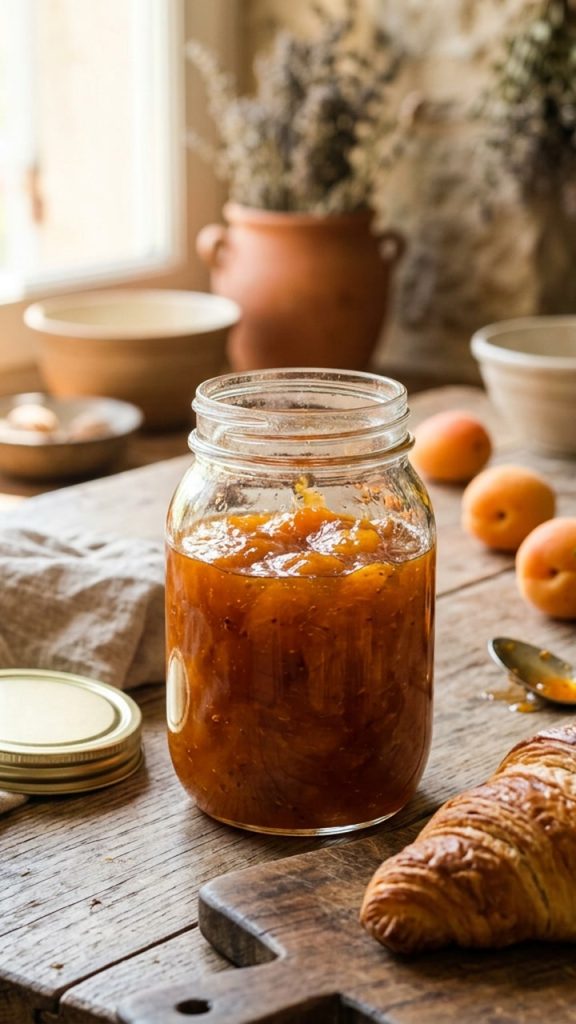
Rustic apricot jam keeps some of the fruit in soft pieces, with a little tang from fresh lemon juice. This recipe is for anyone who wants a cooked fruit preserve made with ripe apricots, granulated sugar and lemon, without added pectin.
Save this recipe for later:
Ingredients for rustic apricot jam
- 3 lb ripe apricots, pitted and chopped (about 8 cups)
- 3 cups granulated sugar
- 1/4 cup fresh lemon juice
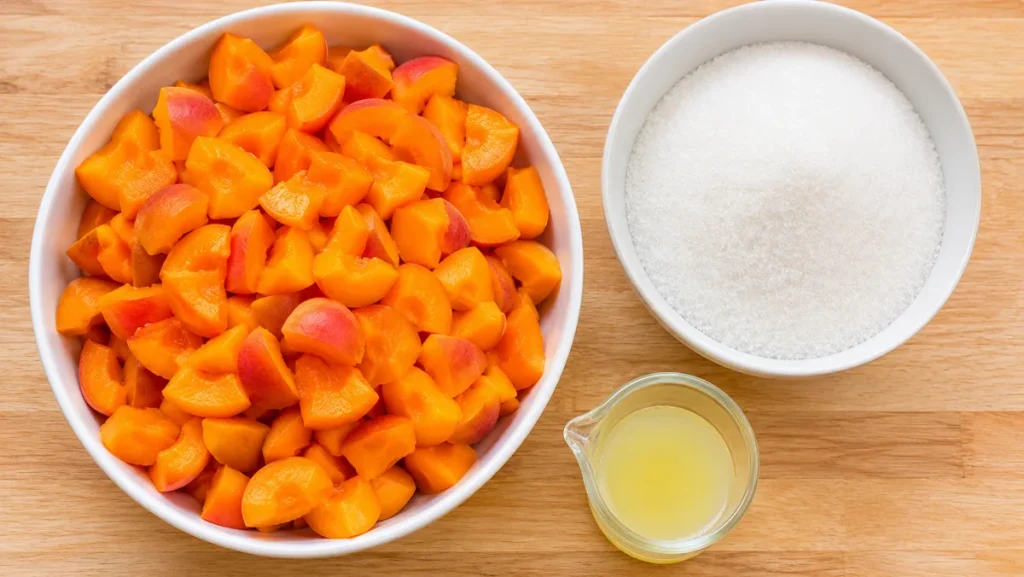
Leave the apricot skins on. They soften as the fruit cooks and contribute color and body to the finished jam. Pit and chop the apricots, keeping the skins with the fruit, then combine everything in a wide heavy pot.
The ingredient list is short, so keep the measured amounts together as written. The lemon juice belongs in the pot with the apricots and sugar from the beginning. There is no separate pectin mixture to prepare or add later.
Give the fruit its standing time
Before turning on the heat, let the combined ingredients stand for 1 hour, stirring once. This standing period is part of the method, so allow for it when planning your jam session. Put 2 small plates in the freezer during this stage so they are ready when you need to check the set.
A wide heavy pot is the cookware specified here. As the fruit cooks down, stir across the bottom and through the fruit rather than moving only the liquid at the surface. The recipe calls for more frequent stirring as the mixture thickens, when it needs closer attention.
Keep some apricot pieces in the pot
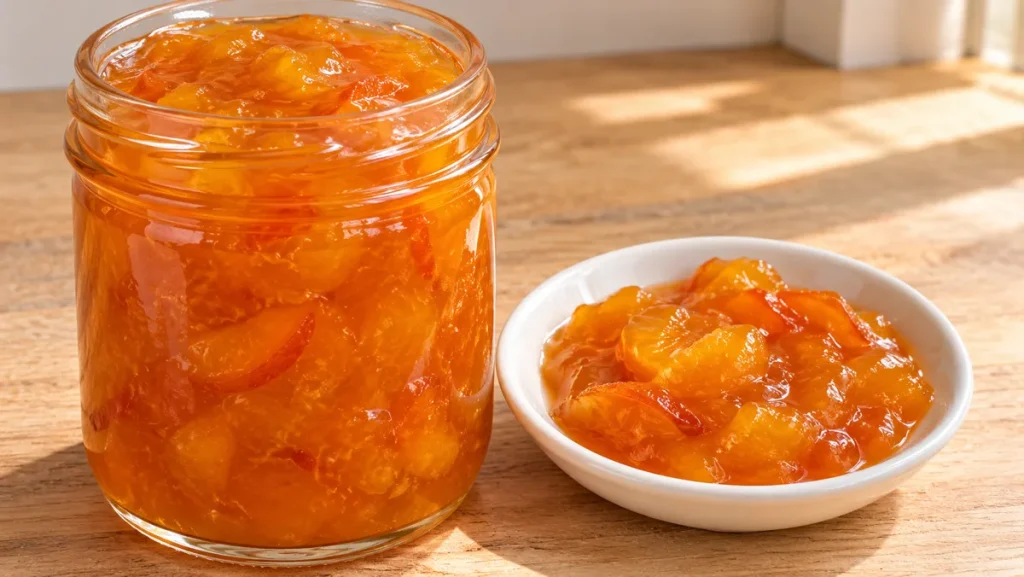
Mash some of the fruit while it boils. You can leave other pieces to soften in the cooking jam, giving the preserve its rustic texture. There is no blending or straining step, and the softened skins stay in the mixture.
Use the cooking window as a guide, then check the actual set. A thick-looking spoonful alone is harder to judge while the jam is hot. The recipe gives a temperature endpoint and a frozen-plate test, so you have a specific way to decide when to stop cooking.
Cook, check and fill the jars
- Combine the apricots, sugar and lemon juice in a wide heavy pot. Let stand for 1 hour, stirring once. Put 2 small plates in the freezer.
- Bring to a boil over medium high heat. Cook for 25 to 35 minutes, stirring often and stirring more as the jam thickens. Mash some of the fruit as you go.
- Cook until the jam reaches 220°F, or until a spoonful placed on a frozen plate wrinkles after 1 minute. Remove the pot from the heat and skim.
- Ladle the jam into hot half pint jars, leaving 1/4 inch headspace. Wipe the rims, then add the lids and bands.
- Process in a boiling water canner for 10 minutes, adding 5 minutes above 1,000 feet. The recipe makes about 5 half pints.
The Foodie Yummy Cookbook
12 reader-favorite recipes in one printable PDF. Enter your email and download it instantly.
Watch the set before you finish
For the plate test, give the spoonful its full 1 minute on the frozen plate before checking for a wrinkle. That pause is part of the test. Checking immediately means you are judging the jam before the specified cooling interval has passed.
If the spoonful does not wrinkle, the plate test has not yet shown the endpoint described in the recipe. Continue cooking and checking the set, keeping up with the stirring as the mixture becomes thicker. If you use the temperature endpoint, the stated target is 220°F.
Once the jam reaches its endpoint, remove it from the heat and skim before filling. Keep the filling steps in order: use hot jars, leave the specified headspace, wipe the rims, and add lids and bands before processing.
Serving from the finished jars
The finished jam should retain the softened fruit and skins that give this version its texture. When serving, spoon out both the jam and the apricot pieces so each portion reflects that mixture. There is no need to strain away the fruit after cooking.
The recipe states that sealed jars keep for 1 year. Refrigerate opened jars for up to 3 weeks. Keep those separate storage instructions in mind when deciding which jar to open and when to use the remainder.
For another preserve, try our fig gingerbread jam . Serve your apricot jam alongside high protein biscuits , or explore another fruit-based recipe with our holiday fruit nut cake .
Apricot jam questions
Do I measure the apricots by weight or volume?
The ingredient list gives 3 lb of ripe apricots, pitted and chopped, with about 8 cups as the accompanying volume. Keep the word “about” in mind when reading that cup measurement.
Does this recipe include added pectin?
No. The ingredients are apricots, granulated sugar and fresh lemon juice. Follow the cooking and set checks given here without adding a separate pectin ingredient.
Why is the yield approximate?
The source gives a yield of about 5 half pints. Treat that as the stated expected yield, while still leaving 1/4 inch headspace in each jar you fill.
Made it or loved it? Share this recipe
Written and edited by The Foodie Yummy Kitchen Team
The Foodie Yummy Kitchen Team writes and edits the recipes on Foodie Yummy: classic American potluck salads, holiday sides and easy comfort food, with a few low-carb options. Every recipe lists exact quantities, numbered steps and a printable recipe card, plus notes on swaps, storage and make-ahead timing. Spot a problem with a recipe? Tell us through the contact page and we will correct it. About us
Rustic Apricot Jam
Ingredients
Instructions
Combine the apricots, sugar and lemon juice in a wide heavy pot and let stand 1 hour, stirring once. Put 2 small plates in the freezer.
Bring to a boil over medium high heat and cook 25 to 35 minutes, stirring often and more as it thickens, mashing some fruit as you go.
Cook until it reaches 220°F or a spoonful on a frozen plate wrinkles after 1 minute. Remove from the heat and skim.
Ladle into hot half pint jars with 1/4 inch headspace, wipe the rims and add lids and bands.
Process in a boiling water canner for 10 minutes, adding 5 minutes above 1,000 feet. Sealed jars keep 1 year; refrigerate opened jars up to 3 weeks.
Notes
Leave the skins on; they soften as the jam cooks and add color and body.
Stir more often as the jam thickens.
The source allows 1 hour for preparation and cooking, plus 1 hour macerating; the prep time field includes the macerating period.