- 0 Facebook
- 9 Pinterest
- 1 Email
- Copy Link
- 10 shares
The first time I stumbled upon the idea of stuffing okra with cheese was during a sweltering summer visit to my grandmother’s farm in Georgia. We had harvested more okra than we knew what to do with, and after three straight days of traditional fried okra, I was craving something different. While rummaging through her refrigerator , I spotted a block of pepper jack cheese and had what my family now calls my “lightning bolt moment.”
That evening, I carefully slit each okra pod, tucked in thin strips of that spicy cheese, and fried them up using my grandmother’s cast-iron skillet and cornmeal coating. The look on her face when the cheese oozed out with that first bite was priceless – surprise quickly melting into pure delight.
What Makes Pepper Jack Cheese Stuffed Fried Okra Special
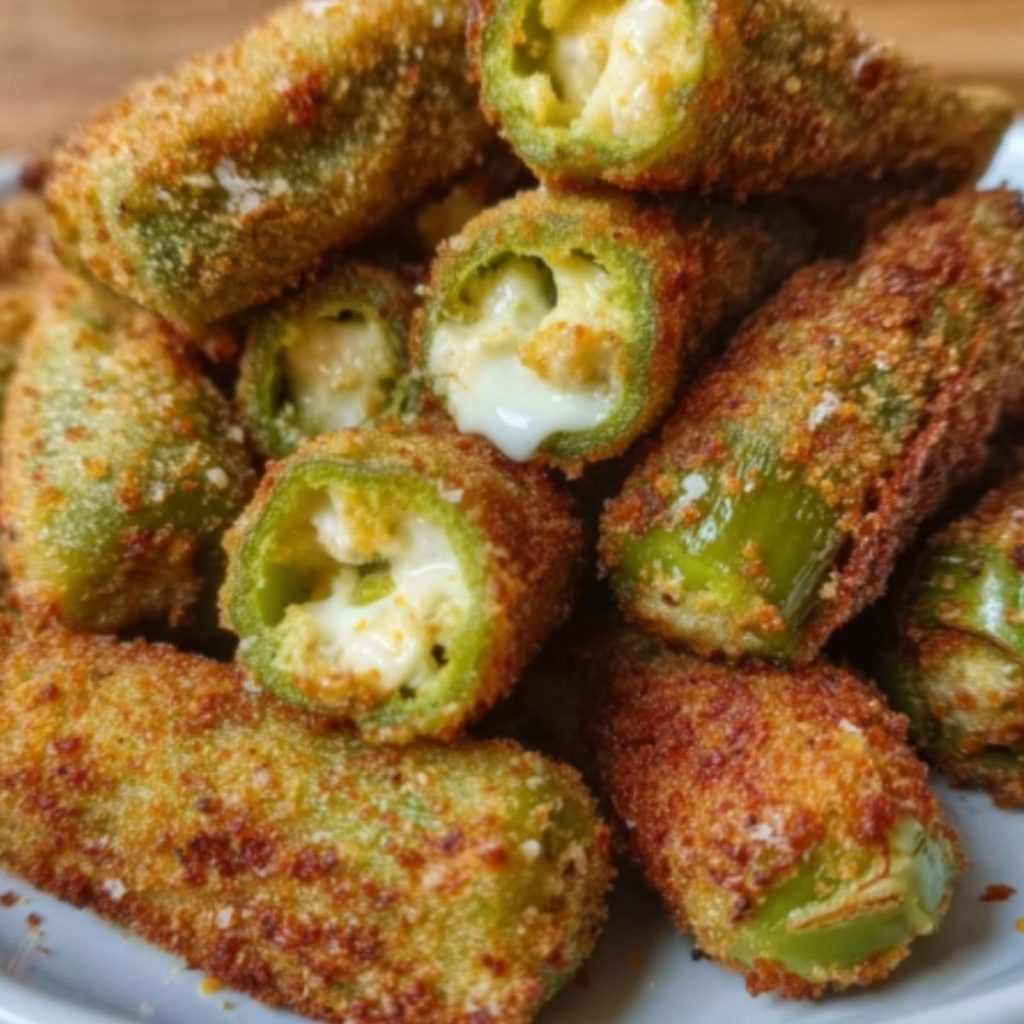
- I’ve discovered that the magic of this recipe lies in the perfect contrast between textures—the crispy cornmeal exterior gives way to tender okra and molten pepper jack cheese in a single bite, creating a sensory experience that ordinary fried okra simply can’t match.
- I always use buttermilk in my batter because its natural acidity works to break down the compounds responsible for okra’s notorious sliminess while also ensuring the coating adheres perfectly to each pod.
- I’ve found that the combination of cornmeal and flour creates a scientifically ideal crust—the cornmeal provides that essential Southern crunch, while the flour helps bind everything together, preventing the coating from falling off during frying.
- I love how the mild, grassy flavor of fresh okra provides the perfect canvas for the bold, spicy notes of pepper jack cheese—this pairing creates a flavor harmony that elevates both ingredients.
- I’ve incorporated smoked paprika into the coating because it adds a subtle depth that complements the char from frying and enhances the cheese’s complexity without overwhelming the dish.
- I serve these versatile bites both piping hot as a dinner side and at room temperature as party appetizers—they maintain their textural integrity either way, making them perfect for any occasion.
- I believe this recipe bridges the gap between beginner-friendly and restaurant-quality—the technique is straightforward enough for novice cooks but yields results that even culinary professionals would proudly serve.
Ingredients Notes
- Fresh okra pods : I always select firm, bright green pods under 4 inches long—they’re less fibrous and perfectly tender when fried. Look for velvety surfaces without brown spots, which indicate freshness and ensure the best texture.
- Pepper jack cheese : I prefer blocks over pre-shredded for superior melting properties. The peppers in this cheese provide gentle heat that blooms beautifully when heated, creating pockets of creamy spice throughout the dish.
- Buttermilk : I consider this my secret weapon—its acidity tenderizes the okra while helping the coating adhere perfectly. In a pinch, I make my own with milk and vinegar, letting it rest 10 minutes before using.
- Cornmeal : I use stone-ground medium-grind cornmeal for authentic Southern texture. It creates that distinctive crunch that’s impossible to achieve with flour alone, while adding subtle sweetness that balances the spicy cheese.
- All-purpose flour : I find this essential for binding the cornmeal to the okra. The proteins in flour create structure when they contact moisture, ensuring your coating stays intact during the hot oil bath.
- Garlic powder : I choose powder over fresh garlic as it distributes evenly throughout the coating. It adds savory depth without moisture that would cause dangerous oil splatter during frying.
- Smoked paprika : I never substitute regular paprika here—the smokiness amplifies the Southern charm of this dish. Look for bright red, aromatic powder from Spain for the most complex flavor profile.
- Salt and black pepper : I always season each layer—the buttermilk soak and the coating—not just the finished dish. Freshly ground black pepper makes a noticeable difference in brightness and aromatic quality.
- Vegetable oil : I use peanut oil when available for its high smoke point and subtle nutty flavor. The key is maintaining 350°F throughout frying—I always use a thermometer rather than guessing.
How to Make Pepper Jack Cheese Stuffed Fried Okra
Preparation
- Wash the okra pods thoroughly under cool running water, then pat completely dry with paper towels. Any residual moisture will create steam during frying, compromising the crispy exterior.
- Working with one pod at a time, trim the stem end, leaving just enough stem to hold onto (about ¼ inch). Using a small, sharp paring knife , carefully make a slit lengthwise down one side of each pod, stopping about ¼ inch from both ends. The slit should be deep enough to create a pocket but not cut through to the other side.
- Cut the pepper jack cheese into thin strips approximately the length of your okra pods and about ¼ inch thick. You’ll need enough strips to stuff all 20 pods. The cheese should fit snugly inside the okra without protruding.
- Pour the buttermilk into a shallow bowl. If using the milk and vinegar substitute, combine them and let stand for 10 minutes until slightly thickened and curdled.
- In a separate shallow bowl or pie plate, whisk together the cornmeal, flour, garlic powder, smoked paprika, 1 teaspoon salt, and ½ teaspoon black pepper until uniformly combined. The mixture should have a sandy texture with no visible clumps of spices.
Stuffing and Coating
- Gently open the slit in each okra pod and insert a strip of pepper jack cheese, ensuring it’s fully contained within the pod. The okra should close naturally around the cheese.
- Working in batches of 4-5 pods, dip the stuffed okra into the buttermilk, ensuring complete coverage. Allow excess liquid to drip off for a few seconds.
- Transfer the wet okra to the cornmeal mixture, rolling to coat completely. Use your fingers to press the coating gently onto the pods, especially around the slit where the cheese is inserted. The coating should feel dry and granular to the touch.
- Place the coated okra on a wire rack set over a baking sheet, allowing them to rest for 5 minutes. This resting period helps the coating adhere properly during frying.
Frying
- In a heavy-bottomed pot or deep cast-iron skillet , heat 2-3 inches of vegetable oil to 350°F (use a thermometer for accuracy). The oil should be shimmering but not smoking.
- Carefully lower 5-6 coated okra pods into the hot oil using a slotted spoon or spider strainer. The oil should bubble vigorously around each pod. If it doesn’t, your oil isn’t hot enough.
- Fry for 2-3 minutes, turning occasionally with the slotted spoon, until the coating turns a rich golden brown and develops a noticeable crunch when tapped with the spoon.
- Monitor closely—if you see any cheese start to bubble out of the slit, remove that pod immediately to prevent burning or further leakage.
Finishing
- Using a slotted spoon, transfer the fried okra to a paper towel-lined plate or another wire rack. The exterior should be crisp and the pods should feel light for their size.
- Sprinkle with additional salt while still hot. You should be able to smell the aromatic blend of corn, spices, and toasted cheese.
- Allow to cool for 1-2 minutes before serving. When broken open, the cheese should stretch in long, melty strands, and the okra inside should be tender but not mushy.
- Serve immediately while hot and crispy. The contrast between the crunchy exterior and the molten cheese center is at its peak when freshly made.
- Let any used oil cool completely, then strain and store for reuse, or dispose of properly—never pour it down the drain.
5 Expert Tips for Perfect Pepper Jack Cheese Stuffed Fried Okra
- I freeze cheese strips for 15 minutes before stuffing—this prevents premature melting during frying and gives you that perfect ooze when bitten, not while cooking.
- Use the “one-hand wet, one-hand dry” technique when coating okra—keeping one hand for buttermilk and the other for cornmeal mixture prevents the dreaded “breading fingers” that clump your coating.
- Test oil temperature by dropping a pinch of cornmeal—it should sizzle immediately and float to the surface. Maintain 350°F between batches for consistent results.
- For extra insurance against cheese leakage, seal the slit by pinching cornmeal coating along the opening—this creates a natural barrier during frying.
- Make the cornmeal mixture in two batches. The first batch inevitably gets clumpy from buttermilk residue. Fresh coating for your second half ensures every piece has that picture-perfect crunch.
Storage Tips for Pepper Jack Cheese Stuffed Fried Okra
- Cool completely before storing. Place leftover okra in a single layer on a wire rack for 15 minutes—this prevents condensation that would make your coating soggy.
- Refrigerate in an airtight container lined with paper towels for up to 2 days. Separate layers with additional paper towels to absorb moisture and preserve crispness.
- For freezing, place cooled okra in a single layer on a baking sheet until solid (about 2 hours), then transfer to a freezer bag with parchment between layers. Stores for 1 month.
- Reheat refrigerated okra in a 375°F oven for 7-10 minutes on a wire rack over a baking sheet. Avoid microwave reheating—it creates steam that ruins the crispy coating.
- Reheat frozen okra directly from freezer (no thawing) in a 400°F oven for 10-12 minutes. The higher temperature quickly reheats while restoring crispness to the exterior.
- Discard any stuffed okra left at room temperature for more than 2 hours—the cheese filling makes this dish particularly vulnerable to bacterial growth.
Variations and Substitutions for Pepper Jack Cheese Stuffed Fried Okra
• Dairy-Free Option : Substitute pepper jack cheese with dairy-free cheese shreds mixed with 1/4 teaspoon of cayenne pepper. Violife and Daiya brands melt particularly well, maintaining that crucial gooey texture.
• Gluten-Free Adaptation : Replace all-purpose flour with rice flour or a gluten-free 1:1 baking blend. The cornmeal is naturally gluten-free, but verify it’s processed in a gluten-free facility.
• Air Fryer Method : Spray coated okra with olive oil and air fry at 400°F for 8-10 minutes, turning halfway. This reduces oil by 75% while still achieving a satisfyingly crispy exterior.
• Cheese Variations : Try smoked gouda for earthiness, sharp cheddar for tanginess, or cream cheese mixed with chopped jalapeños for a creamy kick that stays contained during frying.
• Spice Customization : Add 1/4 teaspoon cayenne for extra heat, 1/2 teaspoon cumin for earthiness, or 1 teaspoon ranch seasoning for a crowd-pleasing twist that complements the pepper jack.
• Southern Twist : Replace buttermilk with hot sauce-spiked buttermilk (2 tablespoons hot sauce per cup) for Nashville hot-inspired fried okra that balances beautifully with the creamy cheese.
• Veggie Alternatives : Use small zucchini or thick green beans when okra isn’t in season. Cut zucchini into 3-inch lengths, hollow slightly, then stuff using the same technique.
• Keto-Friendly : Substitute cornmeal and flour with a mixture of almond flour and crushed pork rinds (1:1 ratio). This creates a surprisingly crispy coating with minimal carbs.
What to Serve with Pepper Jack Cheese Stuffed Fried Okra
- Honey-Lime Dipping Sauce : The sweet-tart combination cuts through the richness of fried okra while complementing the peppery cheese. The acidity refreshes your palate between each crispy, cheesy bite.
- Slow-Cooked Collard Greens : These traditional Southern greens provide earthy depth and slight bitterness that balances the indulgent, cheesy okra. Their tender texture contrasts beautifully with the crispy coating.
- Chilled Tomato-Cucumber Salad : The cool, crisp vegetables offer refreshing relief from the spicy cheese and hot fried exterior. A light vinegar dressing provides palate-cleansing acidity between bites.
- Skillet Cornbread : Its slightly sweet, crumbly texture complements the crispy okra while absorbing any escaping cheese. The corn flavors in both dishes create a harmonious Southern pairing.
- Grilled Lemon Chicken : The bright citrus notes and lean protein balance the richness of the fried okra. Chicken’s mild flavor won’t compete with the star appetizer but rounds out the meal perfectly.
- Creole Remoulade : This tangy, slightly spicy sauce provides cooling creaminess against the hot fried coating while its complex flavor profile enhances the pepper jack’s heat without overwhelming it.
- Pickled Green Tomatoes : Their bright acidity and firm texture cut through the richness of fried food, while their tangy profile awakens your taste buds between the cheesy, spicy bites.
- Sweet Tea with Mint : The sweetness soothes heat from the pepper jack while the tannins cleanse your palate. A classic Southern beverage that completes the dining experience perfectly.
Frequently Asked Questions About Pepper Jack Cheese Stuffed Fried Okra
Q: How do I prevent the cheese from leaking out during frying? A: Freeze cheese strips for 15 minutes before stuffing and firmly seal slit edges with extra coating.
Q: Can I use frozen okra instead of fresh? A: No. Frozen okra contains too much moisture and won’t maintain structural integrity for stuffing.
Q: How do I keep the breading from falling off? A: Ensure okra is completely dry before coating and let rest 5 minutes after breading.
Q: Can I prepare these in advance? A: Stuff and coat up to 4 hours ahead, refrigerate on wire rack, but fry just before serving.
Q: My okra always turns out slimy. How can I prevent this? A: The acidity in buttermilk and high-heat frying both combat sliminess effectively.
Q: Can I bake these instead of frying? A: Yes. Spray with oil, bake at 425°F for 15 minutes. Texture differs but remains delicious.
Q: What’s the best oil for frying okra? A: Peanut, vegetable, or canola oil—all have high smoke points perfect for 350°F frying.
Q: How do I know when the oil is the right temperature without a thermometer? A: Drop in cornmeal—it should sizzle immediately and float, not sink or burn.
Q: What’s causing my coating to become soggy quickly? A: Overcrowding the frying pan lowers oil temperature. Fry in small batches.
Q: Can I make a milder version for kids? A: Substitute monterey jack or mozzarella cheese and reduce smoked paprika by half.
- 0 Facebook
- 9 Pinterest
- 1 Email
- Copy Link
- 10 shares
Pepper Jack Cheese Stuffed Fried Okra
Ingredients
Instructions
Wash the okra pods thoroughly under cool running water, then pat completely dry with paper towels. Any residual moisture will create steam during frying, compromising the crispy exterior.
Working with one pod at a time, trim the stem end, leaving just enough stem to hold onto (about ¼ inch). Using a small, sharp paring knife, carefully make a slit lengthwise down one side of each pod, stopping about ¼ inch from both ends. The slit should be deep enough to create a pocket but not cut through to the other side.
Cut the pepper jack cheese into thin strips approximately the length of your okra pods and about ¼ inch thick. You’ll need enough strips to stuff all 20 pods. The cheese should fit snugly inside the okra without protruding.
Pour the buttermilk into a shallow bowl. If using the milk and vinegar substitute, combine them and let stand for 10 minutes until slightly thickened and curdled.
In a separate shallow bowl or pie plate, whisk together the cornmeal, flour, garlic powder, smoked paprika, 1 teaspoon salt, and ½ teaspoon black pepper until uniformly combined. The mixture should have a sandy texture with no visible clumps of spices.
Gently open the slit in each okra pod and insert a strip of pepper jack cheese, ensuring it’s fully contained within the pod. The okra should close naturally around the cheese.
Working in batches of 4-5 pods, dip the stuffed okra into the buttermilk, ensuring complete coverage. Allow excess liquid to drip off for a few seconds.
Transfer the wet okra to the cornmeal mixture, rolling to coat completely. Use your fingers to press the coating gently onto the pods, especially around the slit where the cheese is inserted. The coating should feel dry and granular to the touch.
Place the coated okra on a wire rack set over a baking sheet, allowing them to rest for 5 minutes. This resting period helps the coating adhere properly during frying.
In a heavy-bottomed pot or deep cast-iron skillet, heat 2-3 inches of vegetable oil to 350°F (use a thermometer for accuracy). The oil should be shimmering but not smoking.
Carefully lower 5-6 coated okra pods into the hot oil using a slotted spoon or spider strainer. The oil should bubble vigorously around each pod. If it doesn’t, your oil isn’t hot enough.
Fry for 2-3 minutes, turning occasionally with the slotted spoon, until the coating turns a rich golden brown and develops a noticeable crunch when tapped with the spoon.
Monitor closely—if you see any cheese start to bubble out of the slit, remove that pod immediately to prevent burning or further leakage.
Using a slotted spoon, transfer the fried okra to a paper towel-lined plate or another wire rack. The exterior should be crisp and the pods should feel light for their size.
Sprinkle with additional salt while still hot. You should be able to smell the aromatic blend of corn, spices, and toasted cheese.
Allow to cool for 1-2 minutes before serving. When broken open, the cheese should stretch in long, melty strands, and the okra inside should be tender but not mushy.
Serve immediately while hot and crispy. The contrast between the crunchy exterior and the molten cheese center is at its peak when freshly made.
Let any used oil cool completely, then strain and store for reuse, or dispose of properly—never pour it down the drain.