- 0 Facebook
- 49 Pinterest
- 1 Email
- Copy Link
- 50 shares
The scent of caramel and brown sugar wafting through my grandparents’ farmhouse is one of my most cherished childhood memories. Every Sunday after church, my granddaddy would sit at the kitchen table, patiently waiting as my grandmother pulled this magnificent pound cake from the oven . I was barely tall enough to peek over the countertop when she first taught me how to make it, carefully measuring the brown sugar and showing me how to fold in those delicious toffee chips.
Years later, when I moved away for college, this was the first recipe I asked her to write down for me. My first attempt in my tiny apartment kitchen wasn’t quite the same – I forgot the baking powder and wondered why it didn’t rise properly! But after a tearful phone call home and some long-distance guidance, I mastered what has now become my signature dessert at family gatherings.
What Makes This Cake Special
I believe what makes this pound cake truly extraordinary is:
- I’ve discovered that the combination of both light brown sugar AND granulated sugar creates the perfect moisture balance while developing those complex caramel notes that simply can’t be achieved with white sugar alone.
- I’ve learned through countless baking sessions that the five eggs in this recipe aren’t just for binding—they create that signature velvety crumb that distinguishes an authentic Southern pound cake from ordinary cake.
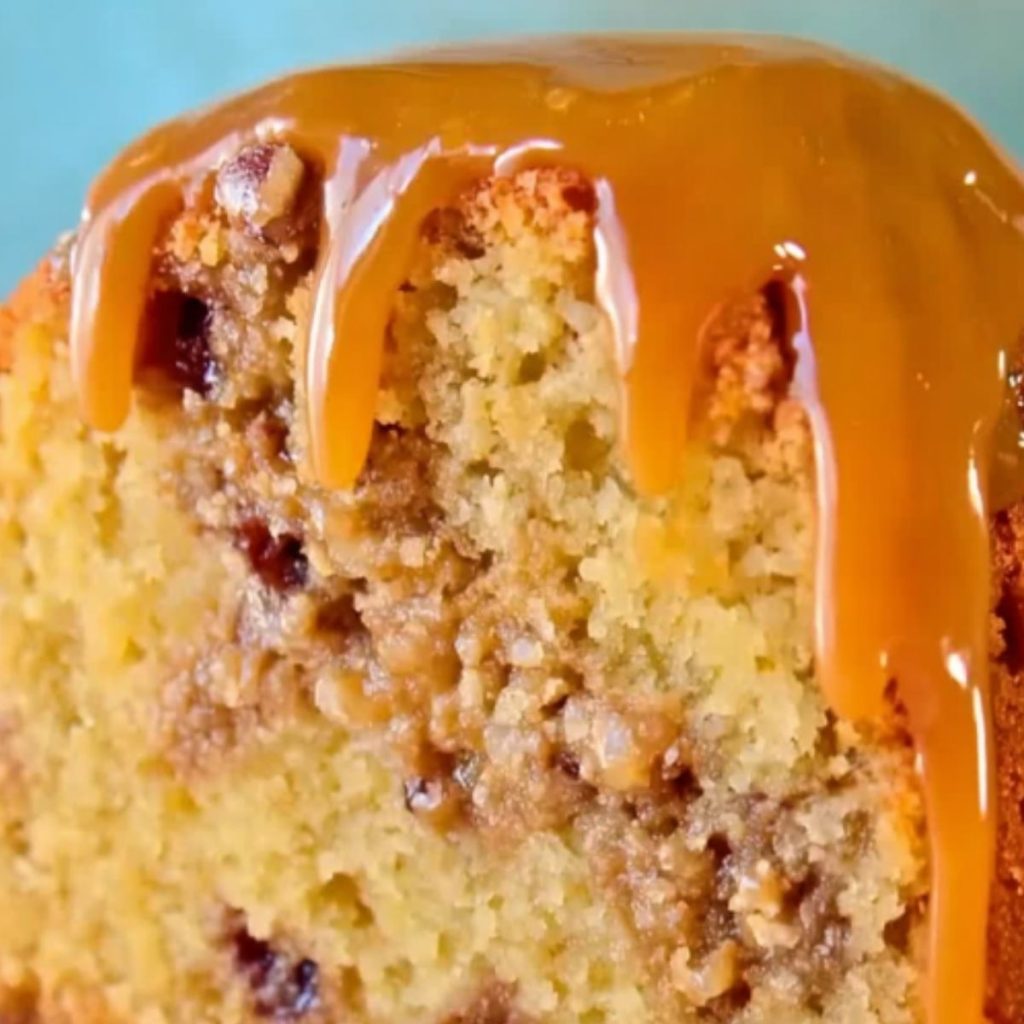
- I’m particularly proud of how the toffee chips melt slightly during baking, creating pockets of buttery caramel throughout the cake that perfectly complement the brown sugar foundation.
- I find the science behind this cake fascinating—the slightly higher fat-to-flour ratio (more butter than typical sponge cakes) creates a cake that stays moist for days, actually improving in flavor as the caramel notes deepen over time.
- I love that while this looks like a showstopper worthy of a professional bakery, the straightforward mixing method makes it approachable for even novice bakers.
- I appreciate how versatile this cake is—serve it warm with the caramel drizzle for a decadent dessert, or chilled for a denser texture that pairs beautifully with afternoon coffee.
- I’ve yet to meet anyone who isn’t impressed by how the sweetened condensed milk in the drizzle creates a foolproof caramel that never crystallizes or hardens, remaining perfectly pourable even days later.
Ingredients Notes
- Butter: I always use unsalted European-style butter for its higher fat content. Room temperature is crucial—I leave it out for exactly one hour before baking for perfect creaming consistency.
- Light Brown Sugar: I find dark brown sugar too overpowering. Light brown provides just enough molasses flavor without overwhelming. Always break up clumps with your fingers before measuring.
- Granulated Sugar: I use this alongside brown sugar to achieve the ideal texture. The sharp crystals cut through butter during creaming, creating those essential air pockets for proper rise.
- Eggs: I use room-temperature eggs—cold eggs deflate your batter! I crack each into a separate bowl first (learned this after fishing shells from batter too many times).
- All-Purpose Flour: I prefer unbleached for its better flavor. Weighing rather than cup-measuring guarantees consistency. Never skip sifting—it prevents those dreaded flour pockets in your finished cake.
- Baking Powder: I always check the expiration date—stale baking powder ruins many cakes. This provides just enough lift without compromising that dense, velvety pound cake texture.
- Salt: I use fine sea salt, which distributes more evenly than kosher. This seemingly small ingredient actually amplifies the caramel notes and prevents the cake from tasting cloyingly sweet.
- Whole Milk: I’ve tried substituting lower-fat options—big mistake! The fat in whole milk is essential for that melt-in-your-mouth richness. Room temperature prevents batter from curdling.
- Toffee Chips: I chop half of mine finer to create flavor throughout, leaving the rest whole for delightful caramel pockets. Store in the freezer to prevent melting when folding into batter.
- Pecans: I always toast mine at 350°F for 8 minutes first—it’s transformative! For guests with nut allergies, I’ve substituted toasted oats with surprisingly delicious results.
- Sweetened Condensed Milk: I’ve learned the hard way—generic brands often separate during heating. Stick with name brands for a silky-smooth drizzle that won’t crystallize over time.
- Brown Sugar (Drizzle): I keep a slice of bread in my brown sugar container to prevent hardening. For the drizzle, I use light brown for color clarity but dark brown for deeper flavor.
- Butter (Drizzle): I use salted butter specifically for the drizzle—that hint of salt creates the perfect sweet-savory balance that elevates this from simple topping to irresistible finishing touch.
- Vanilla Extract: I splurge on Madagascar bourbon vanilla for this recipe. The floral notes complement the caramel perfectly. Never use imitation—the alcohol cooks off, but artificial flavors linger unpleasantly.
How to Make My Granddaddy’s Favorite Brown Sugar Caramel Pound Cake
Preparation
- Preheat your oven to 325°F (165°C). Position the rack in the center of the oven .
- Prepare a 12-cup Bundt pan by thoroughly coating with butter, then dusting with flour. Tap out excess flour. The detailed preparation prevents sticking, which is crucial for a beautiful presentation.
Making the Cake Batter
- In a medium bowl, whisk together the flour, baking powder, and salt until well combined. This even distribution of leavening agents ensures uniform rise.
- In the bowl of a stand mixer fitted with the paddle attachment, beat the softened butter on medium speed until creamy and lightened in color, about 1 minute. The butter should look fluffy and pale yellow.
- Gradually add both sugars to the butter, about ¼ cup at a time, beating well after each addition. Continue beating for 4-5 minutes until the mixture is light and fluffy with a pale caramel color. Don’t rush this step—proper creaming incorporates air that’s essential for the cake’s structure.
- Add eggs one at a time, beating for 30 seconds after each addition. The mixture should look glossy and smooth. If it appears curdled, beat longer until it becomes homogeneous.
- Reduce mixer speed to low. Add the flour mixture in three parts, alternating with the milk in two parts, beginning and ending with flour (flour→milk→flour→milk→flour). Mix just until no streaks of flour remain after each addition. Overmixing at this stage can develop gluten and lead to a tougher crumb.
Adding Mix-ins
- Gently fold in the toffee chips and chopped pecans using a rubber spatula with a light hand. The batter will be thick and glossy with visible chips and nuts distributed throughout.
Baking
- Transfer the batter to the prepared Bundt pan, smoothing the top with a spatula. Tap the pan firmly on the counter 2-3 times to release any large air bubbles.
- Bake for 75-85 minutes, rotating the pan halfway through for even browning, or until a wooden skewer inserted into the center comes out clean with a few moist crumbs. The cake will be deeply golden brown, with a firm top that springs back when lightly touched.
- Allow the cake to cool in the pan for exactly 15 minutes—this timing is crucial. The cake will continue cooking slightly and begin to pull away from the sides.
- Invert the cake onto a wire cooling rack and let it cool completely, about 2 hours. The exterior should feel firm while maintaining a tender crumb inside.
Making the Caramel Drizzle
- In a medium, heavy-bottomed saucepan, combine the sweetened condensed milk and brown sugar. Heat over medium-low heat, stirring constantly with a wooden spoon to prevent scorching.
- Once the sugar has dissolved completely and the mixture begins to bubble gently around the edges (about 5 minutes), continue cooking for 2 more minutes. The caramel should coat the back of a spoon and leave a clean line when you run your finger through it.
- Remove from heat and immediately stir in the butter until melted, then add the vanilla extract. The caramel will be a rich amber color with a silky consistency. Let cool off the heat for 5-10 minutes until slightly thickened but still pourable, stirring occasionally to prevent a skin from forming.
Final Assembly
- Place the cooled cake on a serving platter. Slowly pour the warm caramel drizzle over the top, allowing it to cascade naturally down the sides. The ridges of the Bundt pan will create beautiful dripping patterns.
- For the most impressive presentation, allow the caramel to set slightly, about 20 minutes, before serving. This creates a glossy finish that clings to each slice.
- For the ultimate experience, serve at room temperature where the buttery, caramel flavors are most pronounced. The cake keeps beautifully for up to 5 days in an airtight container.
Expert Tips
- Perfect Bundt Pan Preparation : I never skip greasing every crevice of my Bundt pan with softened butter (not spray), then coating with a thin layer of flour. For extra insurance, refrigerate the coated pan for 5 minutes before filling.
- Master the Creaming Method : I set a timer for exactly 5 minutes when creaming butter and sugars. The mixture should change from dark amber to pale beige. This incorporates crucial air bubbles that create your cake’s perfect texture.
- Prevent Toffee Chip Sinking : Toss toffee chips and pecans in 1 tablespoon from the already measured 3 cups of flour before folding into batter. This light coating suspends them throughout the cake instead of sinking to the bottom without altering the recipe balance.
- Test Doneness Accurately : Start testing 10 minutes before the minimum baking time. Insert wooden skewer in three spots. You want a few moist crumbs, not wet batter or completely clean—that means your cake is overdone.
- Achieve Perfect Drizzle Consistency : Heat caramel to 218°F exactly for the perfect pour-able consistency. Too thin (under 215°F) and it will run off; too thick (over 220°F) and it won’t flow elegantly down the sides.
Storage Tips
- Room Temperature Storage: Store completely cooled cake under a cake dome or in an airtight container for up to 5 days. The toffee bits and caramel actually enhance flavor on days 2-3.
- Refrigeration Method: For longer freshness (up to 10 days), refrigerate in an airtight container with wax paper between caramel-topped slices to prevent sticking. Allow 20 minutes at room temperature before serving for best flavor and texture.
- Freezing Whole Cake: First freeze unwrapped for 2 hours until caramel sets, then wrap tightly in plastic wrap followed by foil. Label with date and freeze for up to 3 months.
- Freezing Individual Slices: Wrap each slice tightly in plastic wrap, then place in freezer bags with air removed. Stack flat for efficient storage and easy single-serving defrosting.
- Proper Thawing: Thaw frozen cake in refrigerator overnight, then unwrap and bring to room temperature for 1-2 hours. This gradual process prevents condensation that would make the cake soggy.
- Reheating for Best Texture: Microwave individual slices for 10-15 seconds to slightly warm. For a special touch, add a fresh drizzle of warm caramel just before serving frozen-then-thawed pieces.
- Caramel Storage: Store leftover caramel drizzle separately in a glass jar in the refrigerator . Use within 1 week for best flavor. Reheat gently in microwave for 10-second intervals, stirring between each, until pourable.
- Preventing Freezer Burn: Double-wrap cake using plastic wrap then foil, pressing out all air. For extra protection, place wrapped cake inside an airtight container before freezing.
Variations and Substitutions
Dietary Adaptations
• Gluten-Free Option: Replace all-purpose flour with a high-quality measure-for-measure gluten-free flour blend. Add ¼ teaspoon xanthan gum if your blend doesn’t include it to maintain the cake’s structure.
• Dairy-Free Alternative: Substitute butter with equal amounts of vegan butter sticks (not spread) and use full-fat coconut milk instead of whole milk. The high fat content preserves the cake’s moisture and richness.
• Egg Substitute: For each egg, combine 1 tablespoon ground flaxseed with 3 tablespoons warm water and let sit for 5 minutes until gelatinous. This works surprisingly well in dense cakes like this one.
• Nut Allergy Solution: Replace pecans with toasted rolled oats or sunflower seeds for crunch without compromising texture. For a completely nut-free version, omit toffee bits (which may contain nuts) and use butterscotch chips instead.
Flavor Variations
• Bourbon Caramel: Add 2 tablespoons of bourbon to the caramel drizzle and 1 tablespoon to the cake batter. The alcohol cooks off, leaving a deep, smoky complexity that elevates the caramel notes.
• Chocolate Marble: Divide batter in half; add ¼ cup cocoa powder to one portion. Layer in pan, then swirl with a knife for a striking visual effect that pairs beautifully with the caramel.
• Orange Infusion: Fold in 2 tablespoons orange zest to the batter and substitute 2 tablespoons of the milk with fresh orange juice. The citrus brightness cuts through the rich sweetness.
• Spiced Version: Add 2 teaspoons cinnamon, ½ teaspoon nutmeg, and ¼ teaspoon cardamom to the dry ingredients. This warm spice profile transforms it into a holiday-worthy dessert.
• Maple Twist: Replace ½ cup of the brown sugar with pure maple sugar and add ½ teaspoon maple extract to both batter and drizzle. The earthy sweetness creates a more complex flavor profile.
• Coconut Edition: Substitute half the toffee chips with toasted coconut flakes and add 1 teaspoon coconut extract to the batter. Garnish with toasted coconut for a tropical take.
• Chocolate Caramel: Add ⅓ cup melted and cooled dark chocolate to the caramel drizzle, creating a luscious chocolate caramel that firms up beautifully on the cake.
• Apple Spice: Fold in 1 cup of finely diced dried apples and 1 teaspoon apple pie spice. Reduce baking temperature to 315°F and extend baking time by 5-7 minutes to accommodate the extra moisture.
What to Serve with My Granddaddy’s Favorite Brown Sugar Caramel Pound Cake
Beverages
• Dark Roast Coffee: The bitter complexity of a French or Italian roast creates perfect balance against the cake’s sweetness, while amplifying the caramel’s depth. Serve black or with minimal cream.
• Bourbon Neat: A small pour of quality bourbon (I prefer Woodford Reserve) mirrors the vanilla and caramel notes while providing warming contrast to cut through the richness.
• Chai Tea: The warming spices—cardamom, cinnamon, and clove—harmonize beautifully with brown sugar and caramel while adding aromatic complexity that elevates each bite.
Accompaniments
• Vanilla Bean Ice Cream: The cold, creamy simplicity provides temperature contrast and melts slightly into the cake, creating a custard-like sauce that enhances the caramel drizzle.
• Crème Fraîche Whipped Cream: Tangy crème fraîche folded into lightly sweetened whipped cream offers palate-cleansing acidity that balances the cake’s richness without overwhelming its flavor.
• Salted Caramel Sauce: Drizzle homemade salted caramel alongside the existing drizzle—that extra hit of salt intensifies sweetness while adding sophisticated flavor complexity for adult palates.
Fresh Additions
• Macerated Berries: Fresh raspberries or blackberries tossed with a splash of Grand Marnier provide bright, acidic contrast that cuts through richness while adding seasonal freshness.
• Candied Orange Slices: The citrus oils and slight bitterness from orange zest complement the caramel’s depth while the chewy texture contrasts beautifully with the cake’s softness.
• Brûléed Bananas: Caramelized bananas echo the cake’s caramel notes while adding creamy texture and fruitiness. The burnt sugar edges create delightful flavor complexity.
For Presentation
• Edible Gold Leaf: A few flakes atop the caramel drizzle transform this homestyle cake into an elegant showstopper. The neutral flavor lets the cake shine while adding luxury.
• Chocolate-Dipped Pecans: These add textural crunch, visual interest, and a hint of bitterness from dark chocolate that beautifully balances the cake’s sweetness.
• Spun Sugar Decoration: A delicate crown of amber spun sugar creates impressive height and echoes the caramel flavor profile while adding an ethereal, crisp texture contrast.
Frequently Asked Questions
Preparation Questions
Q: Why is my cake sticking to the Bundt pan? A: Ensure complete butter coverage in every crevice, then dust with flour. Let cool exactly 15 minutes before inverting—not longer.
Q: Can I make this without a stand mixer? A: Yes! Use a hand mixer on medium speed, but increase creaming time by 2 minutes for proper air incorporation.
Q: Can I prepare the cake a day ahead? A: Absolutely! Flavor improves overnight. Make cake and drizzle separately, then assemble 1-2 hours before serving.
Q: Can I halve this recipe? A: Yes, but use a 6-cup Bundt or loaf pan and reduce baking time to 45–55 minutes. Monitor closely for doneness.
Ingredient Questions
Q: Can I reduce the sugar in this recipe? A: Reduce by maximum ¼ cup total. Sugar provides structure—cutting more affects texture and moisture dramatically.
Q: Can I substitute dark brown sugar for light? A: Yes, but expect deeper molasses flavor and darker color. Reduce by 2 tablespoons to prevent overwhelming other flavors.
Q: What if I can’t find toffee chips? A: Substitute butterscotch chips or make homemade toffee bits by crushing Heath bars. In emergencies, use chopped chocolate.
Baking Concerns
Q: How do I know when the cake is perfectly done? A: Insert skewer in multiple spots. Look for moist crumbs—not wet batter or completely clean, which indicates overbaking.
Q: Why did my cake sink in the middle? A: Either underbaked or oven door opened too soon. Check calibration—325°F is crucial for proper structure development.
Q: My cake is too dense. What happened? A: Either inadequate creaming (butter/sugar needs 5 full minutes) or overmixing after flour addition. Follow mixing times precisely.
Caramel Drizzle Troubleshooting
Q: My caramel drizzle is too thin and runs off completely. A: Cook 1-2 minutes longer until it coats spoon thickly. Cool 10 minutes before drizzling for perfect consistency.
Q: How do I prevent the caramel from crystallizing? A: Never scrape sides of pan while cooking. Use clean wooden spoon only. Add 1 teaspoon corn syrup for insurance.
Q: My caramel drizzle hardened before I could pour it. A: Gently reheat with 1-2 teaspoons of cream while stirring constantly until pourable again. Watch closely!
General Questions
Q: Can I freeze leftover cake? A: Freeze individual slices unwrapped for 2 hours, then double-wrap in plastic/foil. Thaw in refrigerator overnight before serving.
Q: Can I use a different pan shape? A: Two 9×5 loaf pans work—reduce baking time to 60-65 minutes. Traditional Bundt provides optimal crust-to-interior ratio.
Q: Is there a way to make this cake less sweet? A: Add ½ teaspoon salt to batter and pinch of flaky salt to caramel. Serve with unsweetened whipped cream.
- 0 Facebook
- 49 Pinterest
- 1 Email
- Copy Link
- 50 shares
My Granddaddy's Favorite Brown Sugar Caramel Pound Cake
Ingredients
Instructions
Preheat your oven to 325°F (165°C). Position the rack in the center of the oven.
Prepare a 12-cup Bundt pan by thoroughly coating with butter, then dusting with flour. Tap out excess flour. The detailed preparation prevents sticking, which is crucial for a beautiful presentation.
In a medium bowl, whisk together the flour, baking powder, and salt until well combined. This even distribution of leavening agents ensures uniform rise.
In the bowl of a stand mixer fitted with the paddle attachment, beat the softened butter on medium speed until creamy and lightened in color, about 1 minute. The butter should look fluffy and pale yellow.
Gradually add both sugars to the butter, about ¼ cup at a time, beating well after each addition. Continue beating for 4-5 minutes until the mixture is light and fluffy with a pale caramel color. Don’t rush this step—proper creaming incorporates air that’s essential for the cake’s structure.
Add eggs one at a time, beating for 30 seconds after each addition. The mixture should look glossy and smooth. If it appears curdled, beat longer until it becomes homogeneous.
Reduce mixer speed to low. Add the flour mixture in three parts, alternating with the milk in two parts, beginning and ending with flour (flour→milk→flour→milk→flour). Mix just until no streaks of flour remain after each addition. Overmixing at this stage can develop gluten and lead to a tougher crumb.
Gently fold in the toffee chips and chopped pecans using a rubber spatula with a light hand. The batter will be thick and glossy with visible chips and nuts distributed throughout.
Transfer the batter to the prepared Bundt pan, smoothing the top with a spatula. Tap the pan firmly on the counter 2-3 times to release any large air bubbles.
Bake for 75-85 minutes, rotating the pan halfway through for even browning, or until a wooden skewer inserted into the center comes out clean with a few moist crumbs. The cake will be deeply golden brown, with a firm top that springs back when lightly touched.
Allow the cake to cool in the pan for exactly 15 minutes—this timing is crucial. The cake will continue cooking slightly and begin to pull away from the sides.
Invert the cake onto a wire cooling rack and let it cool completely, about 2 hours. The exterior should feel firm while maintaining a tender crumb inside.
In a medium, heavy-bottomed saucepan, combine the sweetened condensed milk and brown sugar. Heat over medium-low heat, stirring constantly with a wooden spoon to prevent scorching.
Once the sugar has dissolved completely and the mixture begins to bubble gently around the edges (about 5 minutes), continue cooking for 2 more minutes. The caramel should coat the back of a spoon and leave a clean line when you run your finger through it.
Remove from heat and immediately stir in the butter until melted, then add the vanilla extract. The caramel will be a rich amber color with a silky consistency. Let cool off the heat for 5-10 minutes until slightly thickened but still pourable, stirring occasionally to prevent a skin from forming.
Place the cooled cake on a serving platter. Slowly pour the warm caramel drizzle over the top, allowing it to cascade naturally down the sides. The ridges of the Bundt pan will create beautiful dripping patterns.
For the most impressive presentation, allow the caramel to set slightly, about 20 minutes, before serving. This creates a glossy finish that clings to each slice.
For the ultimate experience, serve at room temperature where the buttery, caramel flavors are most pronounced. The cake keeps beautifully for up to 5 days in an airtight container.