- 0 Facebook
- 2 Pinterest
- 0 Email
- Copy Link
- 2 shares
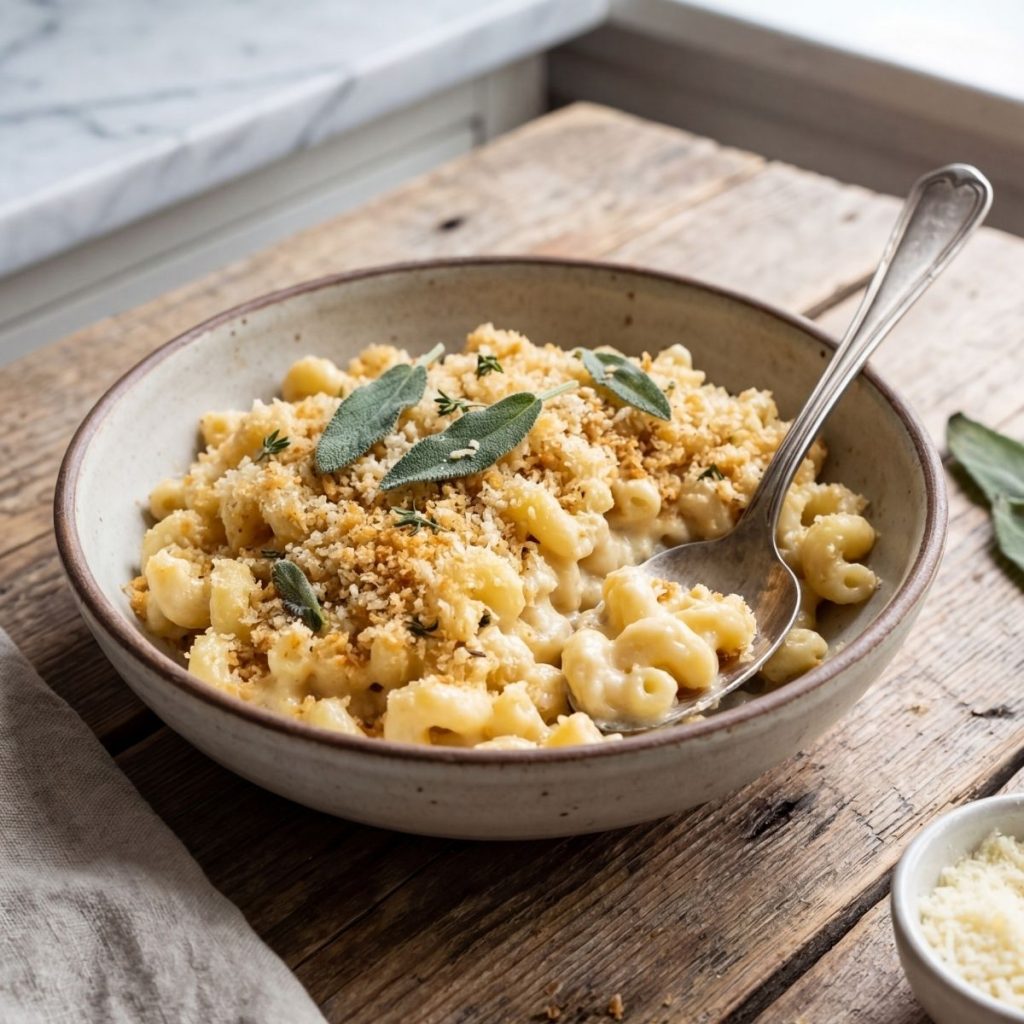
High-protein pasta changed the way I think about comfort food. The first time I cooked with chickpea pasta was actually Aunt Anne’s idea — she handed me a box at the store one Saturday and said, “Just try it. You won’t know the difference.” She was right, and then some. Chickpea, red lentil, and whole wheat pastas have all become regulars in my pantry now, and this Low Calorie High Protein Mac and Cheese is the recipe where they truly shine. Unlike the boxed stuff I grew up eating, this version gets its creamy, velvety sauce from Greek yogurt and real sharp cheddar — no heavy cream, no flour-based roux. I’ve been making this cottage cheese protein pasta bake for years as my go-to high-protein pasta fix, but on nights when I want something that tastes unmistakably like mac and cheese, this is the one I reach for. If you love that classic, soul-warming bowl of creamy baked mac and cheese but want it lighter and leaner, this recipe is exactly what you’ve been looking for. I hope it earns a permanent spot at your table too.
You Might Also Love
If this lightened-up mac has you in a high-protein pasta mood, these recipes belong on your weekly rotation too.
- Cottage Cheese Protein Pasta Bake — a creamy, oven -baked pasta packed with protein and weeknight ease.
- High Protein Italian Pasta Salad — bright, bold, and ready in minutes for meal prep or lunches.
- Momma’s Creamy Baked Macaroni and Cheese — the classic, indulgent version for when you want the full comfort experience.
- One Pot Pasta Chickpeas — a hearty, plant-based pasta dinner that comes together in a single pot.
Why You’ll Love This Recipe?
- High protein without the effort. Each serving delivers a solid protein boost from the combination of high-protein pasta, Greek yogurt, sharp cheddar, and Parmesan — no protein powder required.
- Genuinely creamy sauce, lighter ingredients. Greek yogurt replaces heavy cream and butter without sacrificing that smooth, rich coating you expect from a good mac and cheese.
- Ready in 20 minutes. From boiling water to bowl, this comes together faster than most boxed versions — and it tastes infinitely better.
- No flour, no roux, no fuss. The sauce is simply stirred together off the heat, which means less risk, less cleanup, and a silkier result every time.
- Endlessly adaptable. You can add vegetables, swap the cheese, spice it up, or keep it plain — the base recipe handles everything gracefully.
- Family-approved comfort food. It looks, smells, and tastes like the mac and cheese everyone loves, which means no one at the table needs to know it’s also nourishing them well.
Ingredient Notes
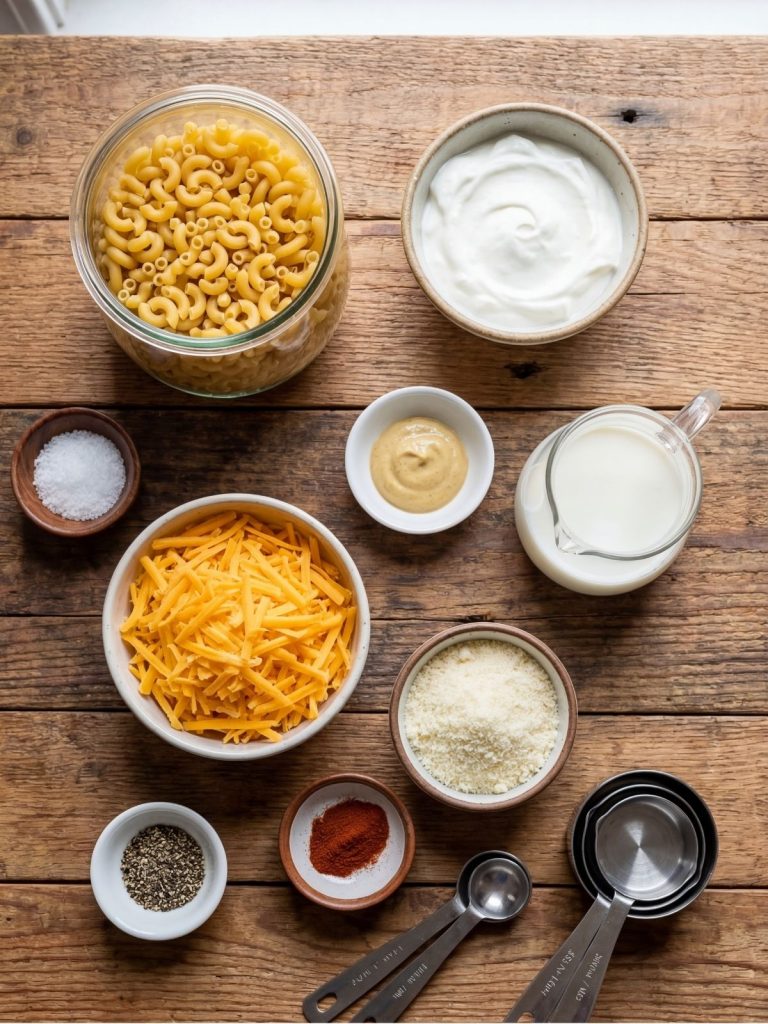
- High-protein pasta (chickpea, red lentil, or whole wheat) — This is the nutritional foundation of the whole dish, delivering significantly more protein and fiber than standard pasta. I prefer chickpea or red lentil varieties for their mild, neutral flavor that doesn’t compete with the cheese sauce.
- Plain Greek yogurt (2% or full fat recommended) — This does the heavy lifting where butter and cream typically would, creating a thick, tangy sauce base. Full fat or 2% gives you the creamiest result — nonfat tends to separate when heated, so I steer clear of it here.
- Sharp cheddar cheese, shredded — Sharp cheddar brings the bold, unmistakable mac-and-cheese flavor that mild cheeses simply can’t replicate. Always shred it fresh from the block — pre-shredded bags contain anti-caking agents that make the sauce grainy.
- Parmesan cheese, grated — Parmesan deepens the savory, umami backbone of the sauce and adds a pleasant sharpness that complements the cheddar. A little goes a long way — you’re looking for depth, not dominance.
- Low-fat milk (optional) — This is purely for consistency control; use it if the sauce feels thicker than you’d like after the pasta water hasn’t done enough. Add it slowly — one tablespoon at a time — so you don’t accidentally over-thin the sauce.
- Dijon mustard (optional) — A classic cheese sauce trick: a small amount of Dijon sharpens every other flavor in the bowl without tasting like mustard at all. I find this especially helpful with chickpea or lentil pasta varieties, which can taste slightly earthier than white pasta.
- Paprika (optional) — Smoked or sweet paprika adds a warm, gentle depth and a beautiful golden color to the finished dish. It’s a small addition with a noticeable payoff.
- Salt and pepper, to taste — Season gradually — both the cheddar and Parmesan bring salt, so taste before you reach for the shaker.
How to Make Low Calorie High Protein Mac and Cheese?
Step 1: Cook the pasta. Bring a large pot of generously salted water to a boil and cook your high-protein pasta according to the package directions. Before draining, scoop out about 1/4 cup of pasta water and set it aside — it’s starchy and silky and is your first tool for loosening the sauce if needed.
Step 2: Mix the sauce base. While the pasta cooks, whisk together the Greek yogurt, Dijon mustard (if using), and paprika (if using) in a medium bowl until smooth and streak-free. Set it aside — it goes into the pasta off the heat, never directly over a flame.
Step 3: Drain and return the pasta. Drain the pasta and immediately return it to the warm pot. Take the pot fully off the heat — this step is critical. The residual warmth melts the cheese beautifully, but direct heat will cause the yogurt to seize and the sauce to turn grainy.
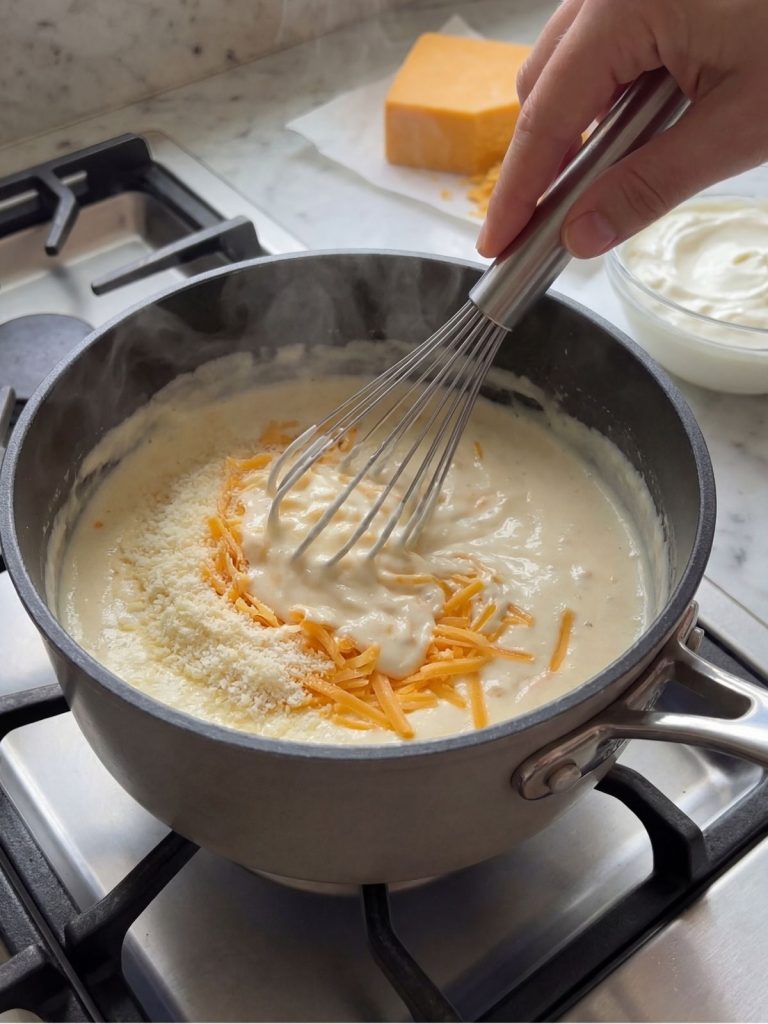
Step 4: Build the sauce. Add the yogurt mixture to the warm pasta and stir well to coat every piece. Then add the shredded cheddar in two or three small handfuls, stirring fully between each addition until melted and glossy. Add the Parmesan and stir again. The sauce should look thick, smooth, and velvety — the kind that clings to the pasta rather than pooling at the bottom.
Step 5: Adjust consistency. If the sauce feels thicker than you’d like, start with the reserved pasta water — add it one tablespoon at a time and stir well. If you need a little more thinning after that, add the low-fat milk in the same way, one tablespoon at a time, until you reach your preferred texture.
Step 6: Season and serve. Taste before adding any salt — the cheeses bring quite a bit on their own. Season with salt and freshly cracked pepper as needed, then serve immediately while the sauce is at its creamiest. A light dusting of extra paprika on top makes for a beautiful finishing touch.
Emily’s Expert Tips
- Keep the heat off when you add the yogurt. I always pull the pot completely off the burner before stirring in the yogurt — even low heat can break the sauce and leave it grainy and separated.
- Grate your own cheese every time. I learned this the hard way: pre-shredded cheddar has starches added to prevent clumping, and those same starches turn your cheese sauce into something lumpy and dull.
- Add cheese in small handfuls, not all at once. Dumping all the cheese in together lowers the pasta temperature too fast, which makes the sauce seize. I add it a handful at a time, stirring fully between each addition.
- Season at the very end. Cheddar and Parmesan are both naturally salty, so I always taste the finished sauce before adding extra salt — it almost never needs as much as you’d expect.
- Don’t walk away while you stir. This whole sauce comes together in about 2 minutes of active stirring — that’s not the moment to multitask. Constant movement keeps the sauce smooth and the heat distributed evenly through every piece of pasta.
Storage Tips
- Refrigerator — Store leftovers in an airtight container for up to 3 days. The sauce will thicken considerably as it cools, which is completely normal.
- Freezer — I don’t recommend freezing this one. The Greek yogurt-based sauce tends to separate and become grainy once thawed, and the texture of high-protein pasta can also turn mushy after freezing.
- Reheating — Reheat gently on the stovetop over low heat, adding a splash of water or milk and stirring constantly to revive the creamy texture. Avoid the microwave if you can — it heats unevenly and often makes the sauce oily and broken.
Variations & Substitutions
- Swap Greek yogurt for cottage cheese — Blend 1 cup of full-fat cottage cheese until completely smooth before using in place of the yogurt. It works beautifully and adds even more protein to an already nourishing bowl.
- Make it dairy-free — Use your favorite unsweetened plain dairy-free yogurt and a plant-based cheddar-style cheese. Results vary by brand, but the technique stays the same — keep the heat off and stir slowly.
- Add vegetables — Stir in 1–2 cups of steamed broccoli, roasted cauliflower, or baby spinach right before serving. These fold in easily and round out the dish into a complete, one-bowl dinner.
- Try a different pasta shape — This sauce works on any shape — elbows, shells, rotini, penne. I love shells for the way the creamy sauce tucks inside. If you’re curious about other hearty legume-based pasta dinners, this one pot pasta with chickpeas is a wonderful weeknight starting point.
- Spice it up — Add a pinch of cayenne, a dash of hot sauce, or a teaspoon of your favorite chili seasoning for a mac with a kick. It pairs especially well with the tang of the yogurt-based sauce.
- Swap Parmesan for nutritional yeast — For a dairy-free or lower-fat option, nutritional yeast brings a similar savory, nutty depth. Start with 2 tablespoons and taste as you go — it’s a great swap that doesn’t sacrifice that satisfying umami note. This garlic parmesan pasta is a good reference for how well that flavor profile translates.
- Boost the protein further — Stir in diced rotisserie chicken, canned tuna, or white beans right at the end to turn this into an even more substantial meal. The sauce is neutral enough to carry almost any lean protein gracefully.
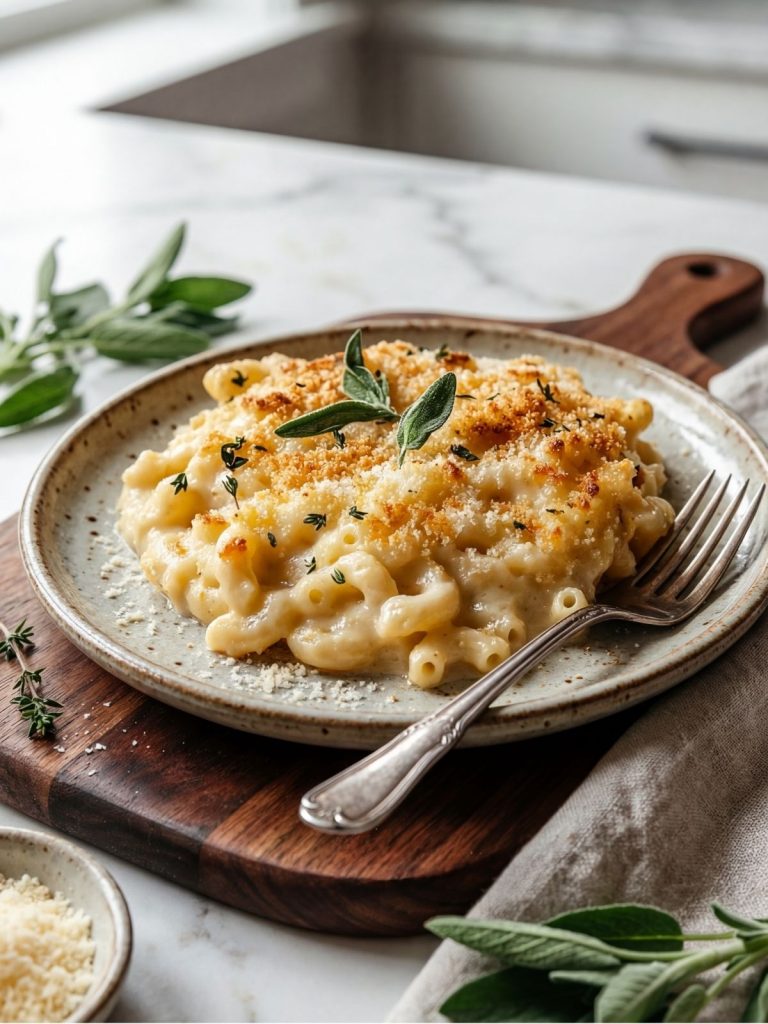
What to Serve With Low Calorie High Protein Mac and Cheese?
- A simple green salad — A handful of mixed greens with lemon vinaigrette cuts through the richness of the cheese sauce beautifully. It adds freshness without any extra cooking time.
- Steamed or roasted broccoli — The mild bitterness of broccoli pairs naturally with cheddar, and it’s ready in under 10 minutes whether you steam it or roast it from the freezer.
- Crusty whole grain bread — A slice of sturdy bread alongside the bowl is perfect for scooping up any sauce left at the bottom. Warm it in the oven while the pasta cooks.
- Sliced tomatoes with flaky salt — Fresh tomatoes add brightness and a cool contrast to the warm, creamy pasta — no prep needed beyond a quick slice.
Frequently Asked Questions
Can I make this mac and cheese ahead of time? I’d serve it fresh for the best texture. The sauce thickens quickly, but you can prep the sauce ingredients ahead and stir everything together just before eating.
What’s the best high-protein pasta to use? Chickpea and red lentil pasta melt most seamlessly into the sauce. Whole wheat works too, but has a slightly denser bite.
Can I use nonfat Greek yogurt? I don’t recommend it — nonfat yogurt is more likely to separate when it hits the warm pasta, leaving the sauce thin and watery.
Why does the sauce look grainy? The most common cause is adding the yogurt while the pot is still over heat. Always take the pot off the burner completely first.
How long does leftover mac and cheese keep in the fridge? Up to 3 days in an airtight container. Reheat slowly on the stovetop with a splash of water or milk.
Is this recipe gluten-free? It can be — use certified gluten-free chickpea or lentil pasta, and confirm your other ingredients are gluten-free labeled.
Can I double the recipe? Yes, easily. Use a larger pot and add the cheese in batches — the technique stays exactly the same.
- 0 Facebook
- 2 Pinterest
- 0 Email
- Copy Link
- 2 shares
Low Calorie High Protein Mac And Cheese
Ingredients
Instructions
Bring a large pot of generously salted water to a boil and cook the high-protein pasta according to package directions. Before draining, scoop out 1/4 cup of pasta water and set aside.
While the pasta cooks, whisk together the Greek yogurt, Dijon mustard (if using), and paprika (if using) in a medium bowl until completely smooth and streak-free.
Drain the pasta and return it immediately to the pot. Remove the pot fully from the heat before proceeding.
Add the yogurt mixture to the warm pasta and stir well until every piece is coated.
Add the shredded cheddar in 2–3 small handfuls, stirring fully between each addition until melted and glossy.
Stir in the grated Parmesan until the sauce is smooth and velvety.
If the sauce is thicker than desired, add reserved pasta water one tablespoon at a time, then low-fat milk if needed, stirring after each addition.
Taste and season with salt and freshly cracked pepper as needed. Serve immediately.
Notes
Always remove the pot completely from the heat before adding the yogurt mixture — even low heat will cause the sauce to seize and turn grainy.
Shred cheddar fresh from the block every time. Pre-shredded cheese contains anti-caking starches that prevent the sauce from melting smoothly.
Use reserved pasta water as your first thinning tool — it adds starch and body to the sauce. Add low-fat milk only if additional thinning is needed.
For a dairy-free version, use unsweetened plain plant-based yogurt and a vegan cheddar-style cheese, keeping the same off-heat technique.
Store leftovers in an airtight container in the refrigerator for up to 3 days. Reheat gently on the stovetop over low heat with a splash of water or milk, stirring constantly. Freezing is not recommended — the yogurt-based sauce separates upon thawing.