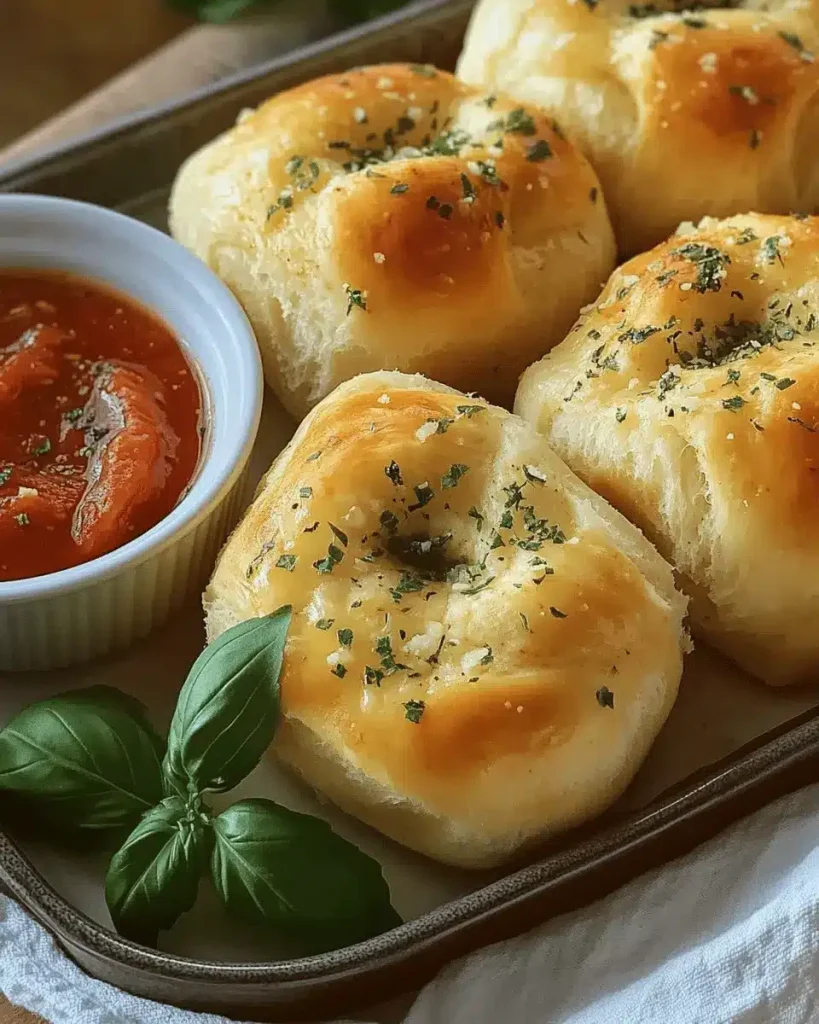
These garlic bread rolls are yeast rolls made from a basic dough of warm water, active dry yeast, sugar and all-purpose flour, with melted butter, minced garlic and salt stirred in. After shaping they rise a second time, bake at 375°F (190°C) and come out of the oven to a brush of melted butter, parsley and Parmesan. The recipe makes 12 rolls and takes 1 hour 40 minutes in total, most of it rising time.
Save this recipe for later:
The dough needs nothing unusual, and the soft, fluffy crumb depends on getting the yeast and the rises right. Those details are covered below. Served warm next to pasta, soup or a hearty salad, the rolls are light and airy inside with a buttery, garlicky top, and they freeze well if you want to bake ahead.
What Goes into the Dough
Exact amounts are in the recipe card at the bottom. This is what each ingredient does.
- Warm water (2 cups): it wakes up the yeast. Water that is too hot kills the yeast, and water that is too cold slows it down.
- Sugar (2 tablespoons) and active dry yeast (1 tablespoon): the sugar feeds the yeast. Stir both into the water and leave them for 5 minutes until frothy.
- Unsalted butter (1/4 cup, melted): adds richness and moisture, and keeps the crumb soft.
- Garlic (1 tablespoon, minced) and salt (1 tablespoon): the garlic is the main flavor, and the salt balances it and helps control the yeast.
- All-purpose flour (5 cups): gives the dough enough gluten to rise and hold its shape. Add it gradually.
- Fresh parsley (1/4 cup, chopped) and grated Parmesan (1/4 cup): these go on after baking. The parsley adds color and a fresh note, and the Parmesan gives a salty, nutty finish.
How the Dough Comes Together
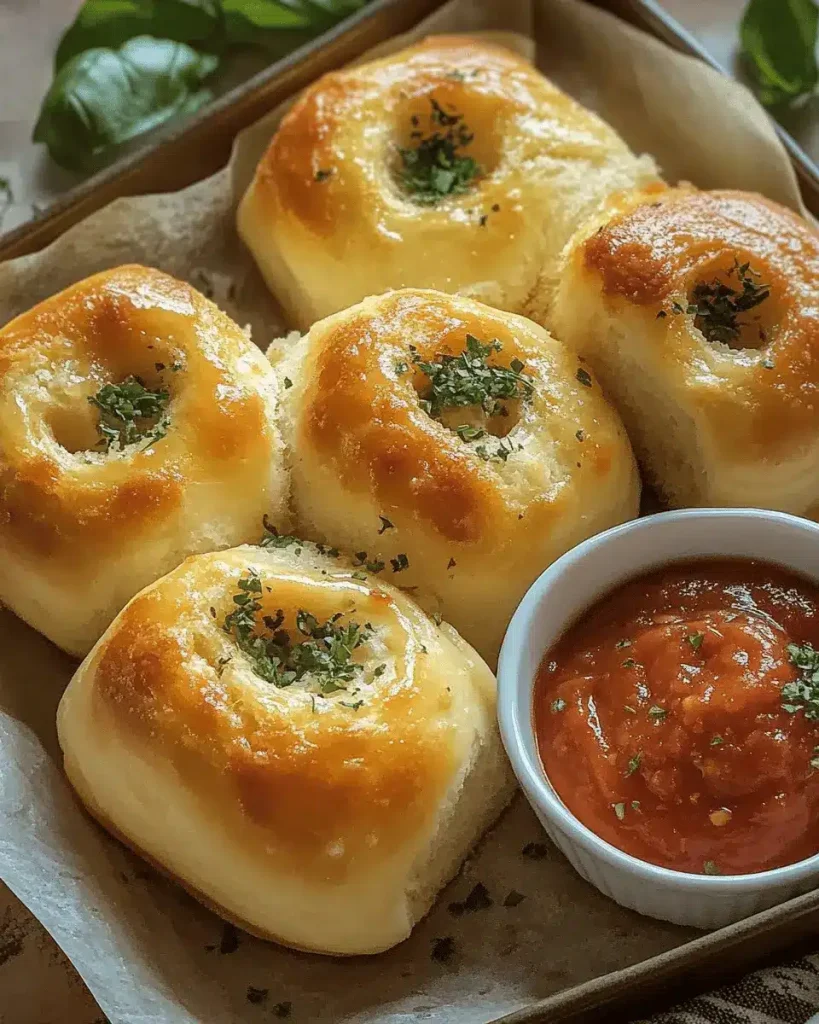
The order matters more than any single step. Yeast, sugar and warm water go in first, and sit for 5 minutes until frothy. The melted butter, garlic and salt follow, and then the flour goes in gradually, mixed until a dough forms. Kneading on a floured surface takes about 5 minutes.
The first rise is 1 hour in a greased, covered bowl, or until the dough has doubled. Punch it down, shape the rolls, set them on a baking sheet and let them rise for another 30 minutes before baking.
Getting a Soft Roll
Give the dough a warm spot to rise. If your kitchen is cool, turn the oven on briefly, switch it off, and set the covered dough inside.
Let the oven reach 375°F (190°C) before the rolls go in. That is what gives an even, golden-brown crust. Ovens vary, so check the rolls near the end of the 15 to 20 minutes to avoid over-baking.
Brush with more butter once they are out. The extra melted butter adds richness and helps the parsley and Parmesan stick. A little sea salt just before serving works too, and more garlic or garlic powder in the dough gives a stronger garlic flavor.
Ways to Change the Rolls
- Herb rolls: add dried oregano, basil or thyme to the dough for a more aromatic roll that suits Italian meals.
- Cheese-stuffed: wrap a small piece of dough around a cube of mozzarella or cheddar before shaping. The cheese melts into the center as the rolls bake.
- Spicy: add crushed red pepper flakes to the garlic mixture.
- Sweet garlic: add a tablespoon of honey or brown sugar to the dough to soften the garlic with a little sweetness.
What to Serve with Them
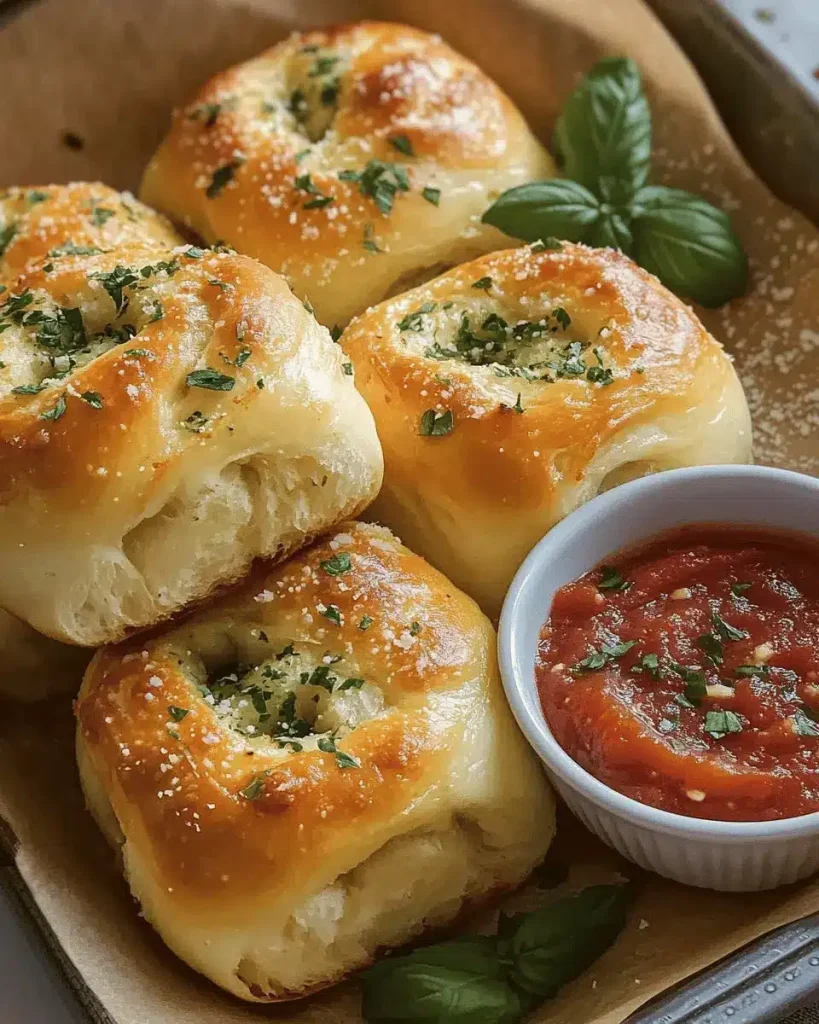
Spaghetti, lasagna or a garden salad all need something to mop up the sauce, and these rolls do that well. They also go with hearty soups and stews, including minestrone and creamy tomato soup, because the soft crumb soaks up broth.
For a crowd, the recipe scales to large batches and the rolls can go to the table warm. Marinara, herbed butter or a spicy aioli work as dips.
How Long It Takes
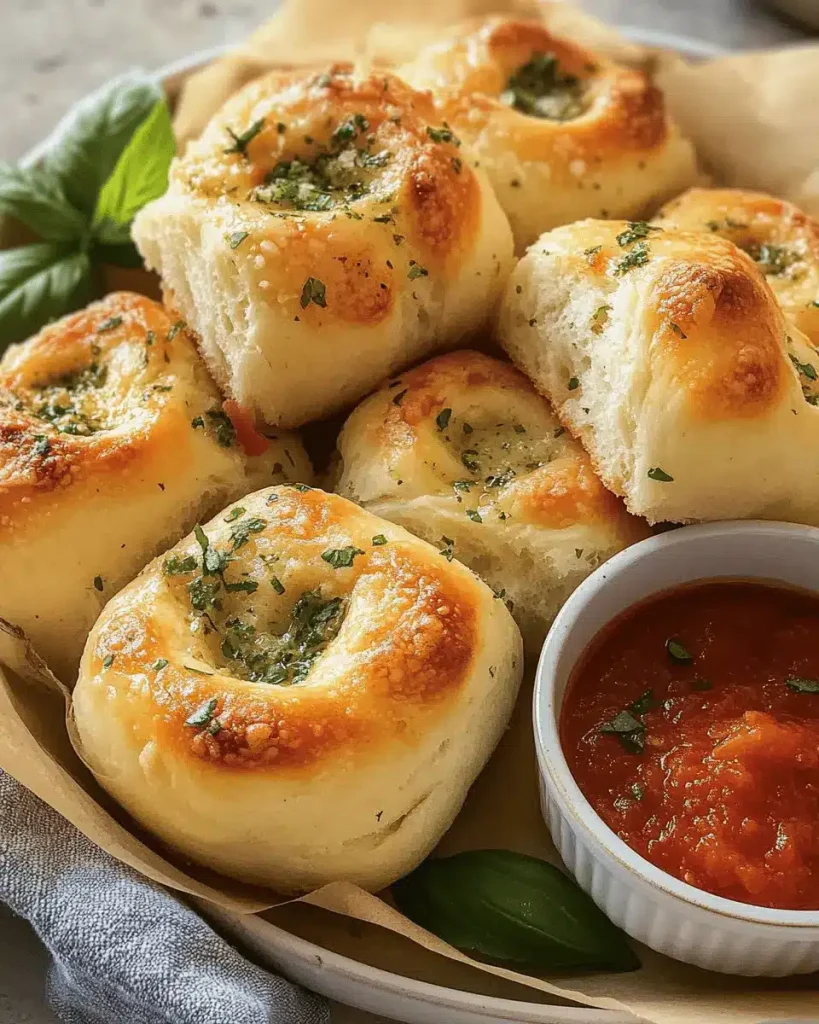
Prep is about 20 minutes, which covers mixing and kneading. Baking takes about 20 minutes. With both rises included, the total is 1 hour 40 minutes. To save time on the day, make the dough ahead, or bake the rolls earlier and freeze them.
Nutrition per Roll
Each roll has approximately 150 calories, 5 grams of fat (3 grams saturated), 24 grams of carbohydrates, 1 gram of fiber, 1 gram of sugar, 3 grams of protein, 200 milligrams of sodium and 10 milligrams of cholesterol. The recipe makes 12 rolls.
FAQ
Can I use whole wheat flour instead of all-purpose flour?
Yes. Whole wheat flour tends to give denser rolls, and you may need to adjust the liquid a little to get the right dough consistency.
Can I store leftover garlic bread rolls?
Yes. Let them cool completely, then keep them in an airtight container or a resealable bag. They last up to two days at room temperature or up to a week in the refrigerator. Reheat them in the oven or microwave.
Can I freeze garlic bread rolls?
Yes. After baking, cool them completely, wrap them tightly in plastic wrap and put them in a freezer bag. They keep for up to three months. Thaw and reheat in the oven.
The Foodie Yummy Cookbook
12 reader-favorite recipes in one printable PDF. Enter your email and download it instantly.
Made it or loved it? Share this recipe
Written and edited by The Foodie Yummy Kitchen Team
The Foodie Yummy Kitchen Team writes and edits the recipes on Foodie Yummy: classic American potluck salads, holiday sides and easy comfort food, with a few low-carb options. Every recipe lists exact quantities, numbered steps and a printable recipe card, plus notes on swaps, storage and make-ahead timing. Spot a problem with a recipe? Tell us through the contact page and we will correct it. About us
Garlic Bread Rolls
Ingredients
Instructions
In a large bowl, combine warm water, sugar, and yeast. Let sit for 5 minutes until frothy.
Stir in melted butter, garlic, and salt.
Add flour gradually, mixing until a dough forms.
Knead the dough on a floured surface for about 5 minutes.
Place the dough in a greased bowl, cover, and let rise for 1 hour or until doubled.
Punch down the dough and shape it into rolls.
Place rolls on a baking sheet and let rise for another 30 minutes.
Preheat the oven to 375°F (190°C).
Bake for 15-20 minutes or until golden brown.
Brush with melted butter and sprinkle with parsley and Parmesan before serving.
Notes
For extra flavor, add more garlic or use garlic powder.
These rolls can be frozen after baking.
Nutrition
| Serving Size | 1 roll |
|---|---|
| Calories | 150 calories |
| Sugar Content | 1g |
| Sodium Content | 200mg |
| Fat Content | 5g |
| Saturated Fat Content | 3g |
| Unsaturated Fat Content | 2g |
| Trans Fat Content | 0g |
| Carbohydrate Content | 24g |
| Fiber Content | 1g |
| Protein Content | 3g |
| Cholesterol Content | 10mg |