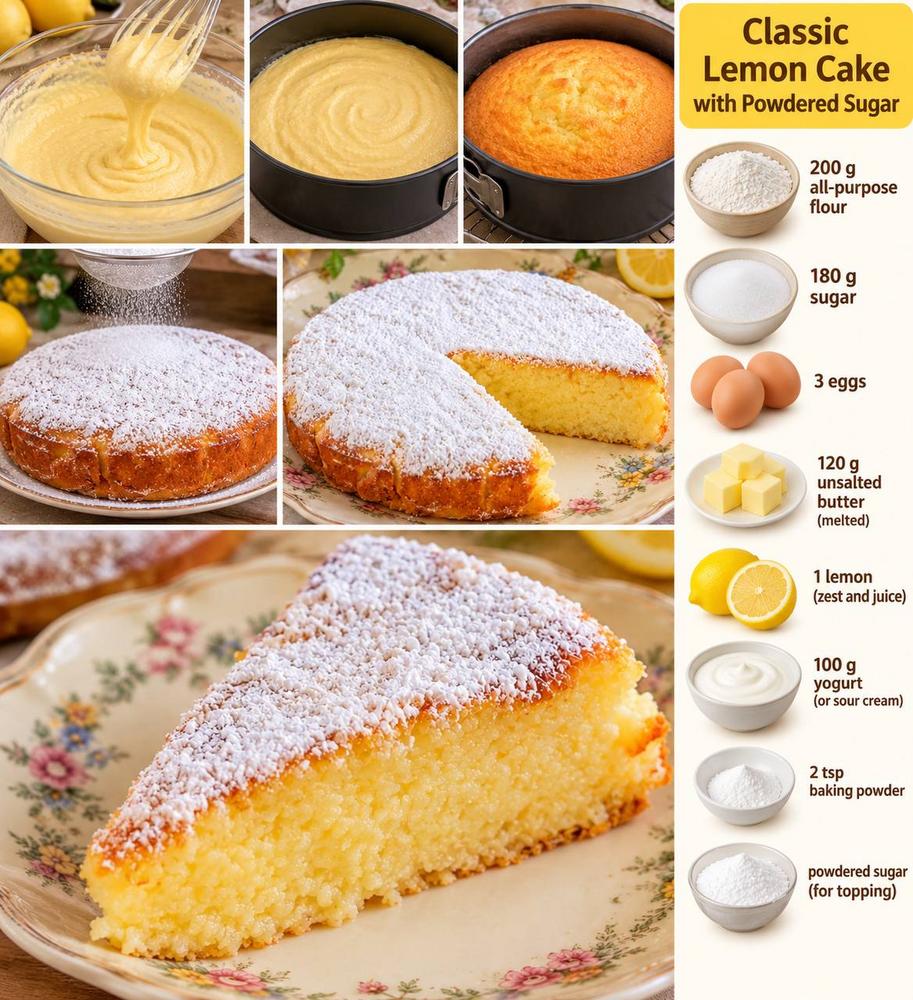
Introduction
There are some desserts that simply transcend trends, offering a timeless appeal that comforts and delights with every bite. The Classic Lemon Cake with Powdered Sugar is undeniably one of them. This isn’t just a cake; it’s a ray of sunshine in edible form, a simple yet elegant creation that brightens any table and any occasion. With its vibrant, zesty flavor and wonderfully moist texture, it’s the kind of cake that evokes cherished memories and creates new ones, making it a beloved staple in kitchens around the world. Whether you’re celebrating a special event or simply craving a sweet escape, this lemon cake delivers pure, unadulterated joy.
What makes this particular lemon cake so special is its beautiful balance of simplicity and sophistication. The bright, tangy notes of fresh lemon cut through the sweetness, creating a refreshing and incredibly addictive flavor profile. Its texture is a dream – tender, moist, and with a fine crumb that practically melts in your mouth. And then there’s the finish: a delicate, generous dusting of powdered sugar that not only adds a touch of rustic elegance but also provides a delightful melt-in-your-mouth sweetness that perfectly complements the cake’s citrusy core. It’s a dessert that proves you don’t need elaborate frostings or complex techniques to achieve culinary perfection.
Beyond its incredible taste and texture, this Classic Lemon Cake with Powdered Sugar is also remarkably easy to prepare, making it an ideal choice for both seasoned bakers and those just starting their baking journey. With straightforward ingredients and a simple step-by-step process, you can achieve bakery-quality results right in your own kitchen. It’s perfect for casual afternoon tea, impressive enough for a dinner party, and always a welcome sight at potlucks or family gatherings. Get ready to fill your home with the irresistible aroma of baking lemon and discover the pure delight of this quintessential dessert!
Nutritional Information
Per serving (approximate values):
- Calories: 390
- Protein: 6g
- Carbohydrates: 55g
- Fat: 17g
- Fiber: 1g
- Sodium: 180mg
Ingredients
- 200 g all-purpose flour
- 180 g granulated sugar
- 3 large eggs
- 120 g unsalted butter, melted and slightly cooled
- 1 large lemon, zest and juice (approximately 3-4 tablespoons juice)
- 100 g plain yogurt (full-fat recommended, or sour cream)
- 2 tsp baking powder
- Pinch of salt
- Powdered sugar, for topping
Instructions
- Prepare Your Pan: Preheat your oven to 180°C (350°F). Grease and flour a 9-inch (23 cm) springform pan. Alternatively, line the bottom with parchment paper and grease the sides.
- Combine Dry Ingredients: In a medium bowl, whisk together the all-purpose flour, baking powder, and pinch of salt. Set aside.
- Cream Butter and Sugar: In a large mixing bowl, using an electric mixer or whisk, cream together the granulated sugar and the melted and slightly cooled unsalted butter until light and fluffy. This should take about 2-3 minutes.
- Add Eggs: Add the eggs one at a time, beating well after each addition until fully incorporated. Scrape down the sides of the bowl as needed to ensure everything is mixed evenly.
- Introduce Lemon and Yogurt: Stir in the lemon zest, fresh lemon juice, and plain yogurt. Mix until just combined. The mixture might look slightly curdled at this stage, but it will smooth out once the dry ingredients are added.
- Combine Wet and Dry: Gradually add the dry ingredient mixture to the wet ingredients, mixing on low speed or by hand with a spatula until just combined. Be careful not to overmix; overmixing can lead to a tough cake. Mix only until no streaks of flour remain.
- Pour into Pan: Pour the batter evenly into the prepared springform pan. Gently tap the pan on the counter a couple of times to release any air bubbles.
- Bake the Cake: Bake for 30-35 minutes, or until a wooden skewer or toothpick inserted into the center of the cake comes out clean. The top should be golden brown and spring back lightly when touched.
- Cool the Cake: Once baked, remove the cake from the oven and let it cool in the springform pan on a wire rack for about 10-15 minutes. This allows the cake to set properly.
- Release and Finish Cooling: Carefully run a knife around the edges of the pan before releasing the springform sides. Transfer the cake to the wire rack to cool completely. It is crucial for the cake to be entirely cool before dusting with powdered sugar.
- Dust with Powdered Sugar: Once the cake is completely cooled, place it on your serving plate. Using a fine-mesh sieve, generously dust the entire top surface of the cake with powdered sugar. For a rustic look, you can dust heavily.
- Serve: Slice and serve your beautiful Classic Lemon Cake with Powdered Sugar. Enjoy!
Cooking Tips and Variations
Achieving the perfect Classic Lemon Cake is all about attention to a few key details. Firstly, always ensure your eggs and yogurt are at room temperature before you begin. This allows them to emulsify better with the butter and sugar, resulting in a smoother, more uniform batter and a finer crumb in your finished cake. When zesting your lemon, remember to only get the yellow part of the peel, avoiding the bitter white pith underneath. For maximum lemon flavor, don’t be shy with the zest – it holds most of the lemon’s aromatic oils.
A common pitfall in baking is overmixing the batter. Once you add the dry ingredients, mix only until they are just incorporated and no streaks of flour remain. Overmixing develops the gluten in the flour too much, which can lead to a tough, dense cake instead of the light, tender texture we’re aiming for. Always test for doneness by inserting a wooden skewer or toothpick into the center of the cake; if it comes out clean, your cake is ready. Every oven is different, so keep an eye on your cake and adjust baking times as needed.
Cooling the cake completely before dusting with powdered sugar is non-negotiable. If the cake is even slightly warm, the powdered sugar will melt into the surface, disappearing or creating a sticky glaze rather than the beautiful, delicate white dusting. For an extra elegant finish, you can create a stencil with parchment paper (perhaps a simple star or a pattern) and dust powdered sugar over it, then carefully lift the stencil to reveal a design.
For variations, consider adding a tablespoon of poppy seeds to the batter along with the dry ingredients for a delightful texture and classic lemon-poppy seed flavor. If you prefer a glaze to powdered sugar, whisk together 1 cup of powdered sugar with 2-3 tablespoons of fresh lemon juice until smooth, then drizzle it over the cooled cake. You can also experiment with other citrus fruits; orange or lime zest and juice can create equally delicious and unique flavor profiles. For an even richer cake, substitute some of the yogurt with an equal amount of cream cheese (softened) in the batter. Serving this cake with a side of fresh berries, like raspberries or blueberries, or a dollop of freshly whipped cream, truly elevates the experience and adds another layer of flavor and freshness.
Storage and Reheating
Proper storage is key to keeping your Classic Lemon Cake fresh and delicious for as long as possible. Once completely cooled and dusted with powdered sugar, the cake should be stored at room temperature in an airtight container. This will prevent it from drying out and help maintain its moist texture. Placed in an airtight container, the cake will stay fresh for 3-4 days. If you live in a very warm or humid climate, or if you want to extend its shelf life further, you can store the cake in the refrigerator. However, bring it back to room temperature before serving for the best flavor and texture, as cold temperatures can make cakes taste a bit denser and less aromatic.
If you plan to store the cake for more than a few days, or if you’ve made a larger batch, freezing is an excellent option. For freezing, it’s best to wrap individual slices or the entire cake (undusted with powdered sugar) tightly in plastic wrap, then an additional layer of aluminum foil. This double layer of protection helps prevent freezer burn. Frozen lemon cake can last for up to 2-3 months. When you’re ready to enjoy it, simply transfer the frozen cake or slices to the refrigerator overnight to thaw, or let them thaw at room temperature for a few hours. Once thawed, you can dust with fresh powdered sugar just before serving. Reheating is generally not recommended for this type of cake, as it can dry out the delicate crumb. It’s truly best enjoyed at room temperature.
Frequently Asked Questions
What makes my lemon cake dry?
A dry lemon cake is often the result of one of two common baking errors: overmixing the batter or overbaking the cake. Overmixing develops the gluten in the flour too much, leading to a tough, dry texture. Mix only until the ingredients are just combined. Overbaking, on the other hand, removes too much moisture from the cake. Always test for doneness with a toothpick and remove the cake from the oven as soon as it comes out clean, even if it’s a few minutes before the recipe’s suggested time.
Can I use bottled lemon juice instead of fresh?
While you technically can use bottled lemon juice, fresh lemon juice and zest are highly recommended for this Classic Lemon Cake. Fresh lemon provides a brighter, more vibrant, and authentic citrus flavor that truly makes the cake shine. Bottled lemon juice often contains preservatives and can have a slightly duller or more acidic taste that doesn’t quite capture the natural essence of fresh lemon. The zest is also crucial for flavor, as it contains aromatic oils not found in the juice, so never omit it!
Why did my cake sink in the middle?
A sunken cake center can be caused by several factors. Opening the oven door too early during baking can cause a sudden temperature drop, making the cake collapse. Insufficient baking powder or expired baking powder can also lead to a lack of leavening. Additionally, if your oven temperature is too high, the outside of the cake might set too quickly while the inside remains underbaked and then sinks. Always ensure your oven thermometer is accurate and avoid opening the oven door until at least two-thirds of the way through the baking time.
How can I prevent the powdered sugar from disappearing?
The key to preventing powdered sugar from disappearing or melting into your cake is to ensure the cake is completely and absolutely cooled before dusting. Even a slight warmth will cause the sugar to absorb moisture and dissolve. If you’re in a humid environment, the sugar might still absorb some moisture over time. For best results, dust the cake just before serving. You can also re-dust it if you notice the sugar starting to disappear after a few hours.
Classic Lemon Cake with Powdered Sugar
Ingredients
Instructions
Prepare Your Pan: Preheat your oven to 180°C (350°F). Grease and flour a 9-inch (23 cm) springform pan. Alternatively, line the bottom with parchment paper and grease the sides.
Combine Dry Ingredients: In a medium bowl, whisk together the all-purpose flour, baking powder, and pinch of salt. Set aside.
Cream Butter and Sugar: In a large mixing bowl, using an electric mixer or whisk, cream together the granulated sugar and the melted and slightly cooled unsalted butter until light and fluffy. This should take about 2-3 minutes.
Add Eggs: Add the eggs one at a time, beating well after each addition until fully incorporated. Scrape down the sides of the bowl as needed to ensure everything is mixed evenly.
Introduce Lemon and Yogurt: Stir in the lemon zest, fresh lemon juice, and plain yogurt. Mix until just combined. The mixture might look slightly curdled at this stage, but it will smooth out once the dry ingredients are added.
Combine Wet and Dry: Gradually add the dry ingredient mixture to the wet ingredients, mixing on low speed or by hand with a spatula until just combined. Be careful not to overmix; overmixing can lead to a tough cake. Mix only until no streaks of flour remain.
Pour into Pan: Pour the batter evenly into the prepared springform pan. Gently tap the pan on the counter a couple of times to release any air bubbles.
Bake the Cake: Bake for 30-35 minutes, or until a wooden skewer or toothpick inserted into the center of the cake comes out clean. The top should be golden brown and spring back lightly when touched.
Cool the Cake: Once baked, remove the cake from the oven and let it cool in the springform pan on a wire rack for about 10-15 minutes. This allows the cake to set properly.
Release and Finish Cooling: Carefully run a knife around the edges of the pan before releasing the springform sides. Transfer the cake to the wire rack to cool completely. It is crucial for the cake to be entirely cool before dusting with powdered sugar.
Dust with Powdered Sugar: Once the cake is completely cooled, place it on your serving plate. Using a fine-mesh sieve, generously dust the entire top surface of the cake with powdered sugar. For a rustic look, you can dust heavily.
Serve: Slice and serve your beautiful Classic Lemon Cake with Powdered Sugar. Enjoy!