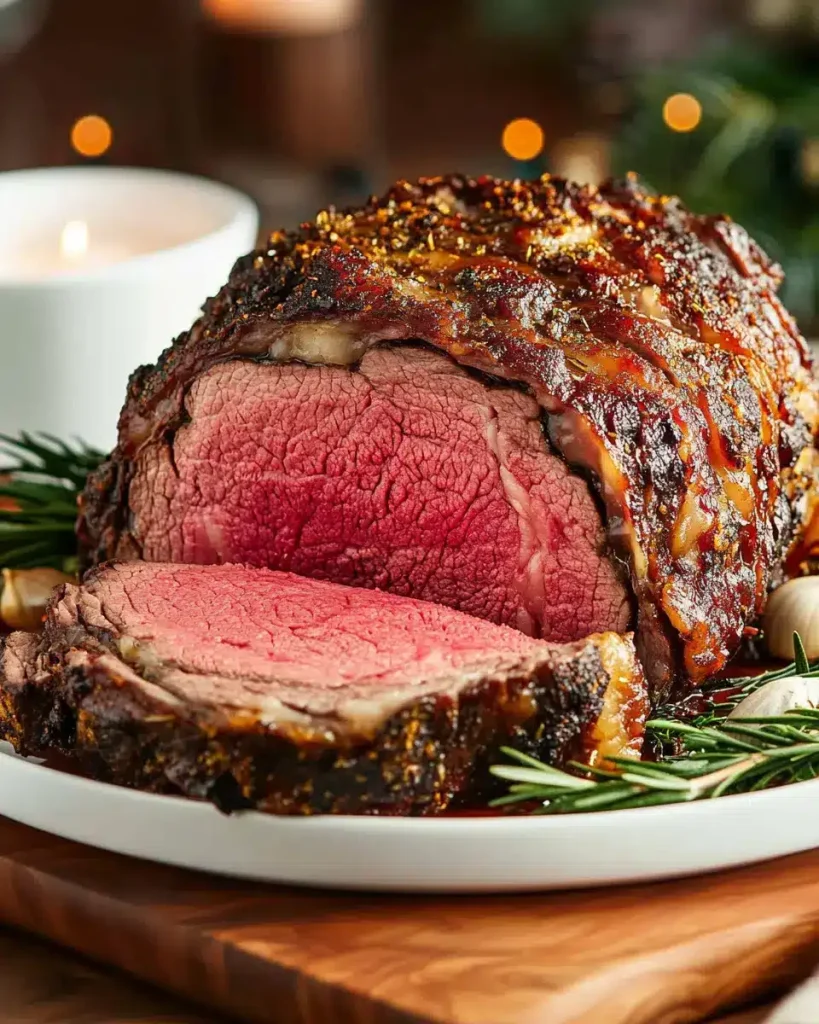
Introduction to Christmas Prime Rib
Christmas Prime Rib is the roast that sits in the middle of the holiday table: a well-seasoned crust outside, tender and juicy meat inside.
Save this recipe for later:
Start with a good bone-in prime rib roast; the bone adds flavor and helps keep the meat tender. Garlic, fresh herbs and a simple rub bring out the natural richness of the beef.
The recipe is straightforward, with only a few ingredients and easy instructions, so it works even if you do not have much time to cook. It looks impressive on the plate and is satisfying to make and to share.
Key ingredients
Bone-in prime rib roast
The roast is the main event. Cooking it on the bone adds flavor and keeps the meat juicy.
Olive oil
Olive oil is the base of the seasoning rub. It helps the seasonings stick to the meat and adds a little richness.
Kosher salt
Salt brings out the flavor of the beef. The larger grains of kosher salt are easy to spread evenly, so the whole roast is seasoned.
Black pepper
Freshly cracked black pepper adds warmth, a bit of heat and some crunch to the crust.
Garlic, rosemary, and thyme
Minced garlic gives a strong savory flavor, and fresh rosemary and thyme add herbal notes that suit the rich meat.
Why you’ll love this recipe
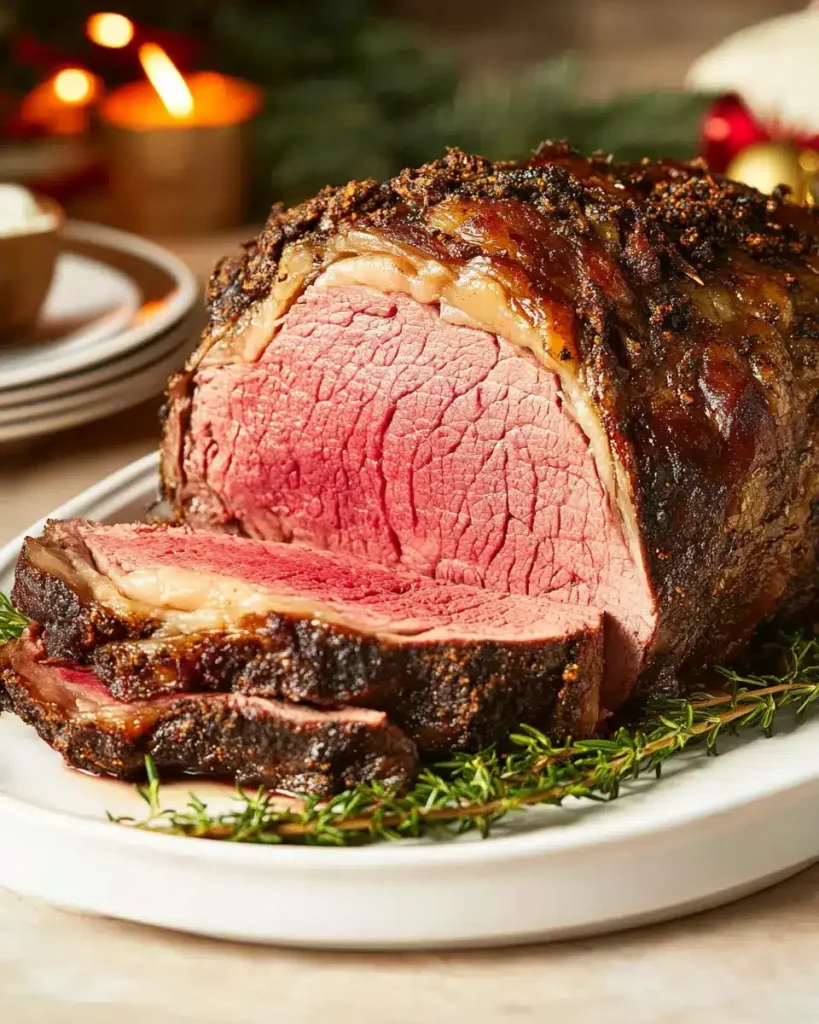
A whole rib roast looks spectacular when you bring it to the table, and the flavor matches the look.
You need only a few ingredients and simple steps, and you will not spend the whole day in the kitchen. The fresh herbs and garlic flavor the meat, so the dish feels luxurious without being difficult.
Resting the roast after it comes out of the oven lets the juices settle back into the meat, so every slice is tender and juicy. It is the kind of dish that gets everyone to the table for a long holiday meal.
Variations on Christmas Prime Rib
Change the rub: a little smoked paprika or some Dijon mustard gives the roast a different flavor.
Try a marinade. Red wine or balsamic vinegar adds deep flavor and helps keep the meat tender and juicy. For something bolder, use a coffee rub, which goes well with the richness of prime rib.
You can also slow-roast the prime rib. Cooking it longer at a lower heat makes it more tender and gives the flavors more time to blend.
Cooking tips and notes
Use a meat thermometer
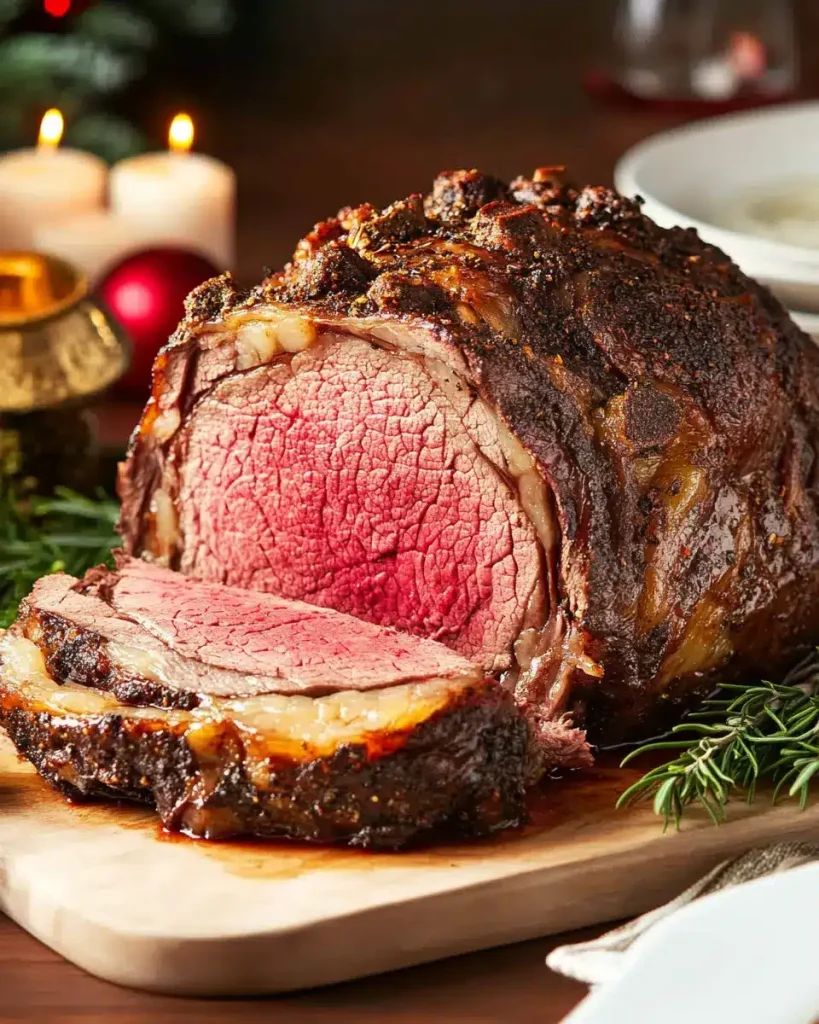
A meat thermometer takes the guesswork out of doneness. For medium-rare, aim for an internal temperature of about 130°F; the roast will be juicy and tender.
Let it rest
After the prime rib comes out of the oven, let it rest for at least 20 minutes before carving. The juices spread back through the meat and the slices stay moist. Cutting in right away lets those juices run out onto the board.
Experiment with flavors
Try other herbs and spices in the rub. A touch of smoked paprika or some mustard changes the flavor, and each version gives the classic roast a slightly different character.
Serving suggestions
Pairing with sides
Creamy mashed potatoes and garlic roasted vegetables are the classic sides. The potatoes go well with the rich beef, and the vegetables add some crunch and freshness.
Sauces and condiments
A homemade red wine reduction or a sharp horseradish sauce adds depth and cuts through the richness of the meat.
Presentation tips
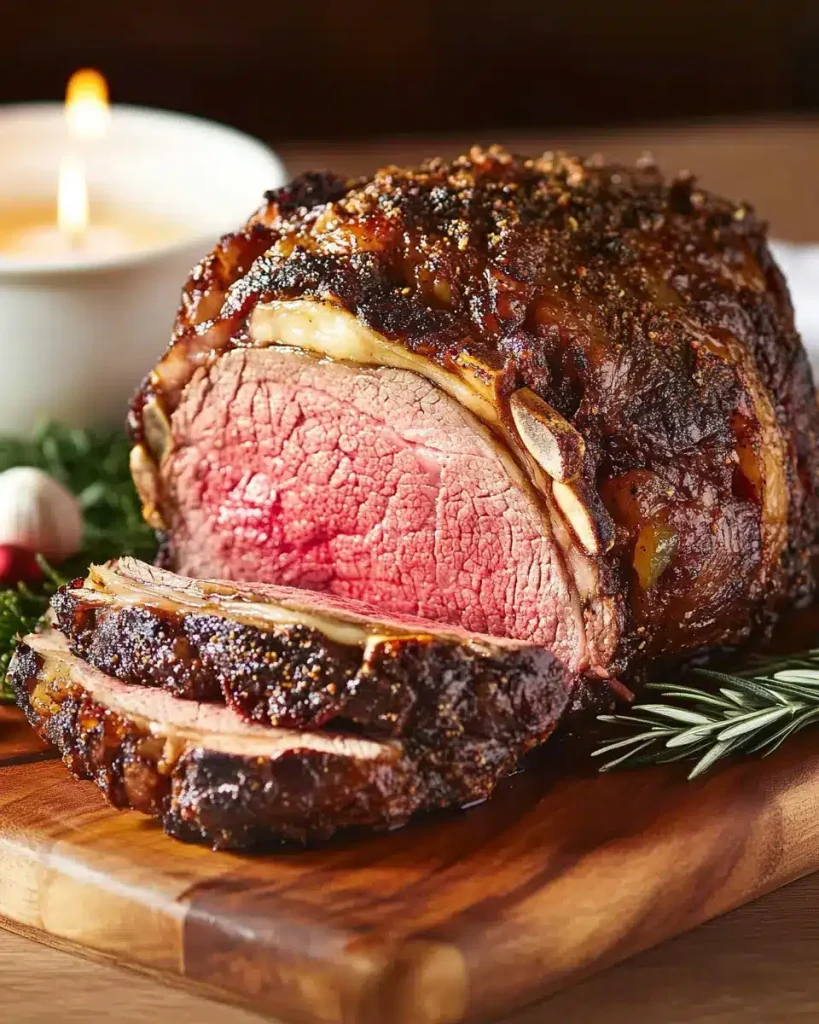
Cut the prime rib into thick slices so you can see how tender it is. Arrange them on a platter and garnish with fresh rosemary or thyme for color and aroma.
Time breakdown
Preparation
About 20 minutes to gather the ingredients and rub the prime rib with olive oil and seasonings.
Cooking/baking
Approximately 2 hours. The roast starts at a high temperature to build a crust, then the heat is lowered so it cooks evenly.
Total
Around 2 hours and 20 minutes from start to finish, including resting time. Keep a meat thermometer handy to check for doneness.
Nutritional facts
Overview
Each serving contains approximately 450 calories, which makes this a hearty main course.
Nutritional breakdown
A single slice has 35 grams of protein. It also has 36 grams of fat, including 14 grams of saturated fat, so it is a rich dish. The roast contains 700 milligrams of sodium per serving, worth noting if you watch your salt intake. With no sugars or carbohydrates, it fits a low-carb or carnivore diet.
Frequently asked questions
How do I choose the right prime rib?
Look for good marbling, thin streaks of fat running through the meat, which add flavor and tenderness. Many cooks prefer a bone-in roast because the bones add flavor during cooking.
What is the best way to season a prime rib?
A simple rub of kosher salt, black pepper, garlic, rosemary and thyme. It brings out the flavor of the beef without covering it up.
How long should I let my prime rib rest before carving?
At least 20 minutes, so the juices redistribute and every slice stays juicy.
Can I prepare the prime rib in advance?
You can season it a day ahead and let it sit in the refrigerator, but roast it on the day you serve it for the best flavor.
Conclusion
A well-seasoned crust, a juicy pink center and a few simple sides: that is a Christmas dinner people remember. Roast it, carve it, and share it with the people you love.
The Foodie Yummy Cookbook
12 reader-favorite recipes in one printable PDF. Enter your email and download it instantly.
Made it or loved it? Share this recipe
Written and edited by The Foodie Yummy Kitchen Team
The Foodie Yummy Kitchen Team writes and edits the recipes on Foodie Yummy: classic American potluck salads, holiday sides and easy comfort food, with a few low-carb options. Every recipe lists exact quantities, numbered steps and a printable recipe card, plus notes on swaps, storage and make-ahead timing. Spot a problem with a recipe? Tell us through the contact page and we will correct it. About us
Christmas Prime Rib
Ingredients
Instructions
Preheat your oven to 450°F (230°C).
Rub the prime rib with olive oil, salt, and pepper. Make sure to cover all sides.
Mix garlic, rosemary, and thyme and rub it evenly over the roast.
Place the prime rib bone side down in a roasting pan.
Roast for 20 minutes, then reduce the temperature to 325°F (160°C).
Continue roasting until the internal temperature reaches your desired doneness (about 130°F for medium-rare).
Remove from the oven and let it rest for 20 minutes before carving.
Notes
Let the meat rest to retain juices.
Use a meat thermometer for best results.
Nutrition
| Serving Size | 1 slice |
|---|---|
| Calories | 450 calories |
| Sugar Content | 0g |
| Sodium Content | 700mg |
| Fat Content | 36g |
| Saturated Fat Content | 14g |
| Unsaturated Fat Content | 20g |
| Trans Fat Content | 1g |
| Carbohydrate Content | 0g |
| Fiber Content | 0g |
| Protein Content | 35g |
| Cholesterol Content | 110mg |