Introduction
There are few things as universally comforting and satisfying as a warm, hearty bowl of stew, especially when the weather turns cool. Imagine coming home to the savory aroma of tender beef and garden-fresh vegetables simmering gently on the stovetop, promising a meal that nourishes both body and soul. Our Beef and Vegetable Stew is more than just a meal; it’s a nostalgic embrace, a culinary hug that brings families together around the dinner table, making even the busiest days feel a little brighter.
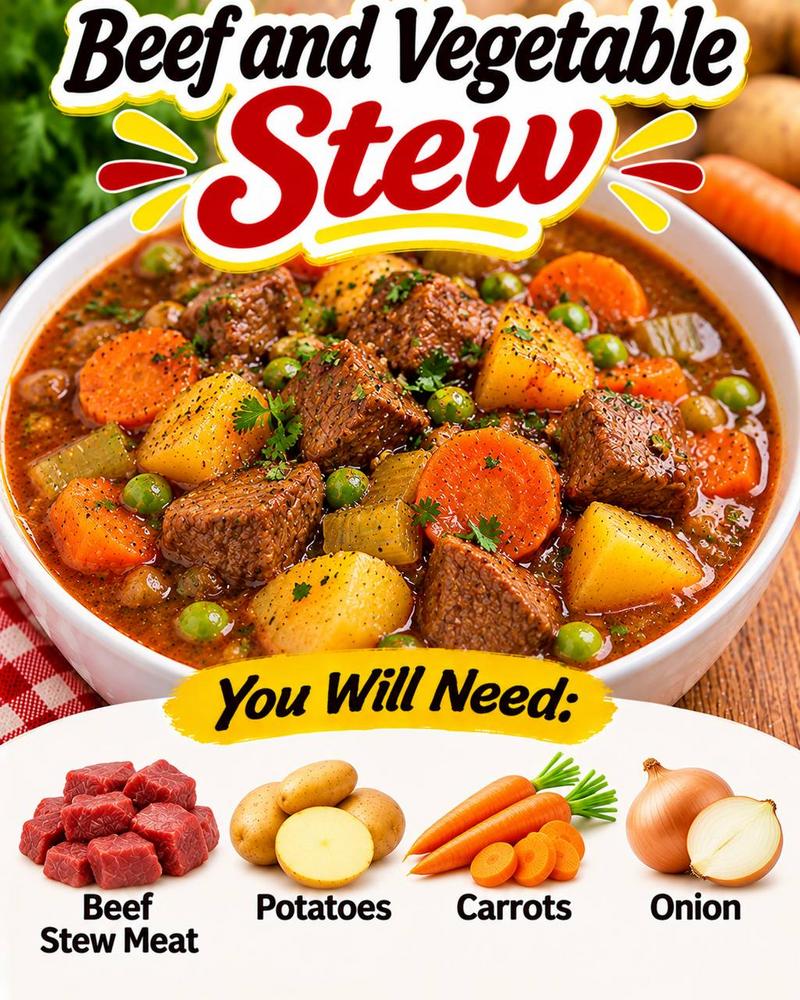
This classic Beef and Vegetable Stew recipe is a testament to the power of simple, wholesome ingredients transformed into something extraordinary through a little time and care. It features succulent pieces of beef, slow-cooked to melt-in-your-mouth perfection, alongside a vibrant medley of potatoes, carrots, onions, and celery, all swimming in a rich, deeply flavored broth. The addition of sweet green peas at the end provides a delightful pop of color and freshness, balancing the robust flavors of the stew. It’s a complete meal in a single pot, packed with nutrients and incredibly satisfying.
What makes this particular recipe stand out is its robust flavor profile and surprising simplicity. We focus on techniques that build layers of taste, from searing the beef to developing a rich aromatic base, ensuring every spoonful is bursting with deliciousness. Whether you’re a seasoned home cook or just starting your culinary journey, this guide will walk you through creating a dish that feels gourmet yet is achievable for anyone. It’s versatile enough to adapt to your pantry, robust enough to satisfy the hungriest appetites, and destined to become a cherished family favorite in your recipe collection.
Nutritional Information
Per serving (approximate values):
- Calories: 480
- Protein: 38g
- Carbohydrates: 45g
- Fat: 18g
- Fiber: 7g
- Sodium: 850mg
Ingredients
- 2 tablespoons olive oil
- 2 pounds beef chuck, cut into 1 1/2-inch cubes
- 1 large yellow onion, chopped
- 2 stalks celery, chopped
- 3 cloves garlic, minced
- 1 teaspoon dried thyme
- 1/2 teaspoon dried rosemary
- 1/4 cup all-purpose flour
- 4 cups beef broth
- 1 cup water (or red wine for richer flavor)
- 1 (14.5 ounce) can diced tomatoes, undrained
- 2 bay leaves
- 1 1/2 pounds russet potatoes, peeled and cut into 1 1/2-inch cubes
- 1 pound carrots, peeled and cut into 1-inch thick rounds
- 1 cup frozen green peas
- Salt and freshly ground black pepper to taste
- Fresh parsley, chopped, for garnish
Instructions
- Pat the beef cubes dry with paper towels. Season generously with salt and black pepper.
- Heat 1 tablespoon of olive oil in a large Dutch oven or heavy-bottomed pot over medium-high heat until shimmering.
- Working in batches to avoid overcrowding the pot, add the beef cubes and sear until deeply browned on all sides, about 3-4 minutes per batch. Remove the browned beef to a plate and set aside.
- Reduce the heat to medium. Add the remaining 1 tablespoon of olive oil to the pot. Add the chopped onion and celery and cook, stirring occasionally, until softened, about 5-7 minutes.
- Add the minced garlic, dried thyme, and dried rosemary to the pot. Cook for another 1 minute until fragrant, stirring constantly to prevent burning.
- Sprinkle the flour over the vegetables and stir well to coat. Cook for 2 minutes, stirring, to cook out the raw flour taste.
- Gradually pour in the beef broth and water (or red wine), scraping up any browned bits from the bottom of the pot with a wooden spoon. This deglazing step adds tremendous flavor.
- Return the seared beef to the pot. Add the diced tomatoes and bay leaves. Stir everything together.
- Bring the liquid to a simmer, then reduce the heat to low, cover the pot, and cook for 1 1/2 hours, stirring occasionally. This slow cooking will begin to tenderize the beef.
- After 1 1/2 hours, add the cubed potatoes and carrot rounds to the pot. Stir gently to submerge them in the liquid.
- Increase the heat slightly to bring the stew back to a gentle simmer, then reduce the heat to low again, cover, and continue to cook for another 45-60 minutes, or until the beef is fork-tender and the vegetables are cooked through but still hold their shape.
- Remove the bay leaves from the stew. Stir in the frozen green peas and cook for 5 minutes, or until the peas are heated through and bright green.
- Taste the stew and adjust seasoning with additional salt and black pepper as needed.
- Ladle the hot Beef and Vegetable Stew into bowls, garnish generously with fresh chopped parsley, and serve immediately.
Cooking Tips and Variations
Achieving the perfect Beef and Vegetable Stew is all about building layers of flavor and allowing time to work its magic. Don’t rush the searing of the beef; this crucial step creates a deep, savory crust through the Maillard reaction, which forms the foundation of the stew’s rich taste. Browning in batches prevents the meat from steaming and ensures a beautiful brown exterior. After searing, deglazing the pot with broth or wine to scrape up all those flavorful browned bits is essential. The low and slow simmering process is non-negotiable for tenderizing tough cuts of beef like chuck, transforming them into melt-in-your-mouth morsels. Taste and adjust your seasoning throughout the cooking process, especially before serving, as flavors can intensify and meld. Finally, allowing the stew to rest for 10-15 minutes off the heat before serving can further enhance the depth of flavor.
This recipe is also wonderfully adaptable to your preferences and pantry. For vegetable swaps, consider adding parsnips for a slightly sweet, earthy note, turnips for a peppery bite, or even sliced mushrooms for an umami boost. Corn can also be a delightful addition, especially in the last 15 minutes of cooking. To explore different herb and spice profiles, a sprig of fresh rosemary and thyme tied together and added to the pot during simmering will infuse the stew with incredible aroma. A pinch of smoked paprika can add warmth and a subtle smokiness, while a splash of red wine, as suggested in the ingredients, will deepen the complexity of the broth significantly. For a thicker stew, you can dredge the beef in flour before searing, which also helps brown the meat, or create a cornstarch slurry (1 tablespoon cornstarch mixed with 2 tablespoons cold water) and stir it into the simmering stew during the last 15 minutes of cooking until it reaches your desired consistency. For an extra rich flavor, you can replace some of the beef broth with an equal amount of Guinness or another dark stout beer.
Storage and Reheating
Beef and Vegetable Stew is one of those magical dishes that often tastes even better the next day, as the flavors have more time to meld and deepen. To store leftovers, allow the stew to cool completely at room temperature, which typically takes about 1-2 hours. Once cooled, transfer the stew to airtight containers. It can be stored in the refrigerator for up to 3-4 days. For longer storage, this stew freezes exceptionally well. Portion the cooled stew into freezer-safe containers or heavy-duty freezer bags, leaving a little headspace for expansion. It can be frozen for up to 3 months. Thaw frozen stew overnight in the refrigerator before reheating.
When it comes to reheating, there are a few excellent options. For individual servings, the microwave is quick and convenient: transfer the stew to a microwave-safe bowl, cover loosely, and heat on high for 2-3 minutes, stirring halfway through, until thoroughly hot. For larger quantities or to maintain a slow-cooked quality, reheat the stew gently on the stovetop. Transfer the stew to a pot or Dutch oven and heat over medium-low heat, stirring occasionally, until it reaches a gentle simmer and is heated through. If the stew has thickened too much during storage, you can add a splash of beef broth or water to achieve your desired consistency while reheating. Ensure the stew reaches an internal temperature of 165°F (74°C) for safe consumption.
Frequently Asked Questions
What is the best cut of beef for stew?
The best cut of beef for stew is typically a tougher cut with good marbling, which breaks down beautifully during long, slow cooking, becoming incredibly tender and flavorful. Beef chuck roast, often labeled as “stew meat” or “boneless chuck,” is the most popular choice. Other good options include beef round (top round or bottom round) or short ribs, though short ribs will add a richer, fattier element.
Can I make this stew in a slow cooker?
Absolutely! This recipe adapts wonderfully to a slow cooker. Follow steps 1-6 (searing the beef, sautéing aromatics, and adding flour) on the stovetop to build flavor. Then, transfer all ingredients (beef, vegetables, broth, tomatoes, bay leaves, herbs) to your slow cooker. Cook on low for 6-8 hours or on high for 3-4 hours, or until the beef is fork-tender. Add the frozen peas during the last 30 minutes of cooking. You may need to reduce the amount of liquid slightly, as less evaporates in a slow cooker.
How can I thicken my stew if it’s too thin?
If your stew is too thin, you have a few options. The simplest is to create a cornstarch slurry: whisk 1 tablespoon of cornstarch with 2 tablespoons of cold water until smooth. Stir this mixture into the simmering stew and cook for another 5-10 minutes, stirring occasionally, until the stew thickens to your desired consistency. You can repeat this with another slurry if needed. Alternatively, you can remove about 1/2 cup of the cooked potatoes, mash them, and stir them back into the stew; the starch from the potatoes will help thicken it naturally. Reducing the liquid by simmering uncovered for a bit longer is also an option, but be mindful of the vegetables overcooking.
Beef and Vegetable Stew
Ingredients
Instructions
Pat the beef cubes dry with paper towels. Season generously with salt and black pepper.
Heat 1 tablespoon of olive oil in a large Dutch oven or heavy-bottomed pot over medium-high heat until shimmering.
Working in batches to avoid overcrowding the pot, add the beef cubes and sear until deeply browned on all sides, about 3-4 minutes per batch. Remove the browned beef to a plate and set aside.
Reduce the heat to medium. Add the remaining 1 tablespoon of olive oil to the pot. Add the chopped onion and celery and cook, stirring occasionally, until softened, about 5-7 minutes.
Add the minced garlic, dried thyme, and dried rosemary to the pot. Cook for another 1 minute until fragrant, stirring constantly to prevent burning.
Sprinkle the flour over the vegetables and stir well to coat. Cook for 2 minutes, stirring, to cook out the raw flour taste.
Gradually pour in the beef broth and water (or red wine), scraping up any browned bits from the bottom of the pot with a wooden spoon. This deglazing step adds tremendous flavor.
Return the seared beef to the pot. Add the diced tomatoes and bay leaves. Stir everything together.
Bring the liquid to a simmer, then reduce the heat to low, cover the pot, and cook for 1 1/2 hours, stirring occasionally. This slow cooking will begin to tenderize the beef.
After 1 1/2 hours, add the cubed potatoes and carrot rounds to the pot. Stir gently to submerge them in the liquid.
Increase the heat slightly to bring the stew back to a gentle simmer, then reduce the heat to low again, cover, and continue to cook for another 45-60 minutes, or until the beef is fork-tender and the vegetables are cooked through but still hold their shape.
Remove the bay leaves from the stew. Stir in the frozen green peas and cook for 5 minutes, or until the peas are heated through and bright green.
Taste the stew and adjust seasoning with additional salt and black pepper as needed.
Ladle the hot Beef and Vegetable Stew into bowls, garnish generously with fresh chopped parsley, and serve immediately.