- 0 Facebook
- 6 Pinterest
- 3 Email
- Copy Link
- 9 shares
I still remember the night I accidentally created these Crème Brûlée Cookie Bars. It was during a holiday gathering at my sister’s house when disaster struck – my carefully prepared traditional crème brûlée refused to set properly. With guests arriving in less than an hour and dessert in jeopardy, I frantically searched her pantry for alternatives.
That’s when inspiration struck. Why not combine the vanilla custard with a simple cookie base? I quickly mixed up a buttery shortbread bottom, poured my salvaged custard over it, and finished with a sprinkle of brown sugar that caramelized beautifully under the broiler.
What Makes Crème Brûlée Cookie Bars Special
I believe these Crème Brûlée Cookie Bars represent the perfect marriage of science and indulgence, and here’s why:
- I’ve discovered that the high butter content in the shortbread base creates an incredibly tender texture while providing the perfect structural support for the custard layer above.
- The double dose of vanilla extract (in both layers) isn’t an accident – I’ve found this dual approach intensifies the aromatic compounds, creating a more complex flavor profile than using the same amount in just one layer.
- I’m particularly proud of how the sweetened condensed milk transforms this recipe, providing the same silky mouthfeel as traditional crème brûlée without the finicky water bath that intimidates many home bakers.
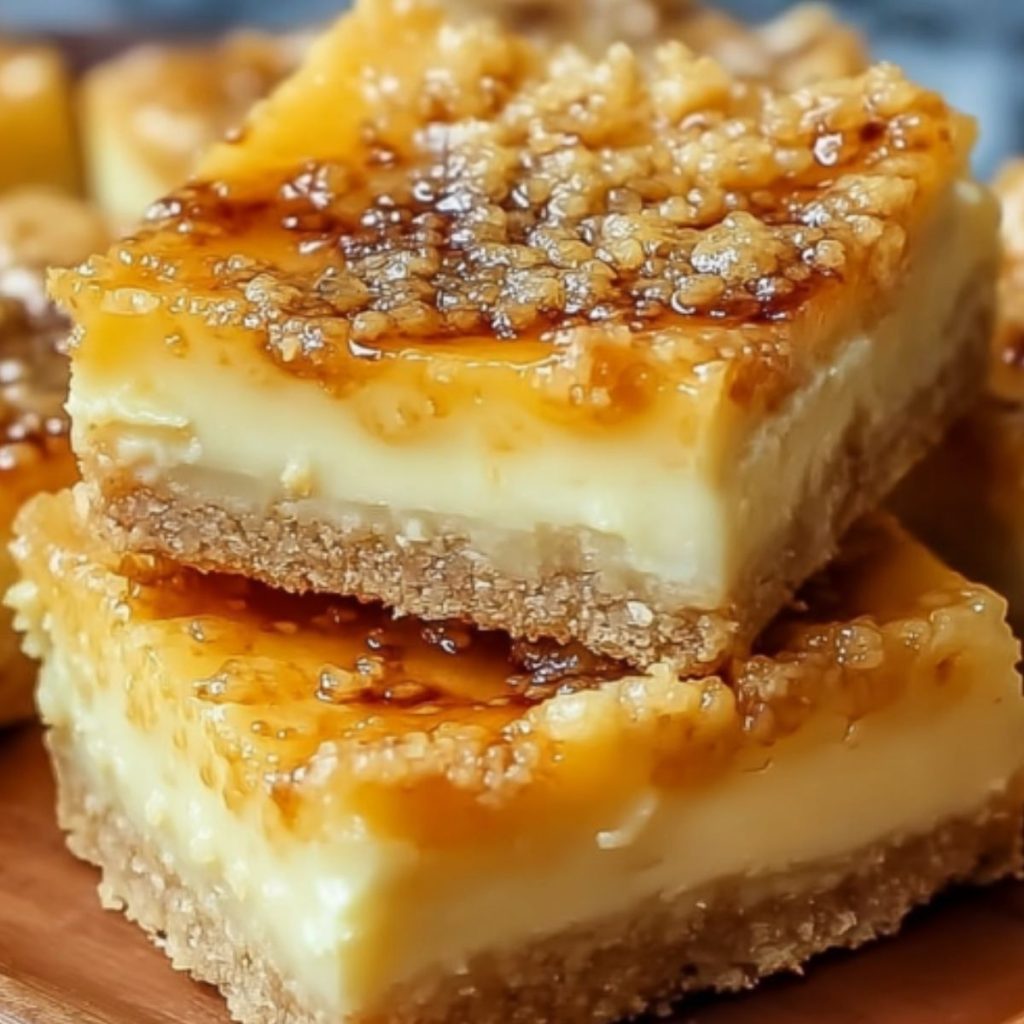
- The brown sugar topping caramelizes perfectly under heat, creating that signature crackable top through the Maillard reaction – the same chemical process that gives traditional crème brûlée its distinctive finish.
- I love that these bars can be served either warm (when the contrast between crisp top and creamy center is most pronounced) or chilled (when the flavors meld and intensify), making them incredibly versatile for any occasion.
- I’ve tested this recipe countless times and found it’s virtually foolproof – beginners achieve restaurant-quality results on their first attempt, while experienced bakers appreciate the clever shortcut approach to a classic dessert.
Ingredients Notes
- Unsalted Butter: I always choose European-style butter with higher butterfat for its richer flavor. Room temperature is crucial—I can leave an indent with my finger but it shouldn’t look greasy or melted.
- Granulated Sugar (for base): I prefer pure cane sugar for its clean sweetness. It creates that perfect crisp-tender texture in the shortbread base by inhibiting gluten formation while maintaining structure.
- Vanilla Extract: Use either pure vanilla extract or the seeds of half a vanilla bean in each layer. Avoid imitation vanilla, as the difference is immediately noticeable. The base absorbs these aromatic compounds beautifully.
- All-Purpose Flour: I sift mine twice for the most delicate crumb. Measuring by weight rather than volume ensures consistency, and I avoid overmixing to prevent a tough base.
- Sweetened Condensed Milk: This miracle ingredient creates that signature crème brûlée texture without the traditional water bath. I look for brands without additives for the purest flavor and creamiest result.
- Egg Yolks: I use farm-fresh eggs whenever possible—their vibrant orange yolks add richness and that gorgeous golden hue. Room temperature yolks incorporate more smoothly into the custard.
- Brown Sugar (for topping): I keep mine in an airtight container with a clay disk to prevent hardening. The molasses content caramelizes beautifully, creating that signature crackable top that makes these bars irresistible.
How to Make Crème Brûlée Cookie Bars
Preparation
- Preheat your oven to 350°F (175°C). Line a 9×13-inch baking pan with parchment paper, leaving an overhang on the sides for easy removal later.
Cookie Base
- In a large bowl, cream together the softened butter and granulated sugar until light and fluffy, about 3-4 minutes. The mixture should be pale and noticeably increased in volume.
- Beat in the first teaspoon of vanilla extract until fully incorporated, scraping down the sides of the bowl as needed.
- Gradually add the all-purpose flour, mixing on low speed until just combined. The dough will appear crumbly but should hold together when pressed between your fingers.
- Press the dough firmly and evenly into the prepared pan, creating a smooth, compact layer. Use the bottom of a measuring cup to ensure an even surface.
- Prick the dough all over with a fork to prevent it from puffing up during baking.
- Bake the cookie base for 15-18 minutes, or until the edges are just beginning to turn golden. The center should remain pale. Remove from oven but keep the oven on.
Custard Layer
- While the base is baking, prepare the custard layer. In a medium bowl, whisk together the sweetened condensed milk and egg yolks until smooth and well combined.
- Stir in the second teaspoon of vanilla extract. The mixture should have a silky, pourable consistency with a rich, vanilla aroma.
- Pour the custard mixture evenly over the hot cookie base, gently tilting the pan if necessary to ensure complete coverage.
- Return the pan to the oven and bake for an additional 15-20 minutes. The custard is done when it appears set around the edges but still has a slight jiggle in the center, similar to a cheesecake.
Note: The custard forms a luxuriously thin layer, much like the delicate top of traditional crème brûlée, which provides the perfect balance with the shortbread base.
Caramelized Topping
- Remove the pan from the oven and let it cool for 10 minutes. Then evenly sprinkle the brown sugar over the custard layer, creating a thin, uniform coating.
- For smoother caramelization, press the brown sugar slightly into the custard with your fingertips or use a fine sieve to sprinkle it evenly.
- Set your oven to broil. Place the pan under the broiler for 1-2 minutes, watching constantly, until the sugar melts and caramelizes to a deep amber color with bubbling spots. Rotate the pan if necessary for even caramelization.
Finishing
- Remove from the broiler and let the bars cool completely at room temperature, about 1 hour. The caramelized top will harden as it cools, creating that classic crème brûlée “crack.”
- Transfer the pan to the refrigerator and chill for at least 2 hours, or overnight for best results. The custard will continue to set and the flavors will intensify.
- When ready to serve, use the parchment paper overhang to lift the entire dessert from the pan. With a sharp knife dipped in hot water and wiped dry between cuts, slice into bars of desired size.
- For maximum textural contrast, serve within a few hours after removing from the refrigerator , when the caramelized top is still crisp and the layers beneath are perfectly chilled.
Expert Tips for Perfect Crème Brûlée Cookie Bars
- Temperature Matters : I never rush softening butter in the microwave. Instead, I cube it and let it sit for exactly 30 minutes at room temperature—soft enough to indent with a finger but still cool to touch.
- Perfect Your Base : Use a flat-bottomed glass wrapped in parchment to press the cookie dough. Work from center outward, applying firm, even pressure to create a compact base that won’t crumble when sliced.
- Protect Your Custard : Position the oven rack in the middle position, not too close to heating elements. If you notice the custard browning too quickly, tent with foil while maintaining heat circulation.
- Broiling Success : For that perfect caramelized top, position pan 6 inches from broiler. I keep the door slightly ajar and rotate every 30 seconds for even caramelization without burning.
- Slice Like a Pro : Refrigerate bars for at least 4 hours before cutting. Dip knife in hot water, wipe completely dry between each cut, and use a single, decisive downward motion—never saw back and forth.
Storage Tips for Crème Brûlée Cookie Bars
- Refrigeration: Store cut bars in an airtight container for up to 4 days. Place parchment paper between layers to prevent sticking and preserve the caramelized top’s texture.
- Optimal Serving: Remove from refrigerator 15-20 minutes before serving. This slight temperature rise enhances flavor while maintaining the perfect contrast between creamy center and crisp top.
- Freezing Method: For longer storage, freeze individually wrapped bars on a baking sheet until solid, then transfer to freezer bags. Consume within 2 months for best quality.
- Prevent Moisture: When refrigerating, place a paper towel under the container lid to absorb condensation. This prevents soggy tops and maintains that signature crackable caramel layer.
- Thawing Technique: Thaw frozen bars overnight in the refrigerator . Never microwave—it melts the layers unevenly. For emergencies, thaw at room temperature for 1 hour on a wire rack.
- Recrisp Option: To restore the caramelized top after refrigeration, sprinkle with a thin layer of sugar and torch briefly, or broil for 30 seconds. Watch constantly to prevent burning.
- Food Safety: Discard bars left at room temperature for over 2 hours. The custard layer contains egg yolks and condensed milk that can develop harmful bacteria when improperly stored.
Variations and Substitutions for Crème Brûlée Cookie Bars
Dietary Adaptations
• Gluten-Free Base: Substitute all-purpose flour with a 1:1 gluten-free baking blend plus ½ teaspoon xanthan gum. The cookie base may be slightly more delicate but will maintain its buttery foundation.
• Dairy-Free Option: Replace butter with plant-based stick butter (not tub margarine) and use coconut condensed milk. The result is equally rich with a subtle coconut undertone.
• Vegan Version: Substitute butter with vegan butter, egg yolks with 2 tablespoons cornstarch mixed with 2 tablespoons water, and use coconut condensed milk. The custard sets beautifully but with a slightly different texture.
• Reduced Sugar: Cut granulated sugar to ¾ cup and use a monk fruit brown sugar blend for topping. The sweetness profile shifts slightly, highlighting the vanilla notes more prominently.
Flavor Variations
• Citrus Infusion: Add 1 tablespoon orange or lemon zest to the cookie base and 1 teaspoon to the custard. The bright citrus notes cut through the richness beautifully.
• Espresso Elegance: Mix 1 tablespoon instant espresso powder into the cookie dough and replace one teaspoon of vanilla with coffee extract in the custard for a sophisticated mocha variation.
• Chocolate Layer: Sprinkle ½ cup mini chocolate chips over the baked cookie base before adding custard. They’ll create pockets of melted chocolate within the bars.
• Spiced Comfort: Add ½ teaspoon cinnamon, ¼ teaspoon nutmeg, and a pinch of cardamom to the cookie base for a chai-inspired variation perfect for fall and winter.
• Maple Twist: Replace granulated sugar with ¾ cup maple sugar in the base and use maple extract instead of vanilla in the custard layer for a Canadian-inspired treat.
• Coconut Dream: Add ½ cup toasted coconut to the cookie base and sprinkle additional toasted coconut over the brown sugar before broiling for texture and tropical flavor.
• Salted Caramel: Add ¼ teaspoon flaky sea salt to the brown sugar topping before broiling and sprinkle additional salt after caramelization for a sweet-salty balance.
What to Serve with Crème Brûlée Cookie Bars
Beverages
• Espresso: The robust bitterness of a freshly pulled espresso shot creates the perfect counterpoint to the bars’ sweetness, cleansing the palate between bites while enhancing the vanilla notes.
• French Press Coffee: A medium-dark roast with chocolate undertones complements the caramelized sugar topping. The clean, full-bodied flavor cuts through the richness without overwhelming delicate vanilla notes.
• Earl Grey Tea: The bergamot’s subtle citrus notes and tannins balance the dessert’s sweetness. Serve hot with a lemon twist to brighten and reset the palate between indulgent bites.
• Sauternes: This honeyed French dessert wine mirrors the caramelized sugar while its acidity prevents palate fatigue. The wine’s apricot and vanilla notes amplify similar flavors in the bars.
• Tawny Port: The nutty, caramel undertones in aged tawny port create a seamless flavor bridge with the brûléed top while its concentrated fruit provides contrast to the creamy custard.
Accompaniments
• Fresh Berries: A simple side of raspberries or blackberries offers tart juiciness that cuts through the bars’ richness. The acidity creates a pleasant palate-cleansing effect between bites.
• Lemon Sorbet: A small quenelle provides refreshing contrast through temperature and acidity. The bright citrus cleanses the palate while enhancing the vanilla notes in the bars.
• Candied Citrus Peel: Orange or lemon peel candied in-house offers bitter-sweet contrast and textural interest. The subtle citrus oils elevate the vanilla and caramel flavors.
• Toasted Nuts: A small serving of lightly salted, toasted pistachios or hazelnuts introduces savory crunch that balances the bars’ sweetness and complements the shortbread base.
Frequently Asked Questions: Crème Brûlée Cookie Bars
Can I make these bars without a kitchen torch?
Yes! The broiler method works perfectly. Position rack 6 inches from heat source and watch constantly to prevent burning.
Why is my cookie base crumbly?
Likely undermixed or overbaked. Dough should hold when pressed between fingers. Press firmly into pan using flat-bottomed measuring cup.
How do I know when the custard layer is done?
Edges should be set with slight jiggle in center. Overbaking causes curdling; underbaking results in runny custard.
Can I make these bars ahead for a party?
Absolutely! They’re best made 1-2 days ahead. The flavors deepen and the layers set perfectly in refrigeration.
Why didn’t my brown sugar caramelize properly?
Sugar layer too thick or uneven. Sprinkle thinly, ensure oven properly preheated, and position rack correctly.
Can I use a kitchen torch instead of broiling?
Yes! Sprinkle sugar evenly, then torch in sweeping motions until caramelized. Provides more precise control over browning.
How do I prevent soggy cookie base?
Pre-bake base completely, cool slightly before adding custard, and avoid overmixing flour which develops too much gluten.
Are these bars too sweet? Can I reduce sugar?
Reduce base sugar to ¾ cup and use dark brown sugar topping. Balance will maintain while reducing sweetness.
My custard layer cracked. What happened?
Overbaking or cooling too quickly. Bake just until set and cool gradually at room temperature before refrigerating.
Can I freeze these bars?
Yes! Wrap individual pieces tightly, freeze up to 2 months. Thaw overnight in refrigerator for best texture.
- 0 Facebook
- 6 Pinterest
- 3 Email
- Copy Link
- 9 shares
Crème Brûlée Cookie Bars
Ingredients
Instructions
Preheat your oven to 350°F (175°C). Line a 9×13-inch baking pan with parchment paper, leaving an overhang on the sides for easy removal later.
In a large bowl, cream together the softened butter and granulated sugar until light and fluffy, about 3-4 minutes. The mixture should be pale and noticeably increased in volume.
Beat in the first teaspoon of vanilla extract until fully incorporated, scraping down the sides of the bowl as needed.
Gradually add the all-purpose flour, mixing on low speed until just combined. The dough will appear crumbly but should hold together when pressed between your fingers.
Press the dough firmly and evenly into the prepared pan, creating a smooth, compact layer. Use the bottom of a measuring cup to ensure an even surface.
Prick the dough all over with a fork to prevent it from puffing up during baking.
Bake the cookie base for 15-18 minutes, or until the edges are just beginning to turn golden. The center should remain pale. Remove from oven but keep the oven on.
While the base is baking, prepare the custard layer. In a medium bowl, whisk together the sweetened condensed milk and egg yolks until smooth and well combined.
Stir in the second teaspoon of vanilla extract. The mixture should have a silky, pourable consistency with a rich, vanilla aroma.
Pour the custard mixture evenly over the hot cookie base, gently tilting the pan if necessary to ensure complete coverage.
Return the pan to the oven and bake for an additional 15-20 minutes. The custard is done when it appears set around the edges but still has a slight jiggle in the center, similar to a cheesecake.
Remove the pan from the oven and let it cool for 10 minutes. Then evenly sprinkle the brown sugar over the custard layer, creating a thin, uniform coating.
For smoother caramelization, press the brown sugar slightly into the custard with your fingertips or use a fine sieve to sprinkle it evenly.
Set your oven to broil. Place the pan under the broiler for 1-2 minutes, watching constantly, until the sugar melts and caramelizes to a deep amber color with bubbling spots. Rotate the pan if necessary for even caramelization.
Remove from the broiler and let the bars cool completely at room temperature, about 1 hour. The caramelized top will harden as it cools, creating that classic crème brûlée “crack.”
Transfer the pan to the refrigerator and chill for at least 2 hours, or overnight for best results. The custard will continue to set and the flavors will intensify.
When ready to serve, use the parchment paper overhang to lift the entire dessert from the pan. With a sharp knife dipped in hot water and wiped dry between cuts, slice into bars of desired size.
For maximum textural contrast, serve within a few hours after removing from the refrigerator, when the caramelized top is still crisp and the layers beneath are perfectly chilled.