- 0 Facebook
- 10 Pinterest
- 10 Email
- Copy Link
- 20 shares
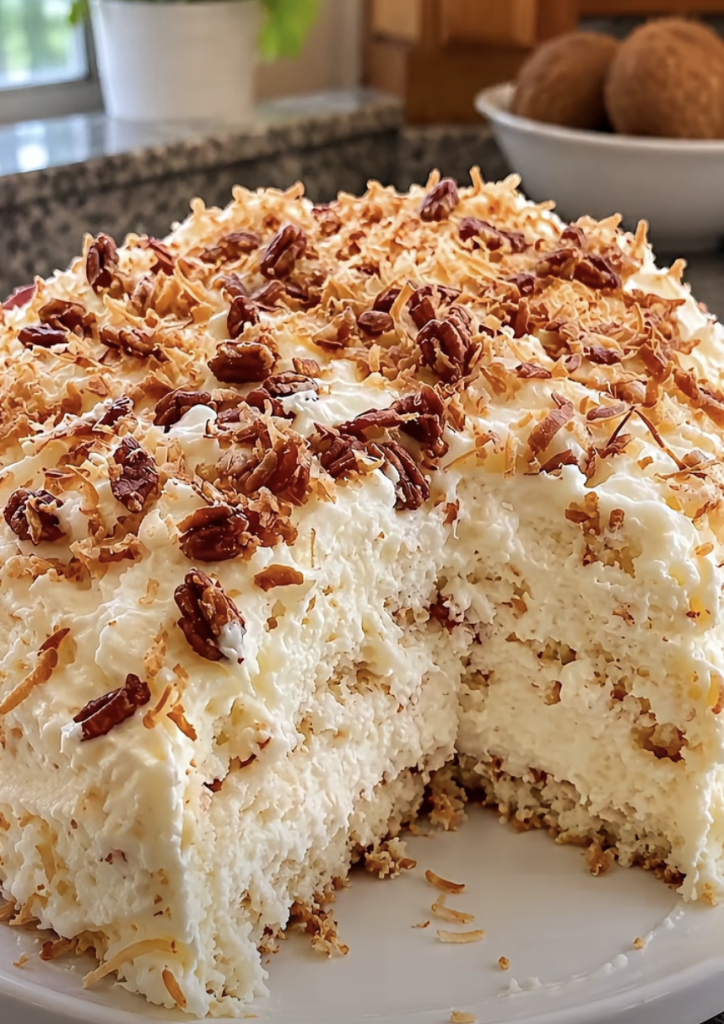
Toasted coconut and a cloud of tangy cream cheese topping do all the heavy lifting in this sundae cake, and not a grain of sugar is in sight. The almond flour base bakes up tender, moist, and nutty, while the whipped coconut cream on top is billowy, rich, and just sweet enough. Everything comes together with a couple of bowls and an electric mixer (easy, honestly), then gets crowned with crunchy pecans and a slow drizzle of sugar-free caramel for that sundae finish.
Why You’ll Love This Recipe
Why Choose Sugar-Free Coconut Cream Sundae Cake?
Some desserts feel like a compromise when sugar is off the table, but this one never does. Tender almond flour cake, a tangy-sweet coconut cream topping, and a crunchy finish add up to a treat that works for a weeknight craving or a weekend gathering. Here’s what makes it worth baking:
- Layered Coconut Flavor : Coconut milk, shredded coconut, and a splash of coconut extract build real depth, so every bite tastes toasty, creamy, and never one-note.
- Tender, Moist Crumb : Almond flour and melted butter keep the cake soft and rich, with none of the dry, crumbly edges that often plague low-carb baking.
- Cloud-Like Frosting : Softened cream cheese beaten with chilled cream and coconut cream whips up thick and billowy, holding its shape for clean, bakery-style slices.
- Easy Weeknight Effort : Just 20 minutes of prep, a couple of mixing bowls, and an electric mixer stand between you and a homemade dessert that looks impressive.
- Crunch Makes the Sundae : Toasting the coconut and pecans adds nutty contrast to the soft cream, and a slow caramel drizzle finishes it like a true sundae.
- Make-Ahead Friendly : Cool the cake completely before frosting so the topping stays fluffy, then chill it; leftovers keep well, covered, in the fridge for up to 3 days.
Ingredient Notes
A great dessert starts with the right ingredients, and that’s especially true when sugar is out of the picture. Here’s what each one brings to this Sugar-Free Coconut Cream Sundae Cake, plus a few tips to keep the texture tender and the flavor balanced.
Quick note: Check labels on sweeteners, extracts, and caramel sauce. Some products hide added sugars or fillers that can change both flavor and texture.
For the Cake
- Almond flour : This forms the tender, nutty base and keeps the cake low-carb. Choose finely ground blanched almond flour (not coarse almond meal) for a soft crumb, and spoon it into the measuring cup and level it off rather than scooping.
- Unsweetened shredded coconut : It adds chew, natural sweetness, and toasty coconut flavor throughout the crumb. Fine or medium shreds blend in best, while large flakes can make the texture a bit stringy.
- Granulated sugar-free sweetener : This sweetens the cake without sugar. A 1:1 erythritol or monk fruit blend works well, and allulose gives a softer, moister crumb but browns faster, so keep an eye on the oven .
- Large eggs : Eggs provide structure, lift, and richness, which matters since almond flour has no gluten. Room-temperature eggs blend more smoothly into the batter, so set them out about 30 minutes before baking.
- Unsweetened coconut milk : This brings moisture and a gentle coconut flavor. Shake the carton well, or stir canned coconut milk until smooth, so the batter mixes evenly.
- Melted unsalted butter : Butter adds richness and keeps the crumb soft. Let it cool slightly before mixing so it doesn’t scramble the eggs, and swap in melted coconut oil for a dairy-free option.
- Baking powder : It gives the dense almond flour batter its lift. Use a fresh, aluminum-free baking powder, since an old tin can leave the cake flat. To test it, stir a little into hot water and look for lively fizzing.
- Vanilla extract (cake) : Vanilla rounds out the sweetness and adds warmth. Pure vanilla extract has a deeper, more balanced flavor than imitation.
- Coconut extract (cake) : Just a little amplifies the coconut flavor without adding bulk. Measure carefully, because too much can taste perfumey, and skip it if needed by adding an extra ½ teaspoon of vanilla.
- Salt : A small pinch sharpens the flavors and keeps sugar-free sweeteners from tasting flat. Fine sea salt dissolves evenly in the batter.
For the Coconut Cream Topping
- Cream cheese : This is the tangy, sturdy base of the frosting, and it helps the topping hold its shape for clean slices. Use full-fat block cream cheese (not spreadable tubs) and soften it fully so the frosting beats up lump-free.
- Heavy whipping cream : It whips into the billowy, cloud-like texture that makes this a sundae cake. Keep it very cold, and chill the bowl and beaters too, for faster, fluffier peaks.
- Powdered sugar-free sweetener : A powdered sweetener dissolves smoothly into the cream, so there’s no gritty bite. If only granulated is on hand, blitz it in a clean blender or spice grinder until fine.
- Unsweetened coconut cream : This adds rich, tropical flavor and a silky body. Chill a can overnight, then scoop out only the thick, solid cream from the top, saving the watery portion for smoothies.
- Vanilla extract (topping) : It softens the tang of the cream cheese and adds a bakery-style aroma. Add it near the end of mixing so the flavor stays bright.
- Coconut extract (topping) : It echoes the cake’s coconut flavor and ties the layers together. Start with the measured amount and taste before adding more, since extracts vary in strength by brand.
For the Topping
- Toasted unsweetened shredded coconut : Toasting brings out nutty, caramelized notes and adds crunch against the soft cream. Toast it in a dry skillet over medium-low heat, or in a 325°F oven for 3 to 5 minutes, stirring often, because it browns quickly.
- Chopped pecans : Pecans add buttery crunch and a classic sundae feel. Toast them alongside the coconut for deeper flavor, and swap in walnuts or almonds if that’s what’s in the pantry.
- Sugar-free caramel sauce (optional) : A slow drizzle gives the cake its sundae finish and a touch of sweet, buttery flavor. Look for a sauce with no added sugar, and warm it briefly so it flows smoothly without melting the frosting.
Step-by-Step Instructions
- Preheat the oven to 350°F (175°C), then grease a 9-inch round baking pan and line the bottom with parchment paper. This makes it easy to lift the tender almond flour cake out later.
- Whisk the almond flour, ½ cup shredded coconut, granulated sweetener, baking powder, and salt in a large bowl until evenly combined. Break up any small clumps so the batter bakes evenly.
- In a second bowl, whisk the eggs, coconut milk, slightly cooled melted butter, vanilla extract, and coconut extract until smooth. Pour this into the dry mixture and fold until no streaks remain; the batter should be thick but spreadable.
- Spread the batter into the pan and smooth the top with a spatula. Bake for 28 to 32 minutes, until the top is golden and a toothpick in the center comes out clean.
- Cool the cake in the pan for 15 minutes, then transfer it to a wire rack until completely cool, about 1 hour. I never skip this step, because even a slightly warm cake will melt the frosting.
- While the cake cools, toast the remaining ½ cup coconut and the chopped pecans in a dry skillet over medium-low heat for 3 to 5 minutes. Stir often and pull them off the heat as soon as they smell nutty and turn light golden brown.
- Beat the softened cream cheese with an electric mixer for 1 to 2 minutes until silky and lump-free. Add the powdered sweetener, chilled coconut cream, vanilla, and coconut extract, then mix until smooth. In a separate chilled bowl, whip the cold heavy cream to stiff peaks (about 2 to 3 minutes), then gently fold it into the cream cheese mixture.
- Spread the coconut cream topping over the cooled cake in generous swoops, then scatter the toasted coconut and pecans over the top. I like to drizzle the caramel sauce last, then chill the cake for at least 30 minutes so it slices cleanly.
Tip: If the topping looks a little soft after folding, chill it for 10 to 15 minutes before spreading. It firms up quickly and holds its shape better.
Reminder: Let the cake cool completely before frosting, and keep leftovers covered in the refrigerator for up to 3 days.
Storage & Freezing
- Refrigerate: Store the frosted Sugar-Free Coconut Cream Sundae Cake covered in the fridge for up to 3 days. Cream cheese and whipped cream frosting should not sit out for more than 2 hours. An airtight cake carrier is best, or tent the cake loosely with foil, which keeps the frosting from smudging. The almond flour crumb firms up and tastes even moister on day two, but the toasted coconut and pecans soften as they absorb moisture from the cream.
- Freeze the cake, not the frosting: The unfrosted cake freezes best. Wrap the cooled cake tightly in plastic wrap, then foil, and freeze for up to 2 months. Whipped cream cheese frosting can turn slightly grainy or weepy after freezing. If you need to freeze leftovers already frosted, chill the cake until firm, then freeze the slices on a parchment-lined tray for 1 hour. Wrap each slice individually and use them within 1 month. Thaw in the fridge, about 8 hours for a whole cake or 2 to 3 hours for a slice, rather than on the counter.
- Reheat and refresh: This cake is meant to be served cold, so don’t heat the frosted slices. A thawed unfrosted cake can be warmed, wrapped in foil, at 300°F for 8 to 10 minutes to bring back its tender crumb. Let it cool completely before frosting, as in the recipe, or the topping will melt. If the frosting looks slightly loose after thawing, fold it gently with a spatula, or chill it for 10 to 15 minutes before spreading.
- Make-ahead tip: I bake and freeze the cake layer ahead of time, then make the topping fresh the day I serve it. I also toast a fresh batch of coconut and pecans for 3 to 5 minutes in a dry skillet and add the caramel drizzle just before slicing, so the crunch and shine look just-made.
Make Ahead Options
Yes, you can make Sugar-Free Coconut Cream Sundae Cake ahead of time, which makes it a lifesaver for busy weeknights and weekend gatherings! Bake the cake up to 2 days in advance , cool it completely (about 1 hour), then wrap it tightly and refrigerate to keep the crumb moist. Whip the coconut cream topping up to 24 hours ahead and store it covered in the fridge, then give it a gentle stir before spreading. Toast the coconut and pecans up to 3 days early and keep them in an airtight container at room temperature. Before serving, frost the cake, chill it for 30 minutes, and add the crunchy toppings and caramel drizzle so every bite stays fresh and just as delicious.
Variations & Substitutions
This Sugar-Free Coconut Cream Sundae Cake is forgiving, so feel free to adjust it to your pantry, your diet, or your mood. Here are a few tested tweaks that keep the cake tender and the topping cloud-like.
- Dairy-free version : Use melted coconut oil for the butter, dairy-free block cream cheese, and whipped chilled coconut cream in place of heavy cream. The frosting will be softer, so chill it longer.
- Different crunchy topping : Swap pecans for walnuts or sliced almonds, or use toasted pumpkin seeds for crunch. Toast them with the coconut for deeper flavor.
- Sweetener choices : A 1:1 erythritol or monk fruit blend works well, while allulose browns faster, so check the cake at 25 minutes.
- Lighter frosting : I sometimes replace half the cream cheese with thick, full-fat Greek yogurt for a tangier, lighter frosting. Chill it 15 minutes before spreading.
- Cupcake sundaes : Bake the batter in a lined 12-cup muffin tin until a toothpick comes out clean, then frost the cooled cupcakes for individual sundae-style servings.
- Chocolate-coconut twist : I fold ¼ cup sugar-free chocolate chips into the batter or drizzle sugar-free chocolate sauce on top for an Almond Joy-style flavor.
Expert Tips
A few small details make the difference between a good Sugar-Free Coconut Cream Sundae Cake and a bakery-worthy one.
- Spoon, don’t scoop : Spoon blanched almond flour into the cup and level it off. Packed flour makes the cake dense and heavy instead of tender.
- Cool the butter : I let the melted butter sit for 5 minutes before whisking it with the eggs, so the batter stays smooth instead of turning scrambled-looking.
- Chill your whipping tools : Pop the bowl and beaters in the freezer for 10 minutes. Cold gear helps the heavy cream reach stiff peaks faster and hold them.
- Beat cream cheese first : Whip the softened block cream cheese alone until silky before adding coconut cream. Lumps won’t smooth out once the liquids go in.
- Scoop only solid coconut cream : Chill the can overnight and spoon off just the thick top layer. The watery part thins the frosting and makes it slump.
- Pull coconut first : I toast the coconut and pecans together but remove the coconut as soon as it turns golden, since fine shreds scorch quicker than nuts.
Serving Suggestions
- Slice it cold and plate it like a sundae: Chill the cake for at least 30 minutes, then cut it with a long knife dipped in hot water and wiped dry between slices. The cream cheese frosting stays neat that way. Because the cake is rich, I cut 8 modest wedges rather than 6 big ones. Set each slice on a small plate with a few extra toasted pecans and a thin zigzag of warmed sugar-free caramel. Drizzle the caramel right before serving so it stays glossy and the coconut stays crisp.
- Add something tart to balance the richness: The coconut cream topping is silky and mellow, so a few fresh raspberries or sliced strawberries on the side give it a bright contrast. A little lime zest over the berries also works well, since citrus plays nicely with coconut. For a lighter finish, add a spoonful of unsweetened Greek yogurt beside the slice.
- Pour a drink with some bitterness or bubbles: Strong black coffee, espresso, or unsweetened cold brew cuts through the cream and brings out the toasted notes in the nuts. For a caffeine-free option, try peppermint or hibiscus tea. If you’re hosting, a chilled glass of brut Cava or Prosecco gives a dry, crisp sparkle that keeps each bite from feeling heavy.
- Match the setting: For a weeknight treat, serve a single slice with coffee, straight from the fridge. For a dinner party, let the cake sit out for 10 to 15 minutes to soften slightly (no longer than 2 hours total), then plate it with berries and a drizzle of caramel. I like to bring the whole cake to the table so guests see the frosting swoops before the first slice. This Sugar-Free Coconut Cream Sundae Cake also works well after grilled fish, chicken, or a big salad, when you want something sweet without a heavy finish.
Common Questions About Sugar-Free Coconut Cream Sundae Cake That’s Irresistible
- Can I use a different sweetener? Yes, a 1:1 erythritol or monk fruit blend works.
- Why cool the cake before frosting? Warm cake melts the cream cheese topping.
- How long do leftovers keep? Covered in the fridge, up to 3 days.
- How do I keep the coconut from burning? I pull the coconut off the heat first.
- 0 Facebook
- 10 Pinterest
- 10 Email
- Copy Link
- 20 shares
Sugar-Free Coconut Cream Sundae Cake That's Irresistible
Ingredients
Instructions
Preheat the oven to 350°F (175°C). Grease a 9-inch round baking pan and line the bottom with parchment paper to make it easy to lift the cake out later.
Whisk the almond flour, 1/2 cup shredded coconut, granulated sweetener, baking powder, and salt in a large bowl until evenly combined, breaking up any clumps.
In a second bowl, whisk the eggs, coconut milk, slightly cooled melted butter, vanilla extract, and coconut extract until smooth. Pour into the dry mixture and fold until no streaks remain; the batter should be thick but spreadable.
Spread the batter into the prepared pan and smooth the top. Bake for 28 to 32 minutes, until the top is golden and a toothpick in the center comes out clean.
Cool the cake in the pan for 15 minutes, then transfer to a wire rack and cool completely, about 1 hour. Cooling fully prevents the frosting from melting.
While the cake cools, toast the remaining 1/2 cup coconut and the chopped pecans in a dry skillet over medium-low heat for 3 to 5 minutes, stirring often, until nutty and light golden brown. Remove the coconut as soon as it turns golden to avoid burning.
Beat the softened cream cheese with an electric mixer 1 to 2 minutes until silky. Add powdered sweetener, chilled coconut cream, vanilla, and coconut extract, mixing until smooth. In a separate chilled bowl, whip the cold heavy cream to stiff peaks (about 2 to 3 minutes), then gently fold it into the cream cheese mixture.
Spread the coconut cream topping over the cooled cake in generous swoops, then scatter the toasted coconut and pecans on top. Drizzle the sugar-free caramel sauce if using, then chill the cake at least 30 minutes so it slices cleanly.
- Tip
If the topping looks a little soft after folding, chill it for 10 to 15 minutes before spreading to help it firm up and hold its shape.
Notes
Spoon, don’t scoop: Spoon blanched almond flour into the measuring cup and level it off to avoid a dense cake.
Cool the butter: Let melted butter rest 5 minutes before adding to the eggs so the batter doesn’t scramble.
Chill your tools: Pop the mixing bowl and beaters in the freezer for 10 minutes to help the heavy cream reach stiff peaks faster.
Beat cream cheese first: Whip the softened block alone until silky; lumps are harder to remove once liquids are added.
Scoop only solid coconut cream: Chill the can overnight and use just the thick top layer for the frosting to avoid a runny topping.
Pull coconut first: Toast coconut and pecans together but remove the coconut as soon as it’s golden since shreds scorch quicker.
Storage: Refrigerate the frosted cake covered for up to 3 days. Freeze unfrosted cake layers up to 2 months wrapped tightly; freeze frosted slices individually for up to 1 month. Thaw in the fridge.
Nutrition
| Serving Size | 1 slice (about 1/8 to 1/10 of cake) |
|---|---|
| Calories | 420 kcal |
| Sugar Content | 2 g |
| Sodium Content | 150 mg |
| Fat Content | 36 g |
| Saturated Fat Content | 14 g |
| Unsaturated Fat Content | 20 g |
| Trans Fat Content | 0 g |
| Carbohydrate Content | 8 g |
| Fiber Content | 3 g |
| Protein Content | 8 g |
| Cholesterol Content | 100 mg |