- 0 Facebook
- 0 Pinterest
- 0 Email
- Copy Link
- 0 shares
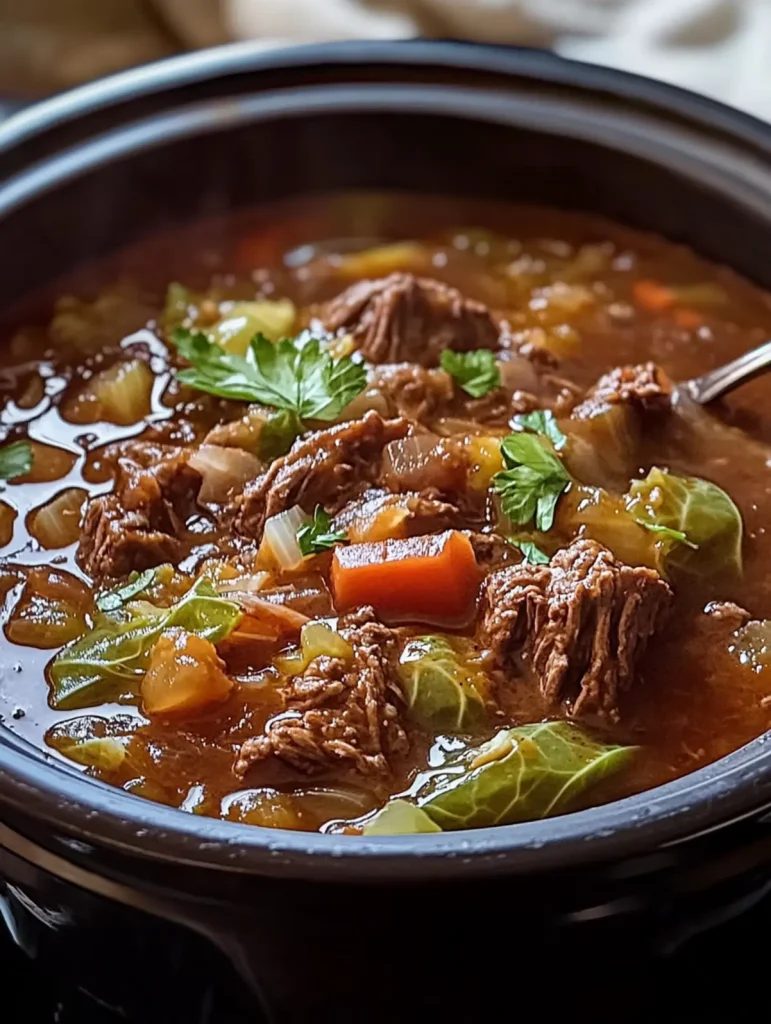
Fork-tender beef swimming in a smoky, tomato-kissed broth is what makes this slow cooker stew so memorable. Chunks of chuck, sweet carrots, and soft potatoes simmer low and slow all day (the cabbage melts into silky ribbons, soaking up every drop of flavor) while the kitchen fills with an aroma no drive-thru could ever match. Ladle it over rice or pair it with crusty bread, anything that can mop up that rich, savory broth.
Why Make Slow Cooker Beef and Cabbage Stew?
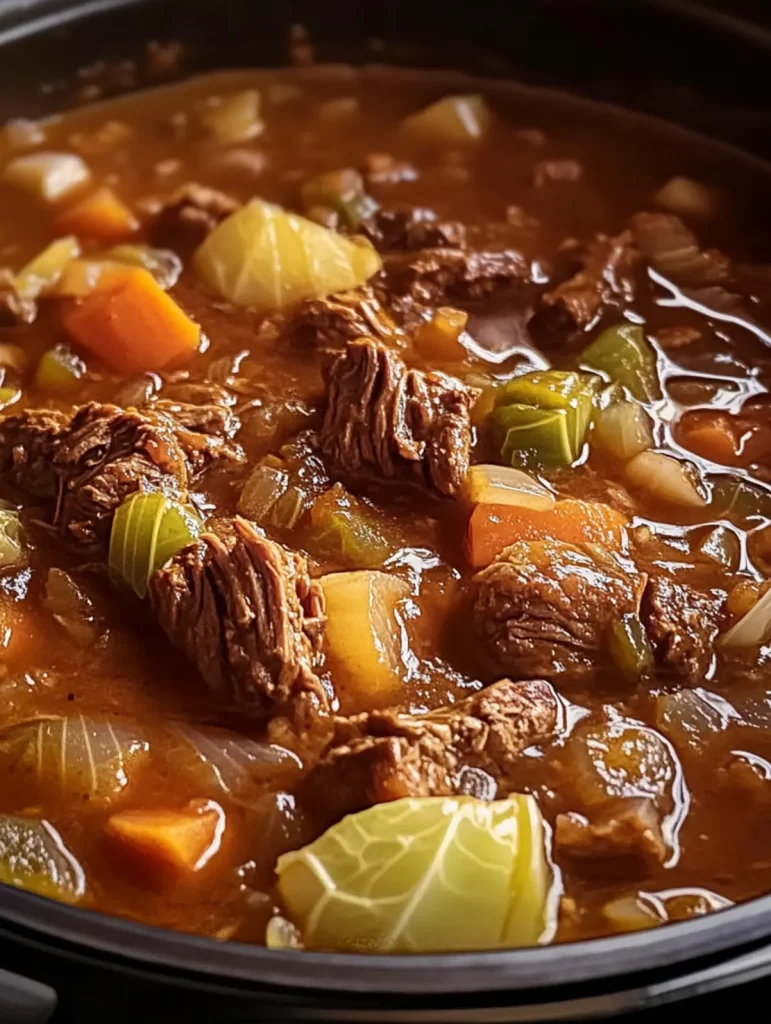
Because it delivers deep, slow-simmered flavor with almost no hands-on effort: about 20 minutes of prep, then the slow cooker does the rest. Browning the beef chuck first builds a savory base, while tomato paste, Worcestershire, and smoked paprika add layers of richness. Chuck is the right cut here. Its connective tissue melts over eight hours on low, so the beef turns fork-tender instead of dry. Cabbage softens into the broth rather than turning mushy, and a quick cornstarch slurry stirred in at the end gives the stew a spoon-coating body. Finish with fresh parsley for a bright lift. It’s also a smart make-ahead meal, since the flavors deepen overnight and leftovers keep well in the fridge for up to three days. That makes it a satisfying, homemade alternative to fast food on busy weeknights.
The Ingredients That Make It Work
Great stew starts with good ingredients, and each one here has a job, from tender beef to a silky, savory broth. This quick guide for your Slow Cooker Beef and Cabbage Stew explains what each ingredient does and how to get the best results from it.
Quick note: if you shop for only one thing carefully, make it the beef. Everything else is forgiving.
The Beef & Broth Base
- Beef chuck (2 lb / 900 g) : Chuck is well marbled and rich in connective tissue, which melts into tender, juicy bites over a long cook. Pat the cubes dry and brown them in batches so they sear instead of steam. Beef brisket or bottom round also work, though chuck is the most forgiving.
- Beef broth (4 cups / 960 ml) : This is the backbone of the stew, so choose a good-quality, low-sodium broth to control the salt. Beef stock gives extra body, and bouillon dissolved in hot water works in a pinch.
The Vegetables
- Green cabbage (1 small head, about 1 1/2 lb / 680 g) : Cabbage turns sweet and silky as it cooks, soaking up the broth. Remove the tough core and chop into roughly 1-inch pieces so it softens evenly without disappearing. Savoy works as a substitute, but green cabbage holds its shape best.
- Carrots (4 medium) : Carrots add natural sweetness that balances the savory beef. Slice them about 1/2 inch thick so they stay tender but intact after 8 hours.
- Potatoes (3 medium, peeled and cubed) : Yukon Gold or red potatoes keep their shape and have a creamy texture. Russets also work, but they break down more and make the broth a little thicker. Cut them into even 1-inch cubes for consistent cooking.
- Yellow onion (1 medium) : Onion melts into the broth and gives it a mellow, sweet depth. White onion or shallots can stand in, but yellow onion has the best balance of sweetness and savoriness.
- Garlic (3 cloves) : Freshly minced garlic gives the stew a warm, aromatic backbone. Jarred minced garlic works if needed, but it is milder, so add a little extra.
The Flavor Builders
- Diced tomatoes (14.5 oz / 411 g can, undrained) : The juices add gentle acidity that brightens the rich beef and broth, so don’t drain the can. Fire-roasted diced tomatoes are a good upgrade for extra smokiness.
- Tomato paste (2 tablespoons) : This concentrated ingredient adds deep umami and a rounded, savory sweetness. For the best flavor, stir it into the pan after browning the beef and cook it for about a minute before it goes into the slow cooker. Tubes keep well in the fridge, making leftover paste easy to use.
- Worcestershire sauce (1 tablespoon) : It adds tang, depth, and a savory kick that makes the broth taste like it simmered for days. It contains anchovies, so it isn’t vegetarian. In a pinch, use 1 tablespoon soy sauce with a few drops of vinegar.
The Seasonings
- Dried thyme (1 teaspoon) : Dried herbs hold up well during long, slow cooking, giving the stew an earthy, woodsy note. If using fresh, substitute about 1 tablespoon of fresh thyme leaves.
- Smoked paprika (1 teaspoon) : It adds subtle smokiness and warm color without heat. Make sure the label says “smoked” rather than sweet or hot paprika. If you only have sweet paprika, add a tiny pinch of cumin for a similar depth.
- Salt (1 teaspoon) : Salt brings every flavor into focus. Because broths vary widely, taste the stew at the end and adjust, especially if you didn’t use low-sodium broth.
- Ground black pepper (1/2 teaspoon) : Pepper adds gentle warmth and a little bite. Freshly ground has noticeably more aroma than pre-ground, so grind it just before using if you can.
The Thickener & Finish
- Cornstarch (2 tablespoons) : This turns the thin cooking liquid into a glossy, spoon-coating broth without clouding the flavor. Stir it in during the last 15 to 20 minutes on high, or just before serving, so it has time to thicken fully. Flour can substitute, but it needs a bit longer to cook out its raw taste.
- Cold water (2 tablespoons) : Whisking cornstarch into cold water first creates a smooth slurry and prevents clumps. Never add cornstarch straight to hot liquid.
- Fresh parsley (2 tablespoons, chopped) : Parsley adds a bright, grassy finish that cuts through the richness. Flat-leaf (Italian) parsley has the best flavor. Stir it in right before serving so it stays vibrant.
How to Make Cozy Slow Cooker Beef and Cabbage Stew You’ll Crave
- Pat the beef chuck cubes dry and season them with half the salt and pepper. Sear them in a hot, lightly oiled skillet in two or three batches, about 2 to 3 minutes per side, until deeply browned, then transfer to the slow cooker.
- Stir the tomato paste into the same skillet and cook for about 1 minute, until it darkens to a brick red. I always pour in about 1 cup of the beef broth and scrape up the browned bits, because that’s where much of the flavor is, then pour it all over the beef.
- Layer the potatoes, carrots, onion, and garlic over the beef, then pile the chopped cabbage on top. The cabbage will mound above the rim at first, but it wilts and sinks as it cooks.
- Pour in the remaining broth and the undrained diced tomatoes, then add the Worcestershire sauce, thyme, smoked paprika, and the remaining salt and pepper. Give everything a gentle stir to distribute the seasonings.
- Cover and cook on low for 8 hours, until the beef breaks apart easily with a fork and the potatoes are tender when pierced. Resist lifting the lid, since every peek lets out heat and adds to the cooking time.
- Whisk the cornstarch and cold water in a small bowl until completely smooth, then stir it into the stew. Turn the slow cooker to high, cover, and cook for 15 to 20 minutes, until the broth turns glossy and lightly coats the back of a spoon.
- Taste the stew and adjust the salt if needed, since broths vary. I like to stir in the chopped parsley just before serving so it stays bright and fresh.
Tip: For the best texture, cut the potatoes and carrots into evenly sized pieces so they finish cooking at the same time as the beef.
Quick note: The broth may look thin before you add the cornstarch slurry, and that’s completely normal. It thickens quickly once it heats through, and it keeps thickening slightly as the stew rests.
Perfect Pairings & Serving Ideas
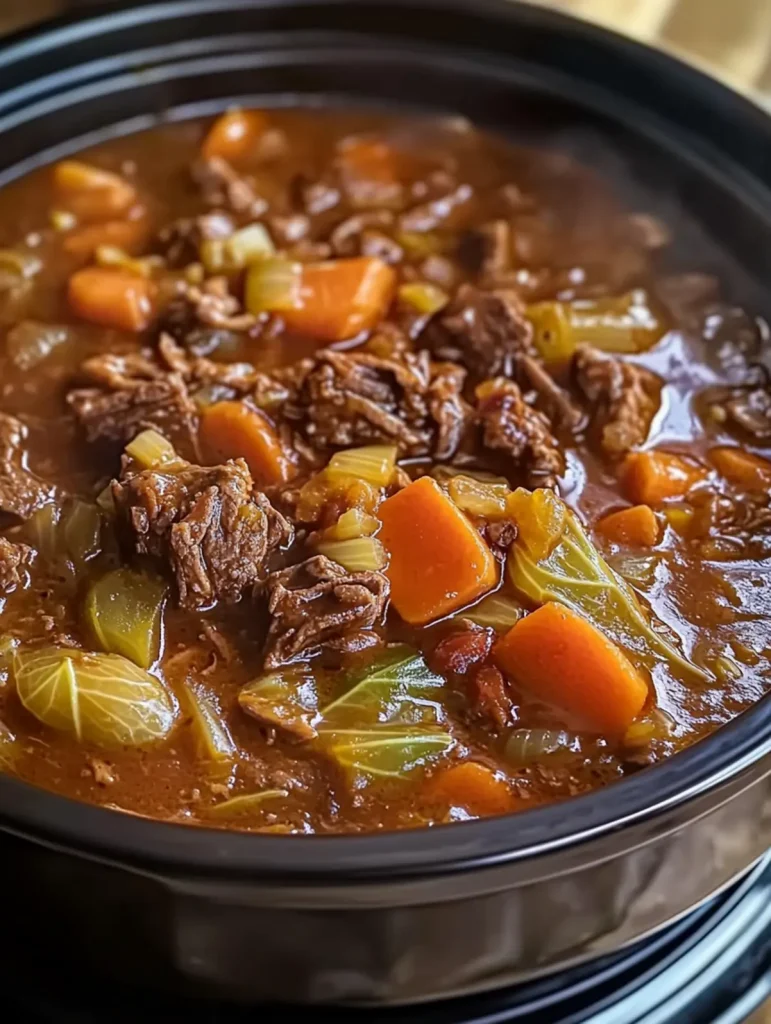
- Bowls and garnishes: Ladle this Slow Cooker Beef and Cabbage Stew into wide, warmed bowls so the glossy, cornstarch-thickened broth pools around the beef instead of sitting deep in a mug. Finish each bowl with a pinch of fresh parsley and a small dollop of sour cream or Greek yogurt. The tang plays nicely against the smoked paprika, and I like to add a few cracks of black pepper right at the table.
- Soak-up sides: Rich broth deserves something to mop it up. Serve thick slices of toasted crusty bread rubbed with a cut garlic clove, or spoon the stew over fluffy white rice, which works especially well for hungry crowds. Since the stew already has potatoes, I lean toward bread for weeknights and rice when I want to stretch it for extra guests.
- Something bright on the side: Beef, potatoes, and slow-cooked cabbage are deeply savory, so a sharp contrast keeps every bite lively. A crisp green salad with a mustard vinaigrette, quick-pickled red onions, or a plate of tangy dill pickles cuts through the richness the way the squeeze of lemon does in the pot. A spoonful of prepared horseradish stirred into the sour cream adds a gentle kick that suits the beef.
- Drinks and occasions: For a cozy dinner, pour a medium-bodied red like Côte du Rhône or Zinfandel, or a malty amber ale, since their fruit and mild bitterness hold up to the tomatoes and Worcestershire. For a non-alcoholic option, sparkling water with a lemon wedge refreshes the palate between bites. For a casual gathering, leave the slow cooker on warm and set out bowls, bread, and toppings so everyone can serve themselves.
Variations & Substitutions
This stew is forgiving, so feel free to adapt it to your pantry, your diet, or whatever flavors you’re craving. These swaps keep the cooking times and results reliable.
- Swap the beef : Pork shoulder, trimmed and cut into 1-inch cubes, sears and cooks exactly like chuck, turning tender and slightly sweeter.
- Go lower-carb : Replace the potatoes with the same weight of 1-inch rutabaga or turnip cubes. They finish in the same time and add a gentle, earthy sweetness.
- Make it vegetarian : Skip the beef and use 1 1/2 lb cremini mushrooms, vegetable broth, and soy sauce for Worcestershire. Stir in drained white beans during the last hour.
- Check gluten-free labels : Cornstarch is already gluten-free, but confirm your Worcestershire sauce and broth are labeled gluten-free, since some brands contain malt vinegar or wheat.
- Add caraway seeds : I stir in 1 teaspoon of caraway seeds with the thyme. Their warm, slightly anise-like flavor is a classic match for cabbage and beef.
- Deepen the broth : I sometimes deglaze the skillet with dry red wine or dark stout instead of 1 cup of broth, which adds a deep, savory richness.
Storage & Freezing
- Refrigerate: Cool the stew for no more than 2 hours, then transfer it to shallow airtight containers so it chills quickly and evenly. Leftover Slow Cooker Beef and Cabbage Stew keeps for up to 3 days in the fridge. The cornstarch-thickened broth will set up almost like a gravy once cold, which is normal. The flavors also deepen overnight, so day two often tastes even better.
- Freeze: Portion the cooled stew into freezer-safe containers or bags, leave about 1 inch of headspace for expansion, and freeze for up to 3 months. The beef freezes beautifully, and the cabbage and carrots hold up well, but potatoes can turn slightly grainy, especially russets. Yukon Golds fare better. I freeze mine in 2-cup portions and skip the parsley until serving, since fresh herbs turn dark and dull in the freezer.
- Thaw and reheat: Thaw overnight in the fridge, then warm the stew in a saucepan over medium-low heat, stirring often, until it’s steaming hot (165°F / 74°C). Avoid a hard boil, which can toughen the beef and break down the potatoes. If the broth has thinned after freezing, simmer it uncovered for a few minutes to bring back its body, or stir in a splash of beef broth if it’s too thick. For the microwave, heat in 1-minute bursts and stir between each.
- Finish like it’s fresh: Reheating can leave the flavor a little flat, so taste and adjust the salt, then stir in a fresh handful of chopped parsley. I also add a squeeze of lemon. If you’re serving it over rice, cook the rice fresh rather than freezing it in the stew, where it turns soft and soggy.
Expert Tips
These small details make the biggest difference when you’re cooking this Slow Cooker Beef and Cabbage Stew.
- Brown in batches : Crowding the skillet steams the beef instead of searing it, so give each chuck cube room and wait for a deep, dark crust.
- Deglaze the skillet : I always scrape up the browned bits with broth after toasting the tomato paste, since that fond adds savory depth the broth alone can’t match.
- Layer cabbage last : Piling cabbage on top of the heavier vegetables lets it soften into silky ribbons instead of sinking and turning to mush.
- Keep potatoes chunky : Cut Yukon Golds into full 1-inch cubes. Smaller pieces or russets can break down over eight hours and cloud the broth.
- Skim before thickening : Chuck releases fat as it cooks, so spoon off the surface fat before adding the cornstarch slurry for a cleaner, glossier broth.
- Taste before salting : Worcestershire, broth, and canned tomatoes all carry sodium, so taste after thickening. I finish a flat-tasting pot with a squeeze of lemon.
Make Ahead Options
Can you make Slow Cooker Beef and Cabbage Stew ahead of time? Absolutely, and it’s a lifesaver on busy mornings! Brown the beef, cook the tomato paste, and chop the cabbage, carrots, onion, and garlic up to 24 hours in advance, then refrigerate everything in separate airtight containers. Soak the cubed potatoes in cold water (to prevent browning) and drain well before using. Next morning, simply layer everything into the slow cooker, add the broth and seasonings, and cook on low for 8 hours. Finally, stir in the cornstarch slurry and parsley just before serving. Fully cooked stew keeps up to 3 days in the fridge and tastes even better the next day.
Common Questions About Cozy Slow Cooker Beef and Cabbage Stew You’ll Crave
- Can I use a different cut of beef? Yes, brisket or bottom round work, though chuck wins.
- Why does my broth look thin before thickening? Totally normal; it thickens fast once the slurry heats.
- Can I freeze leftovers? Yes, up to 3 months; Yukon Golds hold best.
- Will the cabbage turn mushy after 8 hours? No, I layer it on top so it stays silky.
- 0 Facebook
- 0 Pinterest
- 0 Email
- Copy Link
- 0 shares
Cozy Slow Cooker Beef and Cabbage Stew You'll Crave
Ingredients
Instructions
Pat the beef chuck cubes dry and season them with half the salt and pepper. Sear them in a hot, lightly oiled skillet in two or three batches, about 2 to 3 minutes per side, until deeply browned, then transfer to the slow cooker.
Stir the tomato paste into the same skillet and cook for about 1 minute, until it darkens to a brick red. I always pour in about 1 cup of the beef broth and scrape up the browned bits, then pour it all over the beef.
Layer the potatoes, carrots, onion, and garlic over the beef, then pile the chopped cabbage on top. The cabbage will mound above the rim at first, but it wilts and sinks as it cooks.
Pour in the remaining broth and the undrained diced tomatoes, then add the Worcestershire sauce, thyme, smoked paprika, and the remaining salt and pepper. Give everything a gentle stir to distribute the seasonings.
Cover and cook on low for 8 hours, until the beef breaks apart easily with a fork and the potatoes are tender when pierced. Resist lifting the lid, since every peek lets out heat and adds to the cooking time.
Whisk the cornstarch and cold water in a small bowl until completely smooth, then stir it into the stew. Turn the slow cooker to high, cover, and cook for 15 to 20 minutes, until the broth turns glossy and lightly coats the back of a spoon.
Taste the stew and adjust the salt if needed. Stir in the chopped parsley just before serving so it stays bright and fresh.
Quick note: The broth may look thin before you add the cornstarch slurry; it thickens quickly once it heats through and will set up slightly as the stew rests.
Notes
Brown in batches: Crowding the skillet steams the beef instead of searing it, so give each chuck cube room and wait for a deep, dark crust.
Deglaze the skillet: Scrape up the browned bits with about 1 cup of broth after toasting the tomato paste for extra savory depth.
Layer cabbage last: Pile cabbage on top of heavier vegetables so it softens into silky ribbons instead of turning mushy.
Keep potatoes chunky: Cut Yukon Golds into full 1-inch cubes so they hold up over eight hours; smaller pieces or russets can break down.
Skim before thickening: Spoon off surface fat for a cleaner, glossier broth before adding the cornstarch slurry.
Taste before salting: Worcestershire, broth, and canned tomatoes carry sodium, so adjust after thickening; finish with a squeeze of lemon if needed.
Storage – Refrigerate: Cool within 2 hours and store in shallow airtight containers for up to 3 days; broth thickens when cold.
Storage – Freeze: Portion into freezer-safe containers with 1 inch headspace and freeze up to 3 months; Yukon Golds freeze better than russets.
Thaw & Reheat: Thaw overnight, reheat gently on the stove to 165°F / 74°C, and adjust seasoning and parsley before serving.
Nutrition
| Serving Size | About 1 1/4 cups per serving |
|---|---|
| Calories | 520 kcal |
| Sugar Content | 6 g |
| Sodium Content | 800 mg |
| Fat Content | 28 g |
| Saturated Fat Content | 9 g |
| Unsaturated Fat Content | 18 g |
| Trans Fat Content | 0 g |
| Carbohydrate Content | 26 g |
| Fiber Content | 5 g |
| Protein Content | 42 g |
| Cholesterol Content | 130 mg |