- 0 Facebook
- 0 Pinterest
- 17 Email
- Copy Link
- 17 shares
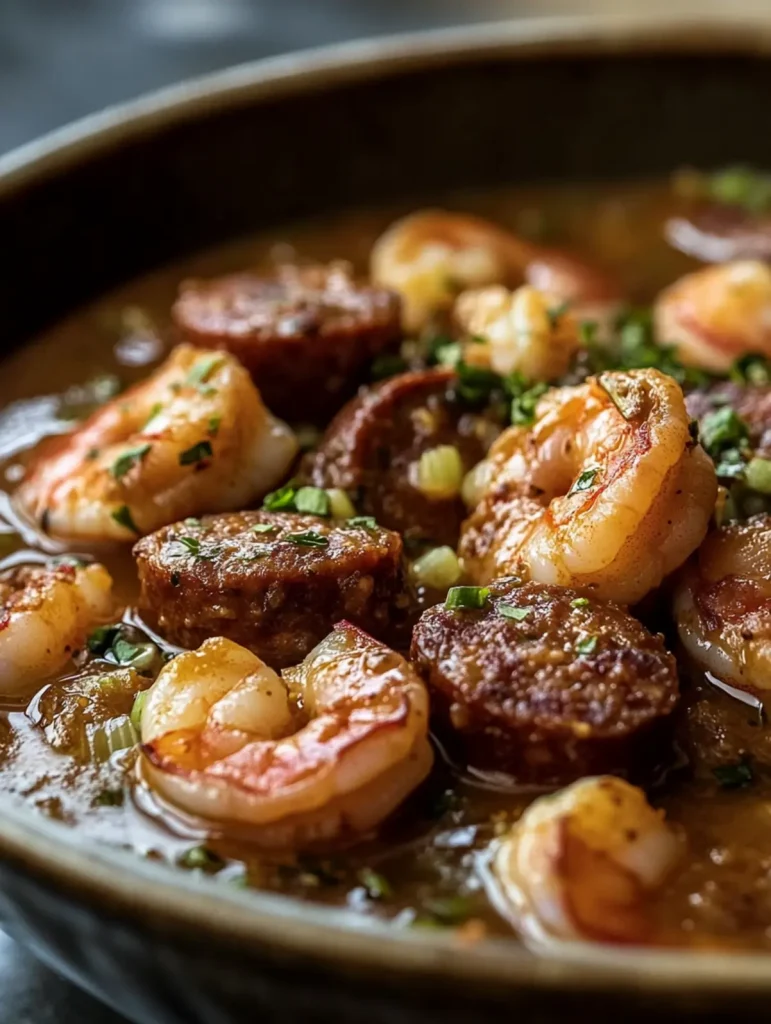
Dark, nutty roux is the soul of this gumbo, and it’s worth every patient stir. Smoky andouille and plump shrimp slip into a rich, velvety broth thickened with okra and the holy trinity of onion, bell pepper, and celery (all hushed by a slow, gentle simmer). It’s a one-pot, stovetop showstopper that tastes like a Louisiana kitchen on a Sunday. Spoon it over fluffy white rice and finish with a scatter of green onions.
Tried, Tested, and Totally Worth It
Why make Shrimp and Sausage Gumbo?
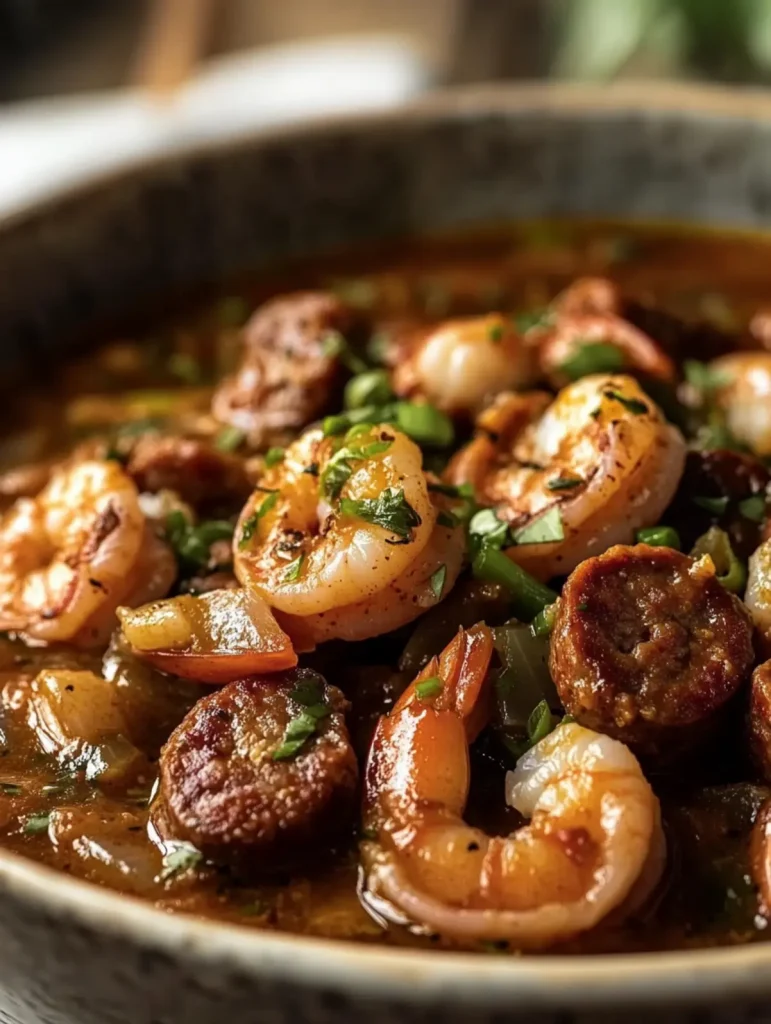
Because The Best Shrimp and Sausage Gumbo With Smoky Southern Soul turns a handful of pantry staples into a slow-simmered, restaurant-worthy pot that rewards patience and still comes together in one pot. Here’s what makes it a keeper for weekend cooks and seasoned chefs alike.
- Deep Roux Flavor : Stirring flour and oil to a dark copper shade builds a toasty, nutty backbone that no shortcut can fake.
- Smoky, Balanced Heat : Andouille releases its paprika-red fat into the pot, while thyme and Cajun seasoning add warmth without overpowering the sweet shrimp.
- Juicy, Tender Shrimp : Adding the shrimp in the last few minutes keeps them plump and snappy, avoiding the rubbery texture that comes from simmering them too long.
- Okra Thickens Naturally : Sliced okra, fresh or frozen, gives the broth a velvety body as it simmers, so no extra thickeners are needed.
- Make-Ahead Friendly : Flavors deepen overnight, and leftovers keep up to three days in the fridge. For longer storage, freeze the base without shrimp and add fresh shrimp when reheating.
Ingredient Notes
Great gumbo starts with great ingredients, and each one here has a job, from the roux that builds the flavor to the shrimp that finish the pot. Here’s what to look for when you shop for this Shrimp and Sausage Gumbo, and how to get the most from every item.
Pro tip: Gumbo moves fast once the roux is ready. Dice and measure everything before you start so you’re not chopping while the roux darkens.
The Stars of the Pot
- Large shrimp (1 lb, peeled and deveined): Shrimp add sweet, briny flavor and a snappy bite. Look for 21-25 count per pound, thaw frozen shrimp in cold water, and pat them dry. They only need a few minutes at the end to turn pink and tender.
- Smoked andouille sausage (12 oz, sliced): This coarse, garlicky pork sausage brings smoke, spice, and savory fat that seasons the whole pot. If you can’t find andouille, smoked kielbasa or another spicy smoked sausage works. Browning the slices first adds extra depth.
The Roux
- Vegetable oil (½ cup, divided): A neutral oil with a high smoke point lets the roux darken without burning or adding off flavors. Use most of it for the roux and the rest for browning the sausage and softening the vegetables. Canola or peanut oil are good swaps.
- All-purpose flour (½ cup): Flour toasted in hot oil gives gumbo its nutty flavor, rich color, and body. Stir constantly and keep the heat moderate, because a scorched roux turns bitter and you’ll have to start over. Pull it off the heat when it reaches a deep copper or milk-chocolate shade.
The Aromatics
- Onion (1 medium, diced): Onion is the sweet, savory base of the “holy trinity.” A yellow onion works best, and a uniform dice helps it soften evenly in the roux.
- Green bell pepper (1 medium, diced): Green pepper adds a slightly bitter, grassy note that balances the richness and smoke. Choose firm, glossy peppers, and don’t swap in red ones unless you want a sweeter, less traditional gumbo.
- Celery (2 stalks, diced): Celery adds a fresh, herbal background that rounds out the pot. Use the tender inner stalks and keep the dice small so they melt into the broth.
- Garlic (4 cloves, minced): Fresh garlic gives the gumbo its warm, savory aroma. Add it after the other vegetables have softened, since it burns quickly and turns bitter.
The Simmer
- Chicken or seafood broth (6 cups): Broth forms the body of the gumbo, so quality matters. Low-sodium broth lets you control the salt, since the sausage and Cajun seasoning already bring plenty. Seafood broth, or a quick stock made from the shrimp shells, adds a more coastal flavor.
- Sliced okra (2 cups, fresh or frozen): Okra naturally thickens the gumbo and adds a subtle earthy flavor. Frozen okra is a great shortcut and can go straight into the pot without thawing. If you use fresh, pick small, bright green pods that feel firm.
- Bay leaves (2): Bay leaves add a subtle, tea-like depth during the long simmer. Remove them before serving, as they stay stiff and unpleasant to bite into.
- Dried thyme (1 teaspoon): Thyme adds an earthy, slightly floral note that pairs well with smoked sausage and shrimp. If you only have fresh, use about 1 tablespoon of leaves.
- Cajun seasoning (2 teaspoons, plus more to taste): This blend brings the paprika, garlic, and cayenne warmth that defines the dish. Brands vary a lot in salt and heat, so start with the recipe amount, taste after simmering, and adjust. A salt-free blend gives you the most control.
- Salt and black pepper (to taste): Season at the end, because the sausage, broth, and Cajun blend all add salt as the gumbo reduces. Freshly ground pepper adds a gentle bite that rounds out the flavors.
To Serve
- Cooked white rice: Fluffy long-grain white rice soaks up the rich broth without competing with it. Cook it separately, then spoon the gumbo over the top so the rice stays distinct and doesn’t turn gummy in the pot.
- Green onions (¼ cup, sliced): Sliced green onions add a fresh, mild bite and a pop of color against the dark gumbo. Add them just before serving so they stay crisp and bright.
Step-by-Step Instructions
- Heat 2 tablespoons of the vegetable oil in a large, heavy-bottomed pot or Dutch oven over medium-high heat. Brown the sliced andouille for 4 to 5 minutes until the edges caramelize and the fat turns red, then move it to a plate and leave the drippings in the pot.
- Reduce the heat to medium-low, add the remaining 6 tablespoons of oil, and whisk in the flour until smooth. Stir constantly with a flat wooden spoon for 20 to 30 minutes, until the roux turns deep copper or milk-chocolate brown and smells nutty. I never walk away during this step, because a burned roux can’t be saved.
- Stir in the diced onion, bell pepper, and celery right away, since they stop the roux from darkening further. Cook for 5 to 6 minutes until soft and fragrant, then add the garlic for the last 30 seconds. Expect a loud sizzle and a burst of steam, which is normal.
- Pour in the broth about a cup at a time, whisking after each addition so the roux dissolves without clumping. Return the sausage to the pot, add the bay leaves, thyme, and Cajun seasoning, and bring everything to a gentle boil.
- Lower the heat and simmer, partially covered, for 30 minutes, stirring now and then. Add the okra (straight from the freezer is fine) and simmer for 15 to 20 minutes more, until the gumbo is glossy and lightly coats the back of a spoon.
- Remove the bay leaves and skim any excess oil from the surface. I wait until now to taste, then add salt, black pepper, and extra Cajun seasoning, since the broth and sausage concentrate as the pot reduces.
- Stir in the shrimp and cook for 3 to 5 minutes, just until they turn pink and opaque and curl into a loose “C.” Take the pot off the heat right away, because overcooked shrimp turn tough.
- Let the gumbo rest for 5 minutes so the flavors settle and it thickens slightly. Ladle it over hot white rice and top with the sliced green onions, which I like to add at the last second to keep them bright.
Pro tip: If the gumbo looks thin when you add the shrimp, don’t worry. It thickens as it rests and tastes even better the next day.
Remember: the roux sets the flavor, so keep stirring, keep the heat moderate, and add the shrimp last.
How to Serve It
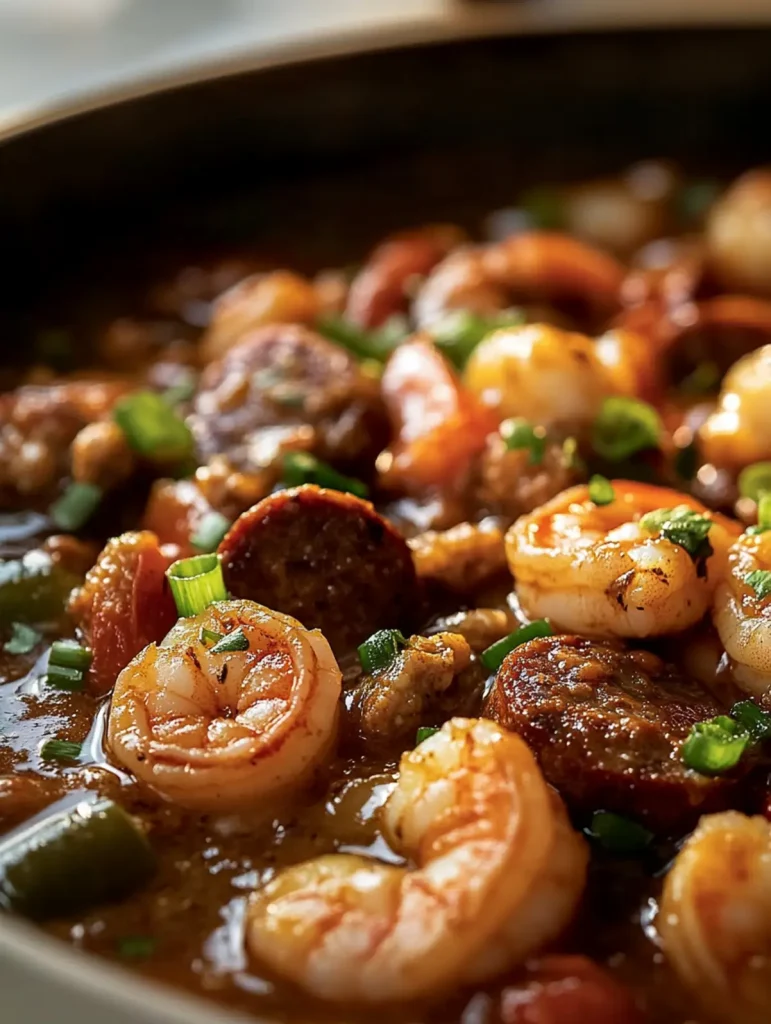
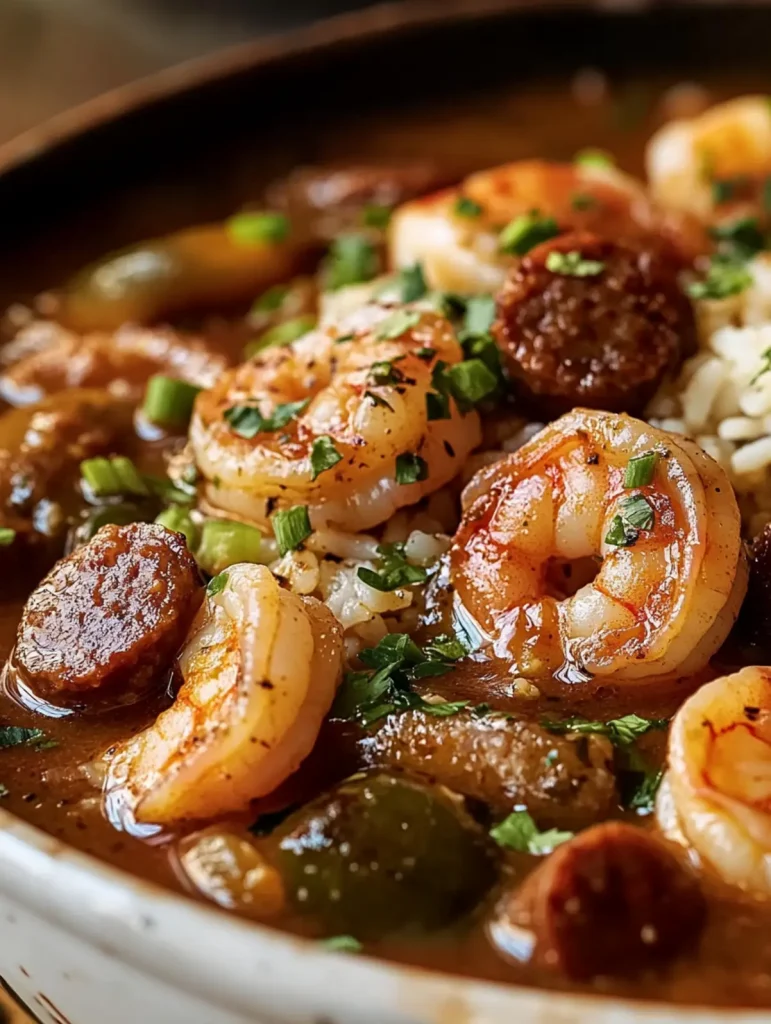
- Plate it in warm, shallow bowls: Mound about ½ cup of hot white rice in the center of each bowl, then ladle the gumbo around it so the rice stays fluffy instead of turning gummy. Let the pot rest for 5 minutes first, so the broth thickens slightly and clings to the rice. Scatter the sliced green onions on at the last second, since their fresh bite and bright color stand out against the dark roux. I also like to make sure each bowl gets a few plump shrimp and several andouille slices, so every serving looks as generous as it tastes.
- Add a crisp or crusty side: This Shrimp and Sausage Gumbo is rich, smoky, and deeply savory, so it pairs best with sides that either soak up the broth or cut through it. Warm, crusty French bread or a buttered baguette is perfect for mopping the bowl. A tangy cucumber salad or vinegar-based slaw adds crunch and acidity to balance the roux and the andouille fat. For a more traditional touch, serve a small scoop of creamy potato salad right in the gumbo, as many Louisiana cooks do, or offer skillet cornbread alongside.
- Pour something cold and bright: The cayenne warmth and smoky sausage call for a drink with acidity or crisp bubbles. A cold lager or pilsner is the classic choice, and an off-dry Riesling, a dry rosé, or a sparkling wine also tames the heat while complementing the sweet shrimp. For a nonalcoholic option, unsweetened iced tea with a squeeze of lemon refreshes the palate between spoonfuls.
- Set it up for a crowd or a weeknight: For a casual gathering, serve the gumbo family-style from the pot and set out bowls of rice, extra green onions, hot sauce, and a shaker of Cajun seasoning so guests can season to taste. If you’re cooking ahead, hold the base on low heat and stir in the shrimp just before serving, so they stay tender instead of rubbery. On a busy weeknight, a bowl of gumbo with a hunk of bread is a complete meal, and a simple green salad rounds it out.
Variations & Substitutions
Once the roux is right, gumbo is a forgiving dish, so adjust the pot to your pantry, your diet, or how much heat you like. These swaps keep the smoky Southern soul intact.
- Gluten-free roux : Use a 1:1 gluten-free all-purpose flour blend in equal amounts. It darkens faster, so stir constantly and pull it from the heat sooner.
- Shellfish-free swap : To replace the shrimp, brown 1 lb diced boneless chicken thighs with the sausage and simmer in chicken broth until cooked through.
- No okra? Use filé : Skip the okra and stir in 1 teaspoon filé powder off the heat just before serving. Never boil it, or the gumbo turns stringy.
- Creole tomato twist : I sometimes add one 14.5-oz can of diced tomatoes with the broth for a tangier, Creole-style pot while the roux stays the backbone.
- Turn up the heat : Stir in ¼ teaspoon cayenne with the Cajun seasoning, or pass hot sauce at the table so everyone sets their own spice level.
- Lower-carb serving : Ladle the gumbo over cauliflower rice instead of white rice. Warm it briefly so it stays tender and doesn’t release water into the broth.
Storage & Freezing
- Refrigerate: Cool the gumbo for no more than 2 hours, then pack it into shallow airtight containers and refrigerate for up to 3 days. Store the rice separately so it doesn’t turn mushy in the broth. The roux and okra will set the gumbo to a thicker, almost stew-like consistency overnight, and any red andouille fat will firm up on top, so it’s easy to lift off with a spoon before reheating.
- Freeze: Freeze the base without the shrimp for up to 3 months, since cooked shrimp turn rubbery after freezing and thawing. Leave about an inch of headspace in freezer-safe containers for expansion, and thaw overnight in the fridge. The okra softens a bit and the broth may look slightly separated, but a good stir brings it back together. I freeze it in 2-serving portions so a quick weeknight bowl is easy, and I always add the green onions fresh at serving time.
- Reheat: Warm the gumbo in a pot over medium-low heat, stirring often, until it reaches a gentle simmer (165°F). Loosen it with a splash of broth or water if it has tightened up. Boiling hard can break the roux and make the broth greasy, and the microwave works in a pinch if you stir between short bursts. If you froze the base, stir in fresh shrimp for the last 3 to 5 minutes, just until pink and curled. Taste before serving, because the flavors concentrate in storage and this Shrimp and Sausage Gumbo may need a pinch more Cajun seasoning to wake it up.
Expert Tips
These tips will help you nail this Shrimp and Sausage Gumbo from the first stir to the last ladle.
- Add vegetables early : The roux keeps darkening in the hot oil, so add the diced onion, bell pepper, and celery when it’s one shade lighter than your target.
- Scrape the corners : A flat wooden spoon reaches the pot’s edges, where flour hides and scorches. If you see black flecks, start over rather than risk bitter gumbo.
- Warm the broth : I heat the chicken or seafood broth first, since warm liquid blends into the roux smoothly and is far less likely to clump.
- Skim before seasoning : Andouille renders red fat, so I ladle off the surface oil before tasting. The sausage and Cajun seasoning bring plenty of salt.
- Dry the shrimp : Pat thawed shrimp thoroughly with paper towels so they don’t release extra water and thin the gumbo right before serving.
Recipe FAQs
- Can I use frozen okra in this Shrimp and Sausage Gumbo? Yes, add it straight from the freezer.
- What color should my roux be? Deep copper or milk-chocolate brown, smelling nutty.
- When do you add the shrimp? I add them last, cooking just 3-5 minutes.
- Can I freeze leftover gumbo? Yes, but freeze the base without shrimp.
- 0 Facebook
- 0 Pinterest
- 17 Email
- Copy Link
- 17 shares
The Best Shrimp and Sausage Gumbo With Smoky Southern Soul
Ingredients
Instructions
Heat 2 tablespoons of the vegetable oil in a large heavy-bottomed pot or Dutch oven over medium-high heat. Brown the sliced andouille for 4 to 5 minutes until edges caramelize and the fat turns red, then transfer the sausage to a plate and leave the drippings in the pot.
Reduce heat to medium-low, add the remaining 6 tablespoons of oil, and whisk in the flour until smooth. Stir constantly with a flat wooden spoon for 20 to 30 minutes until the roux turns deep copper or milk chocolate brown and smells nutty.
Stir in the diced onion, bell pepper, and celery to stop the roux from darkening further. Cook 5 to 6 minutes until soft, then add the garlic for the last 30 seconds and stir until fragrant.
Pour in the broth about a cup at a time, whisking after each addition so the roux dissolves without clumping. Return the sausage to the pot, add the bay leaves, thyme, and Cajun seasoning, and bring to a gentle boil.
Lower the heat and simmer partially covered for 30 minutes, stirring occasionally. Add the okra and simmer 15 to 20 minutes more until the gumbo is glossy and lightly coats the back of a spoon.
Remove the bay leaves and skim any excess oil from the surface. Taste and season with salt, black pepper, and additional Cajun seasoning as the broth has reduced and flavors concentrated.
Stir in the shrimp and cook 3 to 5 minutes just until they turn pink, opaque, and curl into a loose ‘C’. Remove the pot from the heat immediately to avoid overcooking.
Let the gumbo rest 5 minutes so flavors settle and the broth thickens slightly. Ladle over hot white rice and top with the sliced green onions just before serving.
Notes
Add vegetables early: add the diced onion, bell pepper, and celery when the roux is one shade lighter than your target to prevent overbrowning.
Scrape the corners: use a flat wooden spoon to reach pot edges where flour can scorch; if you see black flecks, start the roux again.
Warm the broth: heating the chicken or seafood broth before adding helps it blend into the roux without clumping.
Skim before seasoning: andouille renders red fat, so skim oil before tasting because the sausage and Cajun seasoning contribute salt.
Dry the shrimp: pat thawed shrimp thoroughly so they don’t release water and thin the gumbo.
Storage: cool no more than 2 hours, refrigerate up to 3 days in shallow airtight containers and store rice separately to avoid sogginess.
Freezing: freeze the base without shrimp for up to 3 months, leaving headspace; thaw overnight and add fresh shrimp when reheating.
Reheating: warm over medium-low, stirring often until 165°F and loosen with a splash of broth if too thick; avoid hard boiling which can break the roux.
Nutrition
| Serving Size | About 1 generous bowl (approximately 1 1/2 cups gumbo over 1/2 cup cooked rice) |
|---|---|
| Calories | 550 kcal |
| Sugar Content | 4 g |
| Sodium Content | 1100 mg |
| Fat Content | 36 g |
| Saturated Fat Content | 10 g |
| Unsaturated Fat Content | 26 g |
| Trans Fat Content | 0.5 g |
| Carbohydrate Content | 28 g |
| Fiber Content | 3 g |
| Protein Content | 34 g |
| Cholesterol Content | 220 mg |