- 0 Facebook
- 3 Pinterest
- 3 Email
- Copy Link
- 6 shares
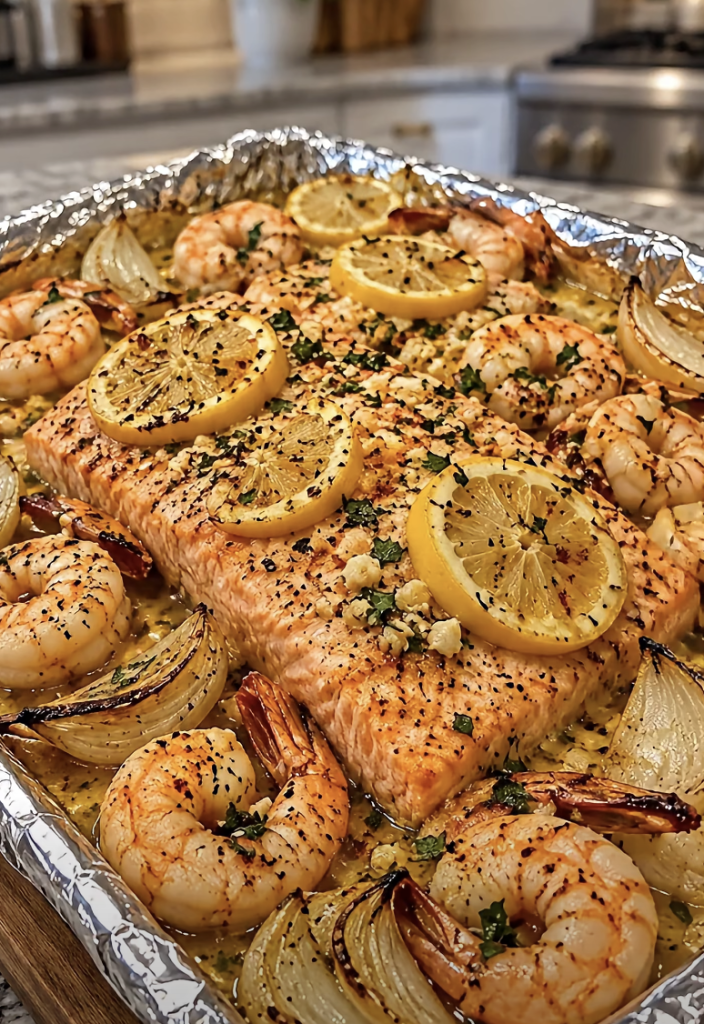
Garlic lemon butter does the heavy lifting here, turning flaky salmon and plump pink shrimp into something that tastes far fancier than its 15 minutes of cooking suggests. Everything comes together in one pan, with onion wedges softening in garlicky butter, a squeeze of lemon cutting through the richness, and a little paprika adding warmth. It’s a vibrant, aromatic dinner that makes drive-thru cravings fade, especially with steamed greens or a crisp salad alongside.
Why Make This Salmon and Shrimp Bake?
Because it delivers restaurant-level flavor with weeknight effort: just 10 minutes of prep, one pan, and a dinner that feels special. The butter and olive oil pairing keeps the garlic fragrant instead of bitter, while the onion wedges soften and sweeten underneath the fish, so every bite tastes layered rather than flat. Salmon and shrimp finish within minutes of each other, and the visual cues make it easy to get right: salmon that flakes with a fork and shrimp that curl into pink “C” shapes. Fresh lemon and parsley lift the richness at the end, and the leftover pan juices are too good to waste, so spoon them over rice, crusty bread, or steamed vegetables. This juicy salmon and shrimp bake also reheats gently the next day, so lunch is sorted too.
Ingredient Notes
Great flavor starts with choosing the right ingredients, and every item here has a job. Each one helps this Salmon and Shrimp Bake turn out juicy, fragrant, and balanced, so here is what to look for and how to use it.
The Seafood
- Salmon fillets (4, 6 oz each) : Fillets of similar thickness cook evenly, and skin-on or skinless both work. Pat them dry before seasoning so the butter sauce clings, and cook until the fish flakes easily with a fork (the USDA recommends 145°F, though many cooks pull it a little earlier for extra tenderness).
- Large shrimp (1 lb, peeled and deveined) : Look for firm, translucent shrimp with a clean, mild scent. If frozen, thaw them in cold water and pat them very dry. Dry shrimp stay plump instead of turning watery in the pan.
The Fats and Aromatics
- Unsalted butter (4 tablespoons, melted) : Butter brings the rich, silky sauce this dish is known for. Unsalted lets you control the seasoning, but if you only have salted butter, reduce the added salt by about half.
- Olive oil (3 tablespoons) : Olive oil adds fruity depth and helps keep the butter from browning too fast. A good everyday extra-virgin olive oil works well here.
- Garlic (5 cloves, minced) : Fresh garlic gives the sauce its sweet, aromatic backbone. Mince it finely and keep it coated in the butter and oil, which helps prevent bitter, scorched bits. Jarred garlic works in a pinch, but the flavor is milder.
- Onion (1 medium, cut into wedges) : Onion softens and sweetens beneath the fish, adding a mellow base layer. Yellow or sweet onions are ideal, and leaving a bit of the root end on each wedge helps the pieces hold together.
The Citrus
- Lemon (1, sliced) : Thin slices add bright aroma and a pretty look, and they gently perfume the fish as it cooks. Slice them about ¼ inch thick and remove any seeds so they don’t turn bitter.
- Fresh lemon juice (2 tablespoons) : Fresh juice cuts through the richness of the butter and wakes up the whole dish. Bottled juice tastes flat and sometimes harsh by comparison, so squeeze it fresh if you can.
The Seasonings
- Paprika (1 teaspoon) : Paprika adds warm color and gentle, earthy flavor. Sweet paprika keeps things classic, while smoked paprika adds a deeper, grill-like note. Check that your jar is fresh, since old paprika tastes dusty.
- Italian seasoning (1 teaspoon) : This dried herb blend adds savory, herbal depth that pairs well with both salmon and shrimp. If you don’t have it, mix equal parts dried oregano, basil, and thyme.
- Garlic powder (½ teaspoon) : Garlic powder spreads even garlic flavor across the seafood and sauce, reinforcing the fresh cloves. Stir it into the butter so it doesn’t clump on the fish.
- Black pepper (½ teaspoon) : Pepper adds mild heat and a subtle bite. Freshly ground has noticeably more aroma than pre-ground.
- Salt (1 teaspoon) : Salt brings out the natural sweetness of the seafood. Kosher salt is easiest to season with, but if you use fine sea salt, start with a little less, since it’s denser.
- Red pepper flakes (½ teaspoon, optional) : A pinch adds gentle warmth that balances the butter and lemon. Keep it at ½ teaspoon for a mild kick, or leave it out if you’re serving anyone sensitive to spice.
The Finishing Touch
- Fresh parsley (2 tablespoons, chopped) : Parsley adds a fresh, grassy lift and bright green color right at the end. Flat-leaf (Italian) parsley has the best flavor, and stirring it in after cooking keeps it vibrant. Fresh dill or chives make good alternatives.
Step-by-Step Instructions
- Heat the oven to 400°F (200°C). Scatter the onion wedges in a single layer in a large baking dish or rimmed sheet pan, then drizzle with 1 tablespoon of the olive oil.
- Whisk the melted butter, remaining 2 tablespoons olive oil, minced garlic, lemon juice, paprika, Italian seasoning, garlic powder, black pepper, salt, and red pepper flakes in a small bowl. I like to let it sit for a minute so the garlic can perfume the butter, and it’s normal if it looks slightly separated, so just give it a quick stir.
- Pat the salmon fillets and shrimp very dry with paper towels. Nestle the salmon on top of the onions and spoon about half of the garlic butter over the fillets.
- Toss the shrimp in the remaining garlic butter, then set them aside for now. Tuck the lemon slices around the salmon and bake for 6 to 7 minutes, until the edges of the fish turn opaque.
- Add the buttery shrimp to the pan in a single layer, spacing them around the salmon so they roast instead of steam. Bake another 6 to 8 minutes, until the shrimp curl into pink “C” shapes and the salmon flakes easily with a fork.
- Rest the pan on the counter for 3 minutes so the juices settle and the sauce thickens slightly. I always scrape up the onions and spoon the pan juices over everything, since that’s where the best flavor is.
- Sprinkle the chopped parsley over the top and serve right away, with rice, crusty bread, steamed vegetables, or a crisp salad to soak up the garlic lemon butter.
Tip: If you’d like lightly browned edges, switch the oven to broil for the last 1 to 2 minutes and keep a close eye on it, because shrimp go from perfect to rubbery fast.
Reminder: Salmon is done at 145°F, but it keeps cooking as it rests, so if you prefer extra-tender fish, pull it at about 140°F.
Storage & Freezing
- Refrigerate: Let the pan cool for no more than 30 minutes, then move leftovers of this Salmon and Shrimp Bake to a shallow airtight container with some of the pan juices spooned over the top. Eat within 3 days, though the shrimp are best in the first 2, since they turn rubbery the longer they sit. I pick out the lemon slices before storing because the rind turns bitter overnight. The garlic butter will firm up and look separated when cold, which is normal.
- Freeze: Salmon freezes much better than shrimp, so if you plan to freeze, set aside the salmon, onions, and sauce in a freezer-safe container or wrap, and store for up to 2 months. Cooked shrimp can be frozen too, but they lose their snap, so I’d save them for rice bowls or pasta rather than serving them on their own. Skip freezing the parsley and add it fresh after reheating, since frozen herbs go dark and limp.
- Thaw: Move frozen portions to the fridge overnight rather than the counter, which keeps the fish from getting watery and the butter from splitting. Once thawed, stir the sauce well, because the butter and olive oil may separate and the garlic and paprika can settle at the bottom.
- Reheat: Warm leftovers in a 275°F oven , covered loosely with foil, for 10 to 15 minutes, adding a spoonful of water or a squeeze of fresh lemon to loosen the sauce. The gentle heat keeps the salmon moist and the shrimp tender, and the leftovers should reach 165°F in the center to be safe. If you’re in a hurry, microwave at 50% power in short bursts, stirring the sauce between rounds. Finish with fresh parsley to bring back the color and brightness.
Make It Your Way
This Salmon and Shrimp Bake is wonderfully forgiving, so adjust it to what’s in your fridge, your dietary needs, or your mood. These are the swaps I’d trust.
- Dairy-free version : Swap the melted butter for an equal amount of dairy-free butter or extra olive oil; the sauce stays garlicky and silky, just less rich.
- Change the fish : Arctic char or steelhead trout cook just like salmon. Thick cod or halibut fillets also work, though check for flaking a minute or two earlier.
- Low-carb and gluten-free : Naturally gluten-free as written (check spice labels); serve over cauliflower rice or roasted zucchini instead of rice or bread for low-carb.
- Citrus swap : When lemons run low, I use lime juice and slices, then finish with cilantro instead of parsley for a brighter, slightly tropical flavor.
- Add smoky heat : I swap in smoked paprika and bump the red pepper flakes to ¾ teaspoon for a deeper, grill-style flavor with gentle heat.
- Add quick vegetables : Add trimmed thin asparagus or halved cherry tomatoes with the shrimp; both finish in 6 to 8 minutes and soak up the garlic butter.
Serving Suggestions
- Plate it family-style or individually: Bring the pan straight to the table so everyone sees the golden butter and lemon slices. Or plate each portion by spooning the softened onions onto a warm plate first, setting a salmon fillet on top, and fanning a few shrimp alongside. Either way, drizzle the pan juices over everything and add the parsley at the last second so it stays bright green.
- Pick a base that catches the sauce: This Salmon and Shrimp Bake makes plenty of garlic lemon butter, so serve it with something that can soak it up. Fluffy white rice, buttery orzo, or creamy mashed potatoes all work, and a warm baguette is perfect for mopping the pan. I always set out extra bread, since the juices are the first thing people fight over.
- Balance the richness with something crisp and green: Butter and salmon are rich, so add acidity and crunch. Steamed asparagus, green beans, or broccoli with a squeeze of lemon works well. So does an arugula salad tossed in a light vinaigrette. If you made the optional red pepper flakes, the cool, peppery greens help temper the heat.
- Choose a drink that echoes the lemon: A chilled Sauvignon Blanc, Pinot Grigio, or dry Vermouth over ice complements the garlic and citrus without overpowering the seafood. For a non-alcoholic option, sparkling water with a lemon wedge and a few parsley leaves feels just as special. It’s an easy weeknight dinner, but add candles and a bottle of wine and it becomes a date-night or dinner-party meal.
Make Ahead Options
This Salmon and Shrimp Bake is a dream for meal prep, because most of the 10 minutes of prep can happen a day ahead. Whisk the melted butter, olive oil, minced garlic, and dry seasonings (hold back the lemon juice), then refrigerate in a covered jar for up to 24 hours , since lemon juice added early can turn shrimp mushy. Cut the onion wedges and slice the lemon within that same window, and refrigerate the pat-dry shrimp and salmon in separate covered containers. Before baking, warm the butter mixture for 15 seconds until liquid, stir in the lemon juice, and follow the baking steps as written for just-as-delicious, restaurant-style results.
Expert Tips
A few small habits make this Salmon and Shrimp Bake come out juicy and full of flavor every time.
- Pat everything dry : Moisture makes seafood steam and thins the garlic butter, so blot salmon and shrimp with paper towels until the surface feels tacky.
- Stagger the seafood : Shrimp need about half the oven time of salmon, so adding them after the first 6 to 7 minutes keeps them plump rather than rubbery.
- Match fillet thickness : I tuck thin tail ends under so each 6 oz fillet is an even thickness, which prevents dry edges beside a raw center.
- Give onions room : Spread the onion wedges in one layer with the root ends attached. Crowded wedges steam instead of caramelizing and won’t sweeten the sauce.
- Re-whisk the sauce : I always stir the garlic butter again right before spooning, because separated butter leaves the paprika and garlic powder clumped on one fillet.
Common Questions About Juicy Salmon and Shrimp Bake in Garlic Lemon Butter
- Can I use frozen shrimp? Yes, thaw in cold water and pat dry.
- How do I know the salmon is done? It flakes easily with a fork at 145°F.
- Why do shrimp turn rubbery? I add them midway, so they stay plump.
- How long do leftovers last? Refrigerate up to three days; shrimp are best within two.
- 0 Facebook
- 3 Pinterest
- 3 Email
- Copy Link
- 6 shares
Juicy Salmon and Shrimp Bake in Garlic Lemon Butter
Ingredients
Instructions
Heat the oven to 400°F (200°C). Scatter the onion wedges in a single layer in a large baking dish or rimmed sheet pan, then drizzle with 1 tablespoon of the olive oil.
Whisk the melted butter, remaining 2 tablespoons olive oil, minced garlic, lemon juice, paprika, Italian seasoning, garlic powder, black pepper, salt, and red pepper flakes in a small bowl. Let it sit for a minute so the garlic perfumes the butter; it may look slightly separated, so give it a quick stir before using.
Pat the salmon fillets and shrimp very dry with paper towels. Nestle the salmon on top of the onions and spoon about half of the garlic butter over the fillets.
Toss the shrimp in the remaining garlic butter, then set them aside. Tuck the lemon slices around the salmon and bake for 6 to 7 minutes, until the edges of the fish turn opaque.
Add the buttery shrimp to the pan in a single layer, spacing them around the salmon so they roast instead of steam. Bake another 6 to 8 minutes, until the shrimp curl into pink ‘C’ shapes and the salmon flakes easily with a fork.
Rest the pan on the counter for 3 minutes so the juices settle and the sauce thickens slightly. Scrape up the onions and spoon the pan juices over everything for maximum flavor.
Sprinkle the chopped parsley over the top and serve right away with rice, crusty bread, steamed vegetables, or a crisp salad to soak up the garlic lemon butter.
Tip: If you like lightly browned edges, switch the oven to broil for the last 1 to 2 minutes and watch closely, since shrimp can overcook quickly.
Reminder: Salmon is done at 145°F, but it keeps cooking as it rests, so for extra-tender fish pull it at about 140°F.
Notes
Pat everything dry before seasoning to avoid steaming the seafood and thinning the garlic butter.
Stagger the seafood by adding shrimp after the salmon’s first 6 to 7 minutes so shrimp stay plump and not rubbery.
Match fillet thickness by tucking thin tail ends under so each fillet cooks evenly.
Give onion wedges room in a single layer so they caramelize and sweeten the sauce rather than steam.
Re-whisk the garlic butter right before spooning, since separated butter can leave spices clumped on one fillet.
Storage: Cool no more than 30 minutes, store leftovers in a shallow airtight container with some pan juices, and eat within 3 days; remove lemon slices before storing to avoid bitterness.
Freezing: Salmon, onions, and sauce freeze best for up to 2 months; cooked shrimp can be frozen but may lose snap, so reserve for mixed dishes.
Thaw overnight in the fridge and re-stir the sauce before reheating; reheat gently at 275°F for 10 to 15 minutes covered, or microwave at 50% power in short bursts.
Nutrition
| Serving Size | 1 salmon fillet (6 oz) with about 4 oz shrimp |
|---|---|
| Calories | 670 kcal |
| Sugar Content | 1 g |
| Sodium Content | 700 mg |
| Fat Content | 45 g |
| Saturated Fat Content | 7 g |
| Unsaturated Fat Content | 30 g |
| Trans Fat Content | 0 g |
| Carbohydrate Content | 4 g |
| Fiber Content | 1 g |
| Protein Content | 61 g |
| Cholesterol Content | 295 mg |