- 0 Facebook
- 2 Pinterest
- 0 Email
- Copy Link
- 2 shares
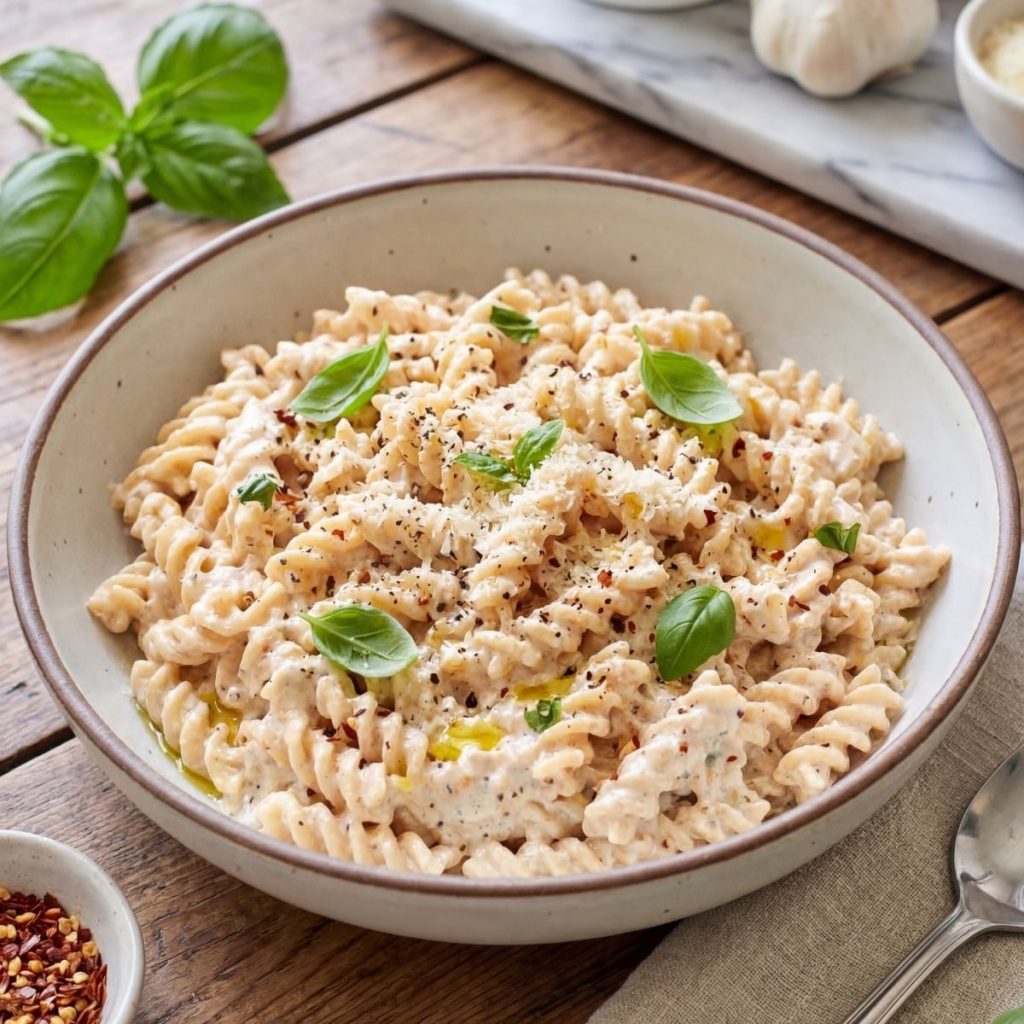
Cottage cheese pasta sauce was not something I ever expected to fall in love with. But one Wednesday evening last spring, Aunt Anne mentioned she’d been blending cottage cheese into her pasta sauces for years — and I finally tried it. The result was a silky, protein-packed sauce that tasted every bit as indulgent as a cream-based Alfredo, without the heaviness. I’ve been making it on repeat ever since, especially paired with my cottage cheese protein pasta bake for a nourishing weeknight dinner. If you’ve been searching for a creamy, wholesome pasta sauce that comes together in minutes, this one is going to become a pantry staple. Give it a try — your family will never guess the secret ingredient.
You Might Also Love
If you’re a fan of creamy, satisfying pasta sauces, these recipes from my kitchen will keep you inspired all week long.
- Creamy Garlic Penne Pasta — velvety garlic cream sauce clings to every bite of tender penne.
- One Pot Creamy Garlic Pasta — minimal cleanup, maximum flavor, ready in under 30 minutes.
- Lemon Ricotta Pasta — bright, fresh, and creamy — a beautiful lighter pasta for any night.
- Creamy Caramelized Onion Pasta — deep, sweet onion flavor wrapped in a rich, comforting sauce.
Why You’ll Love This Recipe?
- Surprisingly creamy texture. Blended cottage cheese turns unbelievably smooth and velvety — no one will ever guess it’s not heavy cream.
- High-protein and wholesome. Each serving packs a satisfying protein punch from the cottage cheese, making this a nourishing comfort meal.
- Ready in 15 minutes. From pantry to table, this sauce comes together faster than boiling your pasta water.
- Flexible and family-friendly. Toss it with penne, spaghetti, or gnocchi — it coats everything beautifully and pleases even picky eaters.
- Built from pantry staples. Garlic, olive oil, Italian seasoning — ingredients I always have on hand for a reliable weeknight dinner.
Ingredient Notes
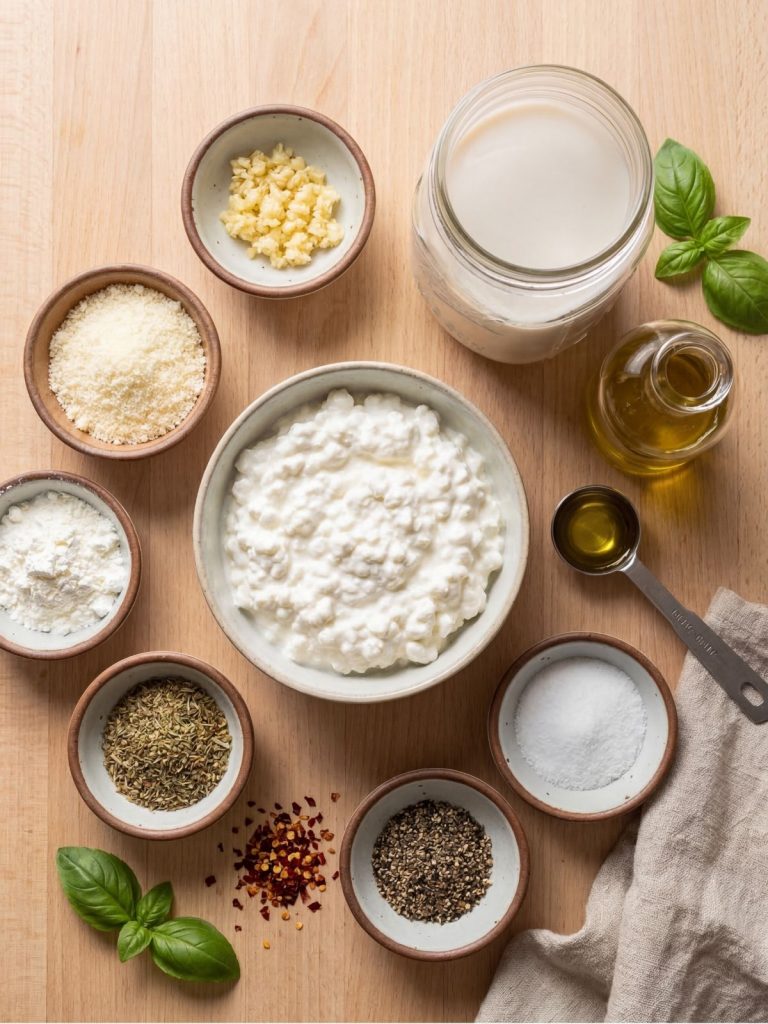
- Cottage cheese (full-fat) — Full-fat gives the richest, creamiest result; low-fat can make the sauce thin.
- Almond milk — Loosens the blended cheese to a pourable, silky consistency; any milk works here.
- Olive oil — Adds richness and helps the garlic bloom without burning.
- Garlic (3 cloves) — Freshly minced garlic builds the savory, fragrant backbone of the sauce. I love using this alongside my creamy garlic pasta for a double garlic hit.
- Parmesan cheese — Optional but highly recommended; deepens saltiness and adds a nutty finish.
- Cornstarch — Stabilizes the sauce so it stays silky and smooth without breaking.
- Italian seasoning — A balanced herb blend that rounds out the flavor without fuss.
- Salt & black pepper — Season to taste; cottage cheese varies in saltiness by brand.
- Red pepper flakes — Optional heat that adds a warm, subtle kick to each bite.
How to Make Cottage Cheese Pasta Sauce?
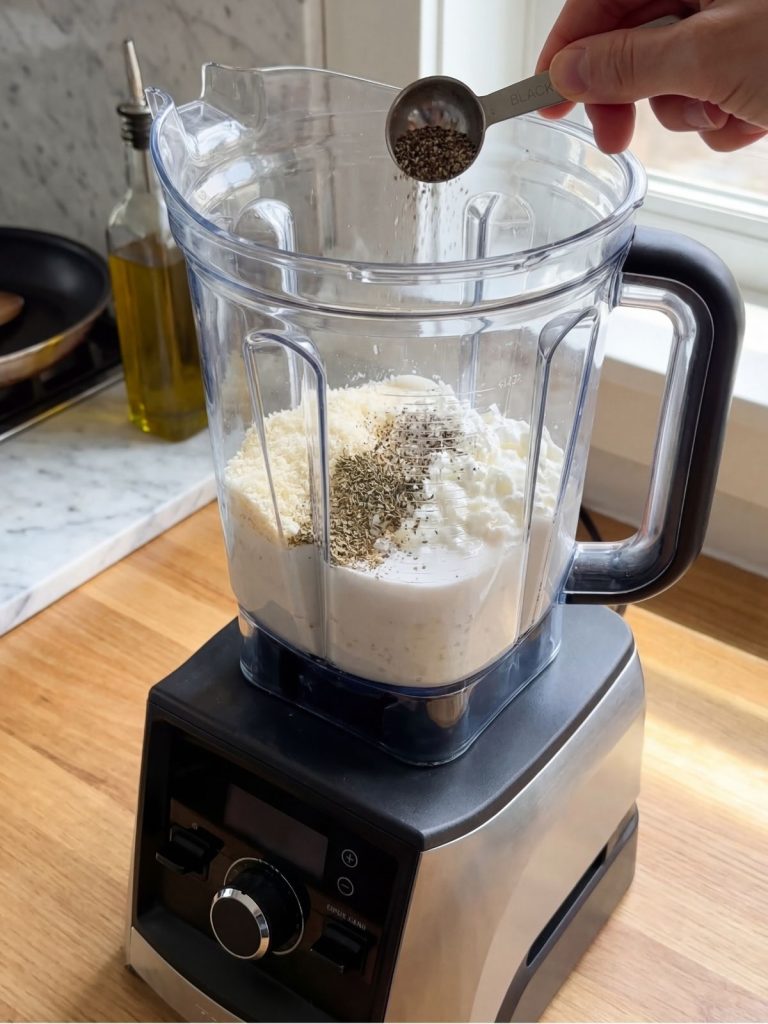
- Blend the base. Add cottage cheese, almond milk, and cornstarch to a blender; blend until completely smooth and creamy.
- Sauté the garlic. Warm olive oil in a saucepan over medium heat; add minced garlic and cook for 60 seconds until fragrant.
- Add the blended sauce. Pour the cottage cheese mixture into the pan; stir to combine with the garlic and oil.
- Simmer and thicken. Cook over medium-low heat for 3–4 minutes, stirring frequently, until sauce thickens slightly.
- Stir in Parmesan. Add grated Parmesan, Italian seasoning, salt, pepper, and red pepper flakes; stir until fully melted.
- Taste and adjust. Season to taste; add a splash more milk if the sauce feels too thick.
- Toss with pasta. Add cooked, drained pasta directly to the sauce; toss well and serve immediately.
Emily’s Expert Tips
- Blend until completely smooth. Any visible curds left in the sauce will affect the texture — give it a full 60 seconds in the blender. A high-speed blender makes a noticeable difference here.
- Don’t skip the cornstarch. It acts as an insurance policy against the sauce breaking or becoming grainy when heated. Even half a teaspoon makes the sauce stable and glossy.
- Use reserved pasta water. Stir in 2–3 tablespoons of starchy pasta water to help the sauce cling beautifully to every strand. This is a trick Aunt Anne passed along years ago that I now use every single time.
- Keep the heat low. High heat can cause the sauce to seize and lose its creamy texture. Medium-low and patient stirring is all it needs.
Storage Tips
- Refrigerate in an airtight container for up to four days.
- Reheat gently over low heat with a splash of milk to restore creaminess.
- Freeze the sauce alone for up to two months; thaw overnight in the fridge.
- Do not freeze with pasta already mixed in — the texture suffers significantly.
Variations & Substitutions
- Dairy-free version: Use oat milk instead of almond milk and skip the Parmesan for a fully plant-based sauce. Looking for more dairy-free ideas? My creamy sun-dried tomato vegan pasta is a reader favorite.
- Extra protein: Stir in a scoop of unflavored protein powder — it blends in seamlessly with the cottage cheese.
- Lemon brightness: Add a teaspoon of lemon zest for a fresh, tangy lift to the sauce.
- Roasted garlic swap: Substitute raw garlic with roasted garlic for a sweeter, mellower depth of flavor. This works beautifully with my roasted tomato and garlic ricotta pasta as inspiration.
- Spicy version: Double the red pepper flakes and add a pinch of smoked paprika for a bolder, warming sauce.
- Add vegetables: Stir in a handful of baby spinach or frozen peas right at the end — both wilt beautifully into the sauce.
What to Serve With Cottage Cheese Pasta Sauce?
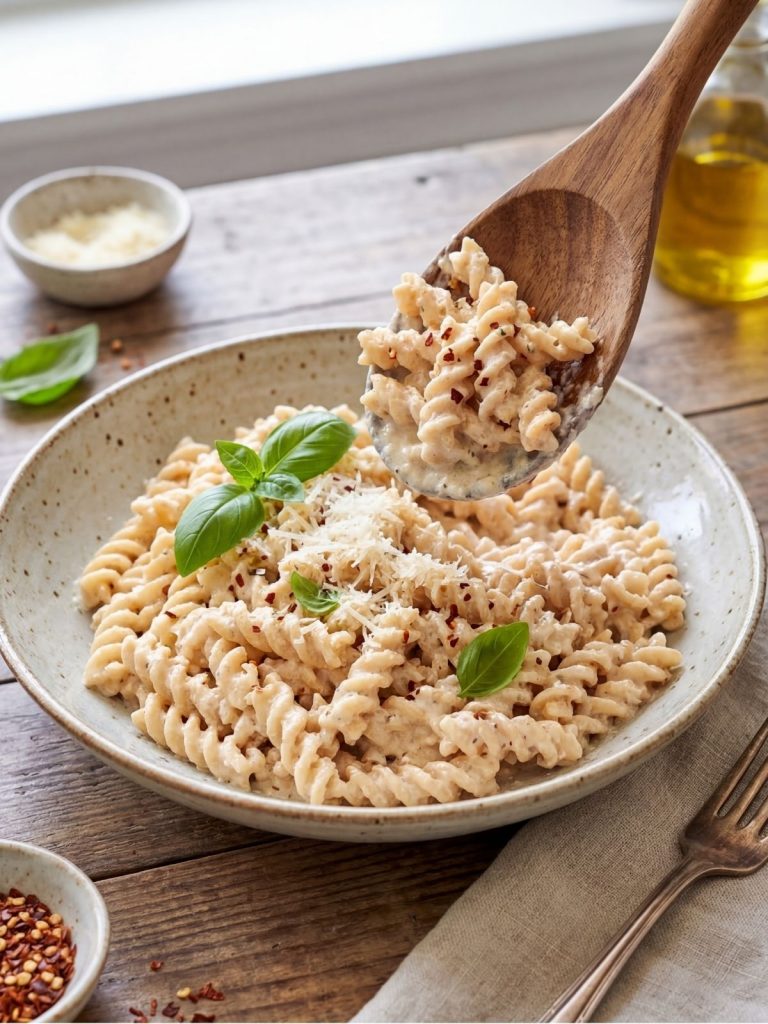
- Penne or rigatoni — Ridged pasta holds this creamy sauce in every groove.
- Garlic bread — A crusty, golden slice is perfect for scooping up extra sauce.
- Roasted cherry tomatoes — Bright acidity balances the richness of the sauce beautifully.
- Simple arugula salad — Peppery greens cut through the creaminess for a well-rounded plate.
- Grilled chicken — Sliced on top, it turns this into a hearty, protein-forward dinner.
Frequently Asked Questions
Can I use low-fat cottage cheese? Full-fat gives the creamiest result; low-fat will work but the sauce may be thinner.
Do I need to blend the cottage cheese? Yes — blending is essential for a smooth, lump-free sauce.
Can I make this sauce ahead of time? Yes — refrigerate for up to four days and reheat gently with a splash of milk.
Is this recipe gluten-free? Yes, the sauce itself is gluten-free; pair with your favorite gluten-free pasta.
Can I freeze cottage cheese pasta sauce? Freeze the sauce alone for up to two months; don’t freeze with pasta mixed in.
Why did my sauce turn grainy? Heat was likely too high — always cook on medium-low and stir constantly.
- 0 Facebook
- 2 Pinterest
- 0 Email
- Copy Link
- 2 shares
Cottage Cheese Pasta Sauce
Ingredients
Instructions
Add cottage cheese, almond milk, and cornstarch to a blender. Blend on high for 60 seconds until completely smooth and free of curds.
Warm olive oil in a medium saucepan over medium heat. Add minced garlic and cook for 60 seconds, stirring constantly, until fragrant but not browned.
Pour the blended cottage cheese mixture into the pan with the garlic and oil. Stir well to combine.
Reduce heat to medium-low and cook for 3–4 minutes, stirring frequently, until the sauce thickens slightly and turns glossy.
Stir in Italian seasoning, salt, and black pepper. If using, add grated Parmesan and red pepper flakes; stir until fully melted and incorporated.
If the sauce is too thick, stir in 1–2 tablespoons of reserved pasta water or additional milk to reach your desired consistency.
Add hot, drained (but not rinsed) cooked pasta to the sauce. Toss well to coat evenly and serve immediately.
Notes
Blend for a full 60 seconds — any remaining curds will affect the final texture of the sauce.
Do not skip the cornstarch; it stabilizes the sauce and prevents it from becoming grainy when heated.
For a dairy-free version, omit the Parmesan and use oat milk in place of almond milk.
Refrigerate leftover sauce in an airtight container for up to 4 days. Reheat gently over low heat with a splash of milk to restore creaminess.
Freeze the sauce alone (without pasta) for up to 2 months. Thaw overnight in the refrigerator before reheating.