- 0 Facebook
- 1 Pinterest
- 0 Email
- Copy Link
- 1 share
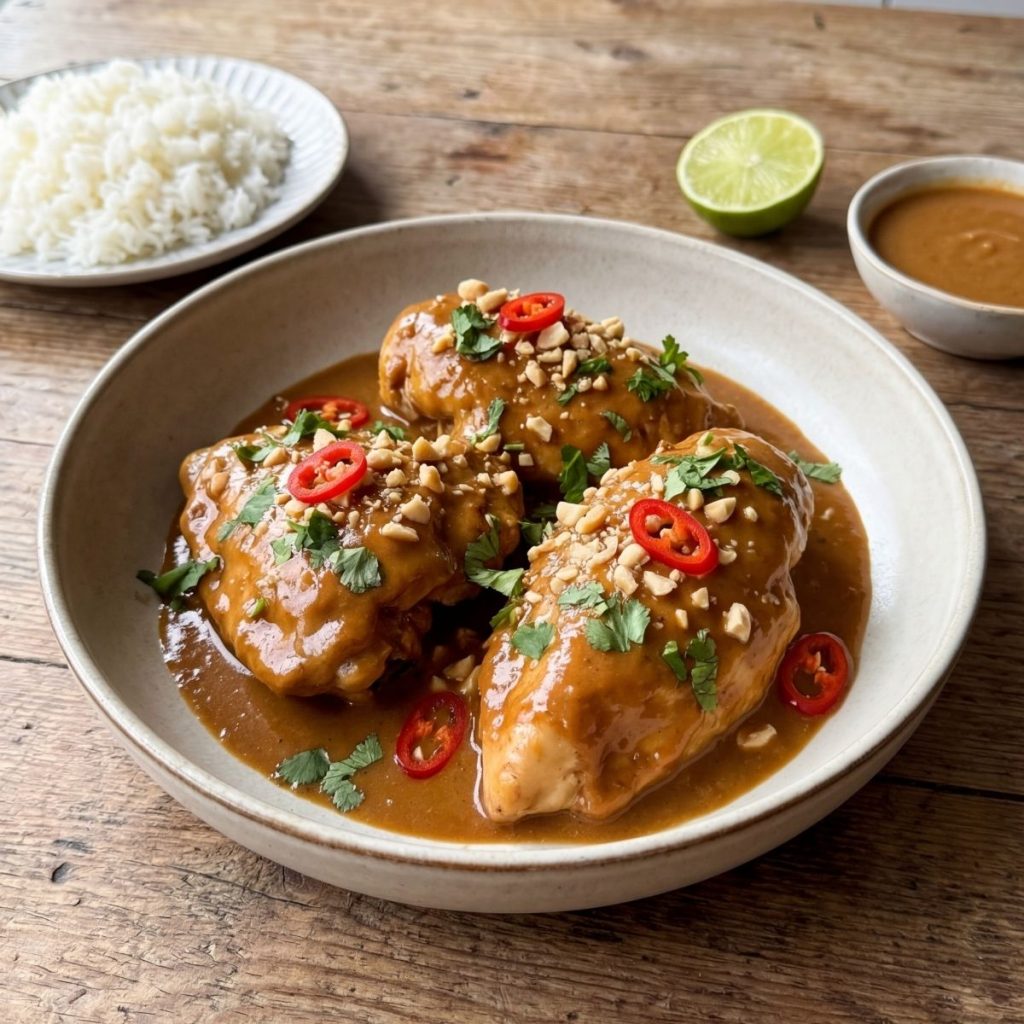
There are evenings when dinner feels like an unsolvable puzzle — it’s already 4 o’clock, everyone is tired, and the last thing I want to do is stand over a hot stove. Those are the nights my slow cooker earns its keep, and this Slow-Cooked Thai Peanut Chicken has become my most reliable answer. The sauce comes together in under ten minutes: creamy peanut butter, rich coconut milk, fresh ginger, garlic, a touch of honey, and a squeeze of lime. You pour it over the chicken, set the timer, and walk away. Hours later, the kitchen smells incredible and dinner is practically on the table. If you love my slow cooker satay chicken , this one delivers that same hands-off peanut magic with a deeper, more aromatic Thai-inspired profile. It also pairs beautifully with my Thai coconut chicken soup if you’re planning a week of bold, comforting flavors. This is weeknight cooking at its most rewarding — minimal effort, maximum payoff. Let’s get started.
You Might Also Love
If you’re drawn to bold, Asian-inspired flavors and the ease of slow-cooker dinners, these recipes belong in your weekly rotation.
- Easy Slow Cooker Satay Chicken — hands-off peanut chicken with deep, savory flavor the whole family asks for on repeat.
- Crockpot Thai Coconut Chicken Soup — creamy, warming, and fragrant — a slow-cooked weeknight bowl worth making every month.
- Chicken Pad Thai — a weeknight noodle classic with bold flavor that comes together faster than takeout.
- Spicy Asian Cucumber Salad — crisp, cooling, and refreshing — the perfect fresh side for rich, saucy mains.
Why You’ll Love This Recipe?
- Velvety peanut coconut sauce. The sauce is silky and rich, with coconut milk smoothing the peanut butter into something that coats every bite of chicken beautifully. It’s the kind of sauce you’ll want to drizzle over absolutely everything on your plate.
- Bold, layered flavors in every spoonful. Fresh ginger, garlic, soy, honey, and rice wine vinegar work together to create a balance of savory, sweet, tangy, and warmly spiced that is incredibly well-rounded. No single note dominates — it’s deeply satisfying from the very first bite.
- Tender, fall-apart chicken. Low and slow cooking transforms both chicken breasts and thighs into pull-apart, melt-in-your-mouth meat that soaks up every drop of that peanut sauce. The texture is hearty and deeply comforting.
- A bright finish that lifts the whole dish. A squeeze of lime stirred in at the very end cuts through the richness with a clean, citrusy note that makes every flavor pop. It’s the finishing touch that takes this from good to genuinely craveable.
- Set-it-and-forget-it weeknight ease. Ten minutes of prep, then the slow cooker handles everything — no babysitting, no stirring, no stress. It’s a crowd-pleasing dinner that practically makes itself.
Ingredient Notes
- Boneless, skinless chicken breasts or thighs — Both work beautifully here, but thighs deliver a richer, juicier result since the extra fat keeps them moist through the long cook. If you use breasts, avoid going past 4 hours on high to prevent them drying out.
- Canned coconut milk — This is the backbone of the sauce, providing creamy richness and taming the intensity of the other bold flavors. Use full-fat coconut milk for the best texture — the lighter version can make the sauce thin and watery.
- Natural peanut butter — Natural peanut butter (with no added sugar or stabilizers) creates a deep, nutty flavor and a smooth, emulsified sauce. Give the jar a thorough stir before measuring — that separated oil needs to be incorporated.
- Low-sodium soy sauce — Soy sauce brings the savory depth that anchors this sauce, balancing the sweetness of honey and the richness of peanut butter. I always use low-sodium so I can control the salt level without the sauce turning overwhelming.
- Honey — Honey provides gentle sweetness that balances the soy and vinegar without making the sauce sugary. Any variety works well here, but local raw honey adds a subtle floral complexity I love.
- Rice wine vinegar — This brings a soft acidity that keeps the sauce tasting bright and fresh rather than heavy. Don’t skip it — it’s a small amount, but it makes a real difference in the final balance.
- Freshly grated ginger — Fresh ginger brings a warm, spicy zing that dried ginger simply cannot replicate — I never substitute here. Peel the knob with the edge of a spoon and grate it finely so it melts seamlessly into the sauce.
- Garlic — Three cloves provide a warm, aromatic base that deepens beautifully over the slow cook. Mince it finely so it distributes evenly throughout the sauce.
- Crushed red pepper flakes — These add a gentle, warming heat that plays perfectly against the sweet and creamy elements. Start with ½ teaspoon and increase to taste once you’ve tried it.
- Lime juice — Stirred in right at the end, lime juice brightens the entire dish and cuts through the richness in the most satisfying way. Adding it during cooking would dull its impact completely — save it for the very last step.
- Cornstarch slurry (optional) — Optional, but if you want a thicker, restaurant-style sauce that clings to every piece of chicken, a quick cornstarch slurry added at the end makes all the difference. It gives the dish the same full-bodied, saucy feel as a great chicken pad thai — hearty, coating, and deeply satisfying.
- Cilantro, chopped peanuts, and rice or noodles — These are non-negotiable in my kitchen. Fresh cilantro lifts the entire bowl, crunchy peanuts add texture contrast, and steamed jasmine rice soaks up every drop of that incredible sauce.
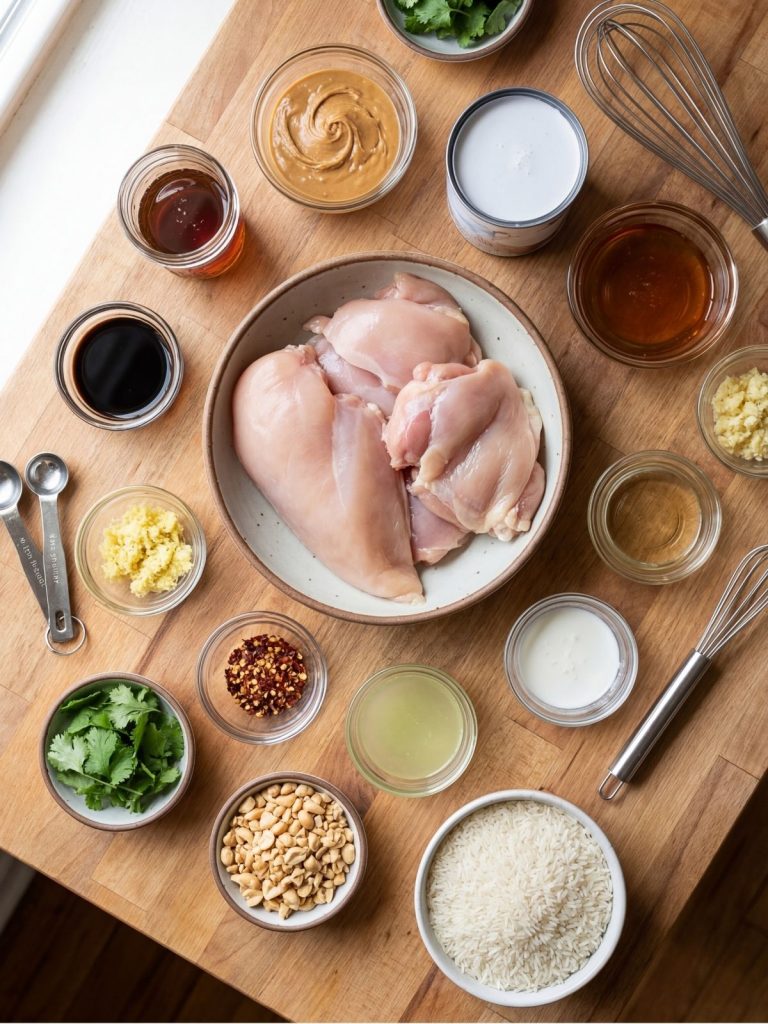
How to Make Slow-Cooked Thai Peanut Chicken?
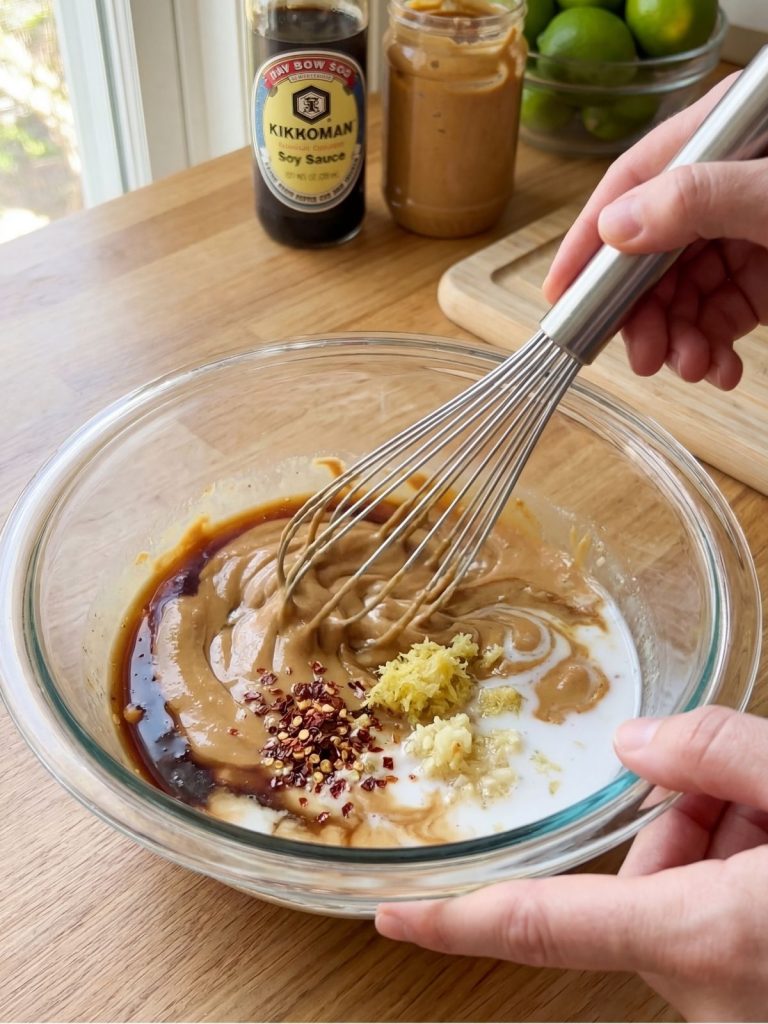
1. Whisk the peanut sauce. In a medium bowl, combine the coconut milk, peanut butter, soy sauce, honey, rice wine vinegar, grated ginger, minced garlic, and crushed red pepper flakes. Whisk until fully smooth — the sauce should be creamy with no lumps of peanut butter remaining. Give it a quick taste at this stage; it should smell bold, fragrant, and balanced.
2. Add the chicken to the slow cooker. Place the chicken breasts or thighs in the bottom of a 4- to 6-quart slow cooker in a single layer. Season lightly with a pinch of salt and pepper if desired — the soy sauce carries plenty of savory depth, so go easy.
3. Pour the sauce over the chicken. Pour the peanut sauce evenly over the chicken, making sure every piece is well coated. No additional stirring is needed at this point — the slow cooker handles everything from here.
4. Cook low and slow. Cover and cook on LOW for 6–7 hours or HIGH for 3–4 hours, until the chicken is completely tender and cooked through. The sauce will thin out as the chicken releases moisture during cooking — that’s entirely expected and will be adjusted next if desired.
5. Shred or slice the chicken. Remove the chicken from the slow cooker and use two forks to shred it into generous pieces, or slice into thicker strips if you prefer. Return the chicken to the slow cooker and stir well to coat it fully in the sauce.
6. Thicken the sauce (optional). If you’d like a thicker, clingier sauce, whisk together the cornstarch and cold water until smooth, then stir the slurry into the slow cooker. Switch to HIGH, leave the lid off, and cook for an additional 20–30 minutes until the sauce thickens to your liking.
7. Finish with lime and serve. Stir in the lime juice right before serving — you’ll notice the sauce brighten and lift immediately. Serve over steamed jasmine rice or soaked rice noodles, topped generously with chopped fresh cilantro and crushed peanuts.
Emily’s Expert Tips
- Choose thighs for the juiciest result: I almost always reach for chicken thighs in slow cooker recipes — the extra fat keeps them incredibly moist and deeply flavorful over a long cook. Breasts work, but they need a shorter time on high to stay tender rather than dry.
- Add the lime juice only at the end: I learned early on that lime added at the start loses its bright, citrusy lift completely during cooking. Stir it in right before serving for that clean, fresh finish that pulls the whole dish together.
- Toast the garnish peanuts: I dry-toast chopped peanuts in a skillet for 2–3 minutes before using — it intensifies their nutty flavor and gives them a deeper, satisfying crunch that holds up beautifully against the rich sauce.
- Taste and balance the sauce before cooking: Whisk the sauce and taste it before it goes in — it should feel bold and well-rounded before a single hour of cooking. A sauce that leans too salty or sweet at this stage will only become more concentrated over time.
- Use natural peanut butter, not commercial: Natural peanut butter emulsifies into the coconut milk into a smooth, silky coating. Commercial varieties with added stabilizers create a heavier, less cohesive sauce that doesn’t blend as cleanly.
Storage Tips
- Refrigerator : Store leftovers in an airtight container in the fridge for up to 4 days. The peanut sauce thickens as it chills, which makes it even richer the next day — reheat gently and it loosens right back up.
- Freezer: This dish freezes beautifully for up to 3 months. Portion into freezer-safe containers, label with the date, and thaw overnight in the fridge before reheating.
- Reheating: Warm on the stovetop over low heat, adding a splash of coconut milk or water to loosen the sauce as needed. Avoid high heat — it can break the peanut sauce and make it grainy.
Variations & Substitutions
- Make it gluten-free: Swap the soy sauce for tamari or coconut aminos — the sauce behaves identically and no one at the table will notice the difference. Coconut aminos bring a slightly milder, sweeter note I actually love in this recipe.
- Peanut-free version: Almond butter or sunflower seed butter are the closest substitutes if peanuts are off the table. The flavor shifts slightly but the sauce is still rich and satisfying — for another bold, nut-free Asian-inspired option, my sesame chicken is worth bookmarking.
- Vegetarian or vegan: Replace the chicken with one can of drained chickpeas and one block of pressed, cubed firm tofu. Reduce the cook time to 3–4 hours on LOW and you have a hearty, plant-based meal that carries the peanut sauce beautifully.
- Low-carb serving: Skip the rice and serve over cauliflower rice, zucchini noodles, or shredded cabbage for a lighter bowl that still delivers all the bold flavor. The sauce is so rich and satisfying that you won’t miss the starch.
- Coconut-forward variation: Double the coconut milk and stir in a tablespoon of red curry paste before cooking for a Thai-inspired coconut curry twist. If you love that direction, my coconut lime chicken takes those bright coconut flavors into a different, equally satisfying weeknight meal.
- Extra spicy version: Increase the red pepper flakes to 1 full teaspoon and add a tablespoon of sriracha or sambal oelek to the sauce. The heat builds gently over the long cook and is beautifully tempered by the creamy peanut base.
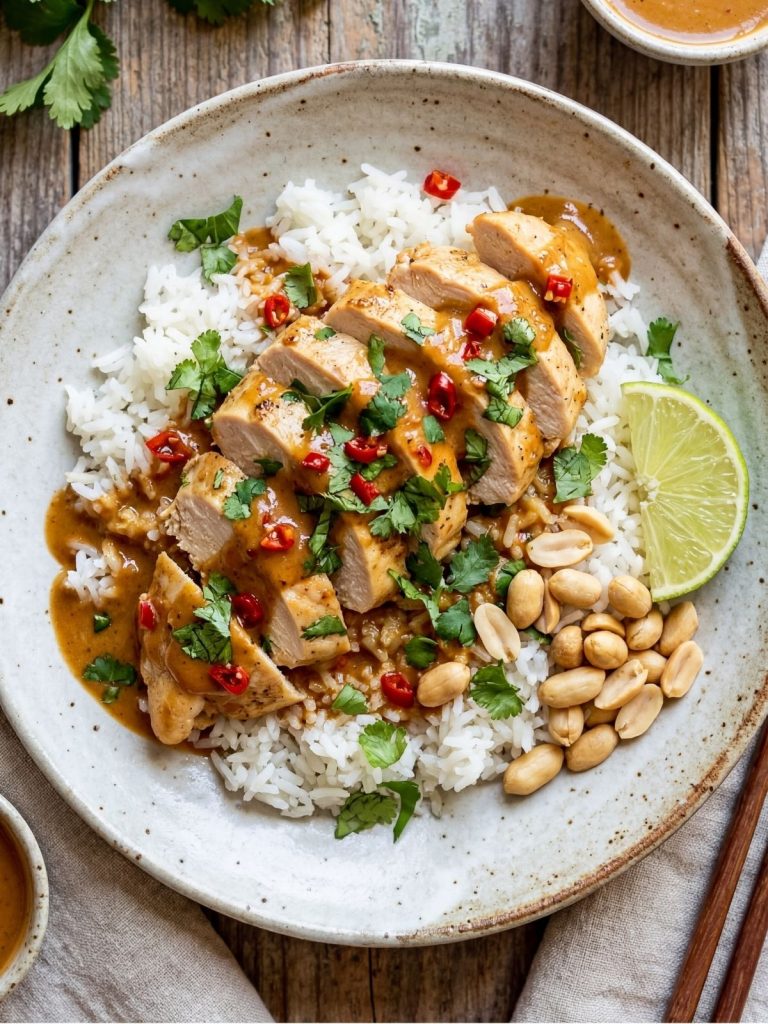
What to Serve With Slow-Cooked Thai Peanut Chicken?
- Steamed jasmine rice: Fluffy jasmine rice is the classic pairing — it soaks up the peanut sauce completely and is ready in under 15 minutes. I always make a double batch and use the leftovers for next-day rice bowls.
- Rice noodles: Soaked rice noodles turn this into a noodle bowl that feels like restaurant-quality takeout with no extra effort. They’re lighter than pasta, ready in minutes, and soak up the sauce in the most satisfying way.
- Steamed broccoli or snap peas: A quick stovetop or microwave steam gives you a tender-crisp, fresh vegetable that balances the richness of the peanut sauce. The bright green color also makes the finished bowl look vibrant and inviting.
- Asian cucumber salad : Cool, crisp cucumber cuts right through the richness of the peanut sauce and adds a refreshing crunch alongside every saucy bite. It comes together in minutes and makes the whole meal feel complete.
Frequently Asked Questions
Can I make slow cooker Thai peanut chicken ahead of time? Yes — cook it a day ahead, refrigerate, and reheat gently on the stovetop with a splash of coconut milk.
Can I use frozen chicken in this recipe? I don’t recommend it — frozen chicken keeps the slow cooker in the unsafe temperature zone too long.
How do I thicken the peanut sauce? Stir in the cornstarch slurry and cook on HIGH, uncovered, for 20–30 minutes at the end.
Can I freeze Thai peanut chicken? Yes, it freezes well for up to 3 months in a sealed, airtight container.
What can I substitute for peanut butter in this recipe? Almond butter or sunflower seed butter are the closest substitutes in flavor and texture.
Is slow cooker Thai peanut chicken gluten-free? Not as written — swap the soy sauce for tamari or coconut aminos to make it gluten-free.
- 0 Facebook
- 1 Pinterest
- 0 Email
- Copy Link
- 1 share
Slow-Cooked Thai Peanut Chicken
Ingredients
Instructions
In a medium bowl, whisk together the coconut milk, peanut butter, soy sauce, honey, rice wine vinegar, grated ginger, minced garlic, and crushed red pepper flakes until completely smooth with no lumps remaining.
Place the chicken in the bottom of a 4- to 6-quart slow cooker in a single layer. Season lightly with salt and pepper if desired.
Pour the peanut sauce evenly over the chicken, making sure every piece is well coated.
Cover and cook on LOW for 6–7 hours or HIGH for 3–4 hours, until the chicken is completely tender and cooked through.
Remove the chicken from the slow cooker and shred with two forks into generous pieces. Return the chicken to the slow cooker and stir well to coat in the sauce.
Optional — to thicken the sauce: whisk the cornstarch and cold water into a smooth slurry, stir it into the slow cooker, and cook on HIGH uncovered for 20–30 minutes until the sauce reaches your desired consistency.
Stir in the lime juice just before serving. Serve over steamed jasmine rice or rice noodles, garnished with chopped fresh cilantro and crushed peanuts.
Notes
Chicken thighs stay juicier than breasts over a long slow cook — highly recommended for the best results.
Always add the lime juice at the very end of cooking to preserve its bright, fresh citrus flavor.
To make gluten-free, swap the soy sauce for tamari or coconut aminos.
Leftovers keep in an airtight container in the fridge for up to 4 days, or freeze for up to 3 months. Reheat gently on the stovetop over low heat with a splash of coconut milk or water to loosen the sauce.