- 0 Facebook
- 0 Pinterest
- 0 Email
- Copy Link
- 0 shares
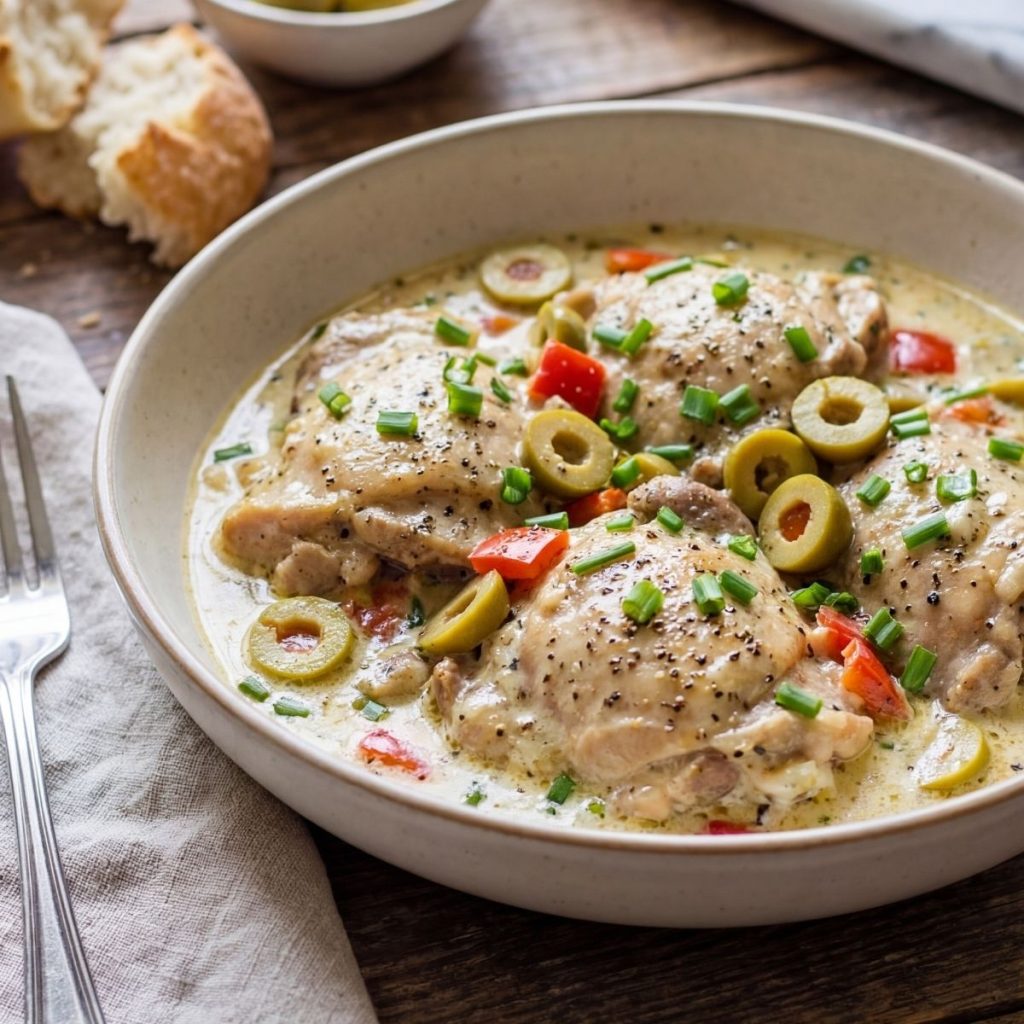
There are weeknights when I stare at a package of chicken thighs and think — I need something that feels like more than just dinner. Something with a little richness, a little color, a little story on the plate. This recipe is exactly that. I started building it on a Tuesday evening when the pantry was looking sparse but I still had a jar of green olives and a handful of baby sweet peppers sitting on the counter. The result was a golden-seared, velvety pan sauce dish that my family now asks for on a weekly rotation. If you love garlic butter chicken thighs or are always on the hunt for a better skillet chicken thighs recipe, this one is going to earn a permanent spot in your weeknight lineup. One skillet , pantry staples, and dinner is on the table in just over 30 minutes. Come on in — let me show you how.
You Might Also Love
If creamy skillet chicken is your kind of weeknight dinner, these recipes belong on your list too.
- Garlic Butter Chicken Thighs — rich, buttery, and golden-crusted with a sauce you’ll want to eat with a spoon.
- Skillet Chicken Thighs — simple, juicy, and weeknight-ready with minimal cleanup.
- Creamy Garlic Butter Chicken Skillet — silky garlic sauce clings to every bite of tender pan-seared chicken.
- Mediterranean Chickpea Feta Salad — a fresh, vibrant side that pairs beautifully with any saucy chicken main.
Why You’ll Love This Recipe?
- Golden sear, velvety finish. The chicken gets a proper golden crust in olive oil before the sauce ever touches the pan — that contrast of crispy exterior and creamy sauce is exactly the kind of texture payoff that makes dinner feel special.
- Briny, bright, deeply savory. The green olives stuffed with red pepper bring a salty, slightly tangy punch that lifts the cream sauce in a way that garlic alone never could.
- Layers of flavor in every bite. Dried basil, sweet peppers, caramelized onion, and garlic all build on top of each other — this is not a one-note dish.
- One skillet , one cleanup. Everything from the sear to the sauce happens in the same pan, which means dinner and cleanup are both done fast.
- Rich without being heavy. The ¼ cup of heavy cream is just enough to create a luscious, clinging sauce without weighing the dish down.
Ingredient Notes
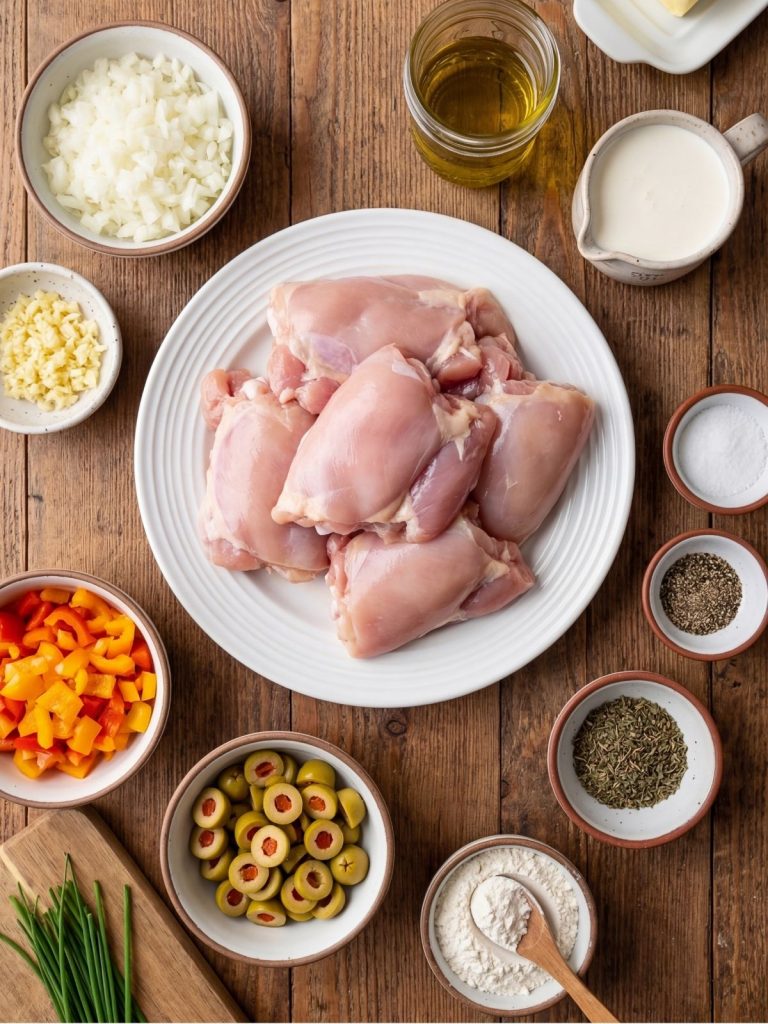
- Boneless skinless chicken thighs — Thighs stay juicy and tender even if you accidentally cook them a minute too long; that’s why I always reach for them over breasts in a skillet sauce dish. Aim for pieces of similar size so they cook evenly.
- Olive oil — This is your searing fat, so you want something with a decent smoke point; a standard light olive oil works well here. It also adds a gentle fruitiness that plays nicely with the olives and peppers.
- Salt, black pepper, dried basil — This trio seasons the chicken directly, giving you flavor from the inside out before the sauce even comes together. The basil is doing real work here — don’t skip it.
- Onion (minced) — Mincing the onion finely means it melts into the sauce base rather than sitting in big pieces, giving you depth without bulk. I use a yellow onion for its mild sweetness.
- Butter — Added after the sear, butter builds the flavor base for the sauce with a richness that olive oil alone can’t deliver; this is a tip Aunt Anne drilled into me years ago. Don’t be tempted to cut it. If you love this kind of pan sauce base, you’ll recognize it in any great creamy garlic butter chicken skillet .
- Garlic (2 cloves, minced) — Fresh garlic is non-negotiable here; jarred garlic brings a flat, slightly acidic note that fights with the cream. Mince it fine so it cooks quickly and evenly.
- Baby sweet peppers — Finely chopped sweet peppers add little pops of color and a gentle sweetness that balances the brine from the olives. Four peppers is just enough — they mellow beautifully as they cook down.
- Green olives stuffed with red pepper (sliced) — These are the unexpected star of this dish, adding salt, brine, and a whisper of roasted pepper flavor. Slice them thin so they distribute through the sauce rather than clumping.
- All-purpose flour — This is your sauce thickener, tossed into the sautéed vegetables before the cream goes in. Just two tablespoons is enough to give you a sauce that coats the back of a spoon.
- Heavy cream — A small amount of heavy cream transforms the flour-thickened base into something silky and restaurant-worthy. Pull it from the fridge a few minutes early so it doesn’t shock the pan.
- Water (optional, as needed) — A splash of water is all it takes to loosen the sauce if it thickens too quickly after the cream goes in. Have a small glass on hand — two to three tablespoons makes all the difference.
How to Make Creamy Boneless Skinless Chicken Thighs?
- Season the chicken. Pat the chicken thighs dry with paper towels — this step is what gives you a golden crust instead of a steamed one. Sprinkle both sides evenly with salt, black pepper, and dried basil.
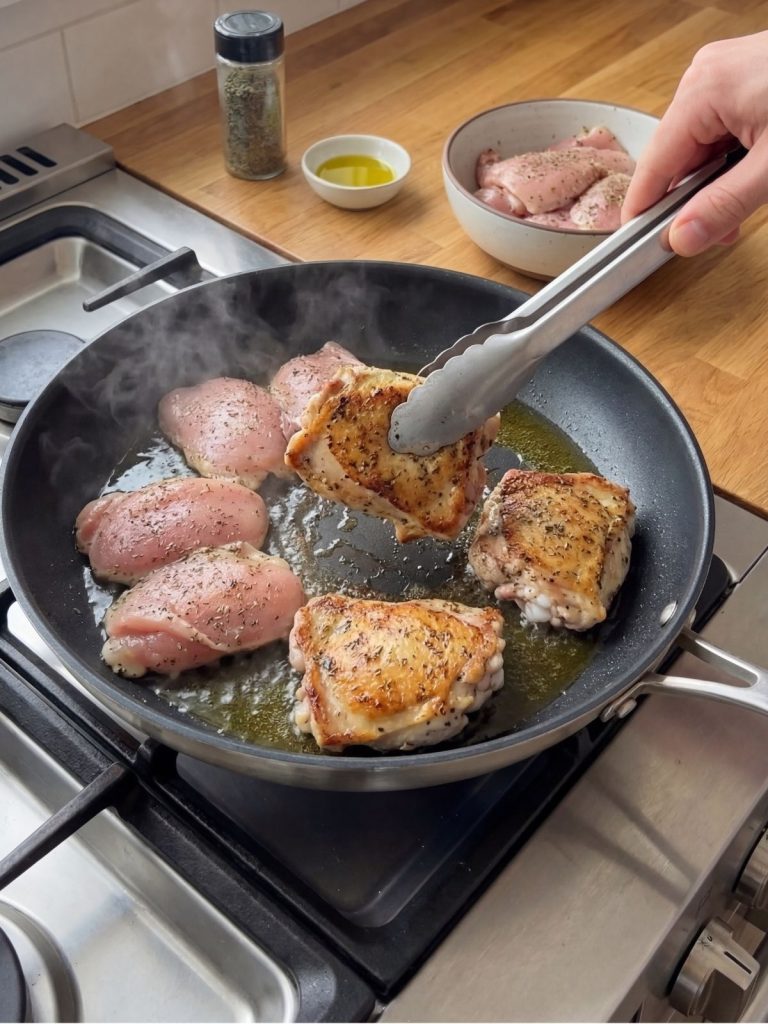
- Sear the chicken. Heat the olive oil in a large skillet over medium-high heat until shimmering. Add the chicken thighs in a single layer and sear undisturbed for 5–6 minutes per side until deeply golden. The chicken does not need to be fully cooked through yet. Transfer to a plate and set aside.
- Build the sauce base. Reduce heat to medium. Add the butter to the same skillet and let it melt, scraping up any browned bits from the bottom of the pan. Add the minced onion and cook, stirring occasionally, for 3 minutes until softened and translucent.
- Add the aromatics and olives. Add the minced garlic, chopped sweet peppers, and sliced olives. Stir and cook for 2 minutes until the garlic is fragrant and the peppers have softened slightly.
- Add the flour. Sprinkle the all-purpose flour evenly over the vegetable mixture. Stir well to coat everything and cook for 1 minute, stirring constantly, to cook out the raw flour taste.
- Add the cream and form the sauce. Pour in the heavy cream and stir until the flour dissolves and the sauce begins to thicken — about 1–2 minutes. If the sauce looks too thick, add 2–3 tablespoons of water and stir to loosen it to a spoonable, silky consistency.
- Return the chicken and finish cooking. Nestle the seared chicken thighs back into the skillet. Spoon the sauce over each piece. Reduce heat to medium-low, cover loosely, and cook for 5–7 minutes until the chicken is fully cooked through and reaches an internal temperature of 165°F.
- Serve immediately. Spoon the sauce generously over the chicken and serve warm with your chosen sides.
Emily’s Expert Tips
- Dry your chicken before seasoning. Moisture is the enemy of a golden crust — pat each thigh thoroughly with paper towels before adding any seasoning. This single step is the difference between a beautifully browned surface and a pale, grey result.
- Don’t crowd the pan. If your skillet is smaller, sear the chicken in two batches rather than overlapping pieces. Overcrowding drops the pan temperature and causes steaming instead of searing.
- Let the flour cook for a full minute. Rushing this step leaves a slightly raw, starchy aftertaste in the sauce; cooking it for a full minute while stirring eliminates that entirely.
- Season your sauce before serving. The olives bring a lot of salt, so taste the sauce before adding more — you may find it needs nothing at all, or just a small pinch.
- Rest before serving. Give the finished dish a minute off the heat before plating; this lets the sauce settle and the chicken juices redistribute for the juiciest result.
Storage Tips
- Refrigerator — Store leftovers in an airtight container for up to 3 days. The sauce thickens considerably once cold, which is perfectly normal — it loosens back up with gentle reheating.
- Freezer — Cream-based sauces can separate after freezing, so I don’t recommend freezing this dish. The texture of the sauce suffers significantly once thawed.
- Reheating — Reheat gently in a skillet over low heat with a splash of water or chicken broth to revive the sauce; avoid the microwave if possible, as high heat can cause the cream to break.
Variations & Substitutions
- Swap the olives for capers — If green olives aren’t your thing, brined capers offer a similar salty, tangy punch without the firm texture. Use about 2 tablespoons and don’t rinse them — you want that brine flavor in the sauce.
- Use chicken breasts instead — Boneless skinless chicken breasts work here, but reduce the final simmering time to 3–4 minutes to avoid drying them out. If you prefer breasts baked instead of pan-seared, these 30 minute oven boneless skinless chicken thighs can give you a technique reference to adapt.
- Make it dairy-free — Swap the butter for a neutral oil and the heavy cream for full-fat coconut cream; the sauce will have a subtle sweetness that actually pairs well with the briny olives.
- Add a spicy twist — A pinch of red pepper flakes added with the garlic turns this into a spicy, fragrant variation that Aunt Anne would absolutely approve of. For more heat-forward inspiration, Bobby Flay’s creamy chicken thighs is worth bookmarking.
- Make it gluten-free — Substitute the all-purpose flour with a 1:1 gluten-free flour blend; the sauce thickens just as well with no noticeable difference in flavor or texture.
What to Serve With Creamy Boneless Skinless Chicken Thighs?
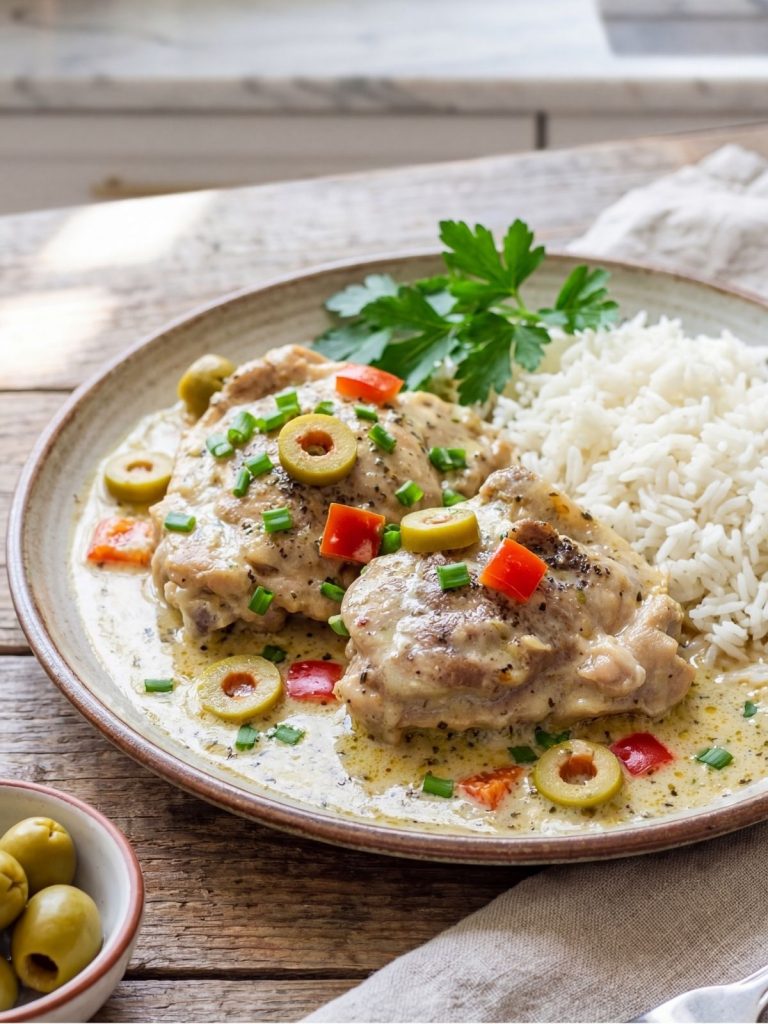
- Steamed white or jasmine rice — The creamy olive and pepper sauce soaks into a bed of fluffy rice beautifully, making every spoonful satisfying. This is my first choice on a weeknight.
- Crusty bread or a warm baguette — A thick slice of good bread is the most rewarding way to capture every last drop of that velvety pan sauce from the bottom of the skillet.
- Roasted or steamed green beans — The crisp, clean flavor of green beans cuts through the richness of the cream sauce and keeps the plate feeling balanced and light.
- Mashed potatoes — Creamy, buttery mashed potatoes and this saucy chicken are a classic comfort food pairing — hearty, warming, and made for a cold evening.
Frequently Asked Questions
Can I make this recipe ahead of time? Yes — cook fully, refrigerate up to 3 days, and reheat gently on the stovetop with a splash of water.
Can I freeze creamy boneless skinless chicken thighs? I don’t recommend it. Cream-based sauces separate when frozen and reheated.
What can I use instead of heavy cream? Full-fat coconut cream or half-and-half work, though the sauce will be slightly thinner.
How do I know when the chicken is cooked through? Use an instant-read thermometer — 165°F internal temperature is the safe target.
Can I use bone-in chicken thighs? Yes, but increase the final covered simmering time to 12–15 minutes to cook through fully.
Do I have to use stuffed olives, or can I use plain green olives? Plain green olives work perfectly. The stuffed variety adds a bit of extra pepper flavor, but it’s optional.
- 0 Facebook
- 0 Pinterest
- 0 Email
- Copy Link
- 0 shares
Creamy Boneless Skinless Chicken Thighs
Ingredients
Instructions
Pat chicken thighs dry with paper towels. Season both sides evenly with salt, black pepper, and dried basil.
Heat olive oil in a large skillet over medium-high heat until shimmering. Add chicken thighs in a single layer and sear undisturbed for 5–6 minutes per side until deeply golden. The chicken does not need to be fully cooked through yet. Transfer to a plate and set aside.
Reduce heat to medium. Add butter to the same skillet and let it melt, scraping up any browned bits from the bottom of the pan. Add the minced onion and cook, stirring occasionally, for 3 minutes until softened and translucent.
Add the minced garlic, chopped sweet peppers, and sliced olives. Stir and cook for 2 minutes until the garlic is fragrant and the peppers have softened slightly.
Sprinkle the all-purpose flour evenly over the vegetable mixture. Stir well to coat everything and cook for 1 minute, stirring constantly, to cook out the raw flour taste.
Pour in the heavy cream and stir until the flour dissolves and the sauce begins to thicken, about 1–2 minutes. If the sauce looks too thick, add 2–3 tablespoons of water and stir to loosen it to a spoonable, silky consistency.
Nestle the seared chicken thighs back into the skillet. Spoon the sauce over each piece. Reduce heat to medium-low, cover loosely, and cook for 5–7 minutes until the chicken is fully cooked through and reaches an internal temperature of 165°F (74°C).
Remove from heat and rest for 1 minute. Spoon the sauce generously over the chicken and serve warm.
Notes
Always pat the chicken dry before seasoning — this is the key to a proper golden sear instead of a pale, steamed result.
Taste the sauce before adding extra salt — the olives bring significant brine and the dish may need very little or none at all.
Plain green olives work in place of stuffed; brined capers are also a great swap for a sharper, tangier flavor.
To make gluten-free, substitute the all-purpose flour with a 1:1 gluten-free flour blend.
Store leftovers in an airtight container in the refrigerator for up to 3 days. Reheat gently in a skillet over low heat with a splash of water or chicken broth to revive the sauce. Freezing is not recommended — cream-based sauces separate when thawed.