- 0 Facebook
- 2 Pinterest
- 0 Email
- Copy Link
- 2 shares
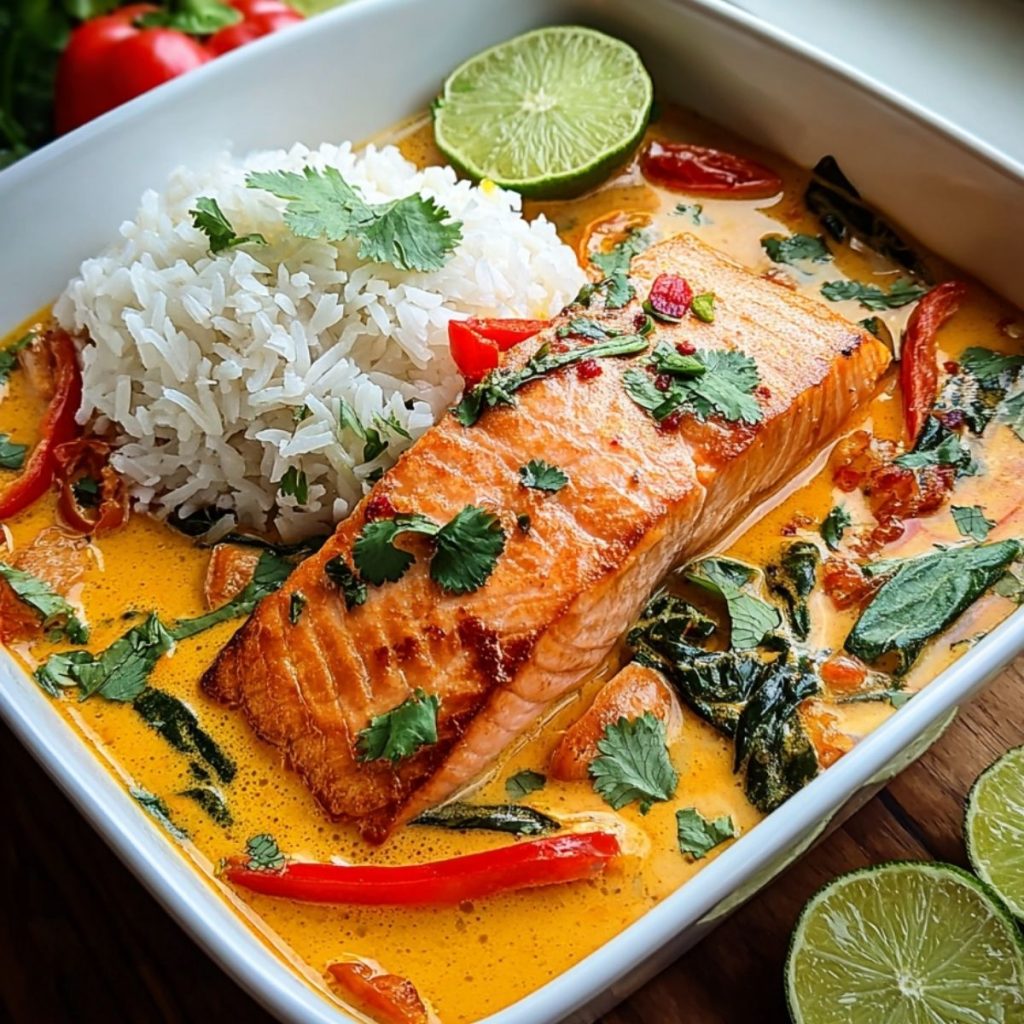
I’ve found the easiest way to enjoy a burst of flavor with minimal effort is through Thai Coconut Salmon Curry. Filled with creamy coconut milk, vibrant spices, and tender salmon, it’s a guaranteed crowd-pleaser.
It all started when I was traveling through the bustling streets of Bangkok, where the exotic aroma of street food called to me, leading me to a tiny, unassuming food stall. There, for the first time, I tasted a succulent coconut curry that felt like a warm embrace. Eager to recreate this delight, I returned home and experimented until I crafted a dish that captured that captivating experience.
This recipe stands out as a gourmet yet budget-friendly option to make at home. You don’t need to venture far for the ingredients, and in just under 30 minutes, you’re rewarded with a meal that tantalizes the senses with its rich, layered flavors. Perfect for weeknights or impressing guests, this dish is special for its harmonious balance of flavors and seamless preparation.
Why You’ll Love Thai Coconut Salmon Curry?
Over the years, I’ve fine-tuned this recipe following trusted culinary methods that ensure great results every time. Here’s why it will quickly become a staple in your kitchen:
- Simplicity: Even novice cooks can master this recipe, as it requires only simple techniques—slicing, stirring, and simmering.
- Rich Flavor: The combination of creamy coconut milk and aromatic spices creates a symphony of flavors that lingers memorably on your palate.
- Universal Appeal: The tender, flaky salmon effortlessly absorbs the curry’s essence, making it perfect for any taste preference.
- Time-Saving: With a prep time of mere minutes, it’s designed for busy days without sacrificing gourmet quality.
- Versatility: This recipe can be adapted easily with different proteins or vegetables, making it a versatile addition to your culinary repertoire.
“This curry delivers consistent, delightful results, blending ease and elegance in one pot—a true hallmark of culinary magic!”
Ingredients Notes
- Fresh Salmon Fillets: I prefer sustainably-sourced salmon for its rich, buttery taste and delicate texture, making it the star of this dish.
- Coconut Oil: Enhances the tropical vibe and adds a subtle nutty aroma to the curry, while aiding in the sear of the salmon.
- Thai Red Curry Paste: Its deep, earthy flavors create the foundation of the dish—use a paste free of artificial additives for genuine flavors.
- Garlic Cloves: Choose fresh, firm bulbs for robust flavor, as they infuse the sauce with a warm and savory undertone.
- Fresh Ginger: Grated ginger delivers a zesty freshness—always select firm roots with smooth skin for optimal flavor.
- Full-Fat Coconut Milk: Delivers creamy, silky texture and balance to the curry; avoid low-fat versions for richness.
- Low-Sodium Broth: Acts as a gentle base, allowing the curry paste and other spices to shine without overwhelming the palate.
- Fish Sauce or Soy Sauce: Adds umami depth and a touch of saltiness—ensure it’s halal-certified and free from preservatives.
- Fresh Lime Juice: A squeeze brightens up everything with a refreshing tang, cutting through the richness of coconut milk.
- Brown Sugar: Balances the spice and savory notes with a hint of sweetness—coconut sugar is a great alternative for a healthy twist.
- Salt: A pinch to adjust the seasoning; taste after adding fish or soy sauce to avoid over-salting.
- Red Bell Pepper: Adds sweetness and a vibrant color to the curry; look for bright, firm peppers for the best texture.
- Snap Peas or Green Beans: Provide a crisp texture and balance to the creaminess; opt for fresh, tender pods.
- Small Zucchini: Sliced for volume and nutrition, ensuring each bite is mellow and succulent.
- Fresh Spinach or Thai Basil: Incorporates a burst of greenness and delicate herbal notes; always use fresh leaves for maximum flavor.
- Jasmine Rice or Rice Noodles: Serve as the perfect companions, absorbing the curry yet maintaining their original taste.
- Fresh Cilantro or Thai Basil: Used as a garnish, adding fragrance and a fresh, herbaceous finish.
- Lime Wedges: Additional tang for those who like a burst of acidity with each bite.
- Sliced Red Chili or Crushed Peanuts: Optional for those who crave extra heat or crunch, elevating the dish to another level.
How to Make Thai Coconut Salmon Curry?
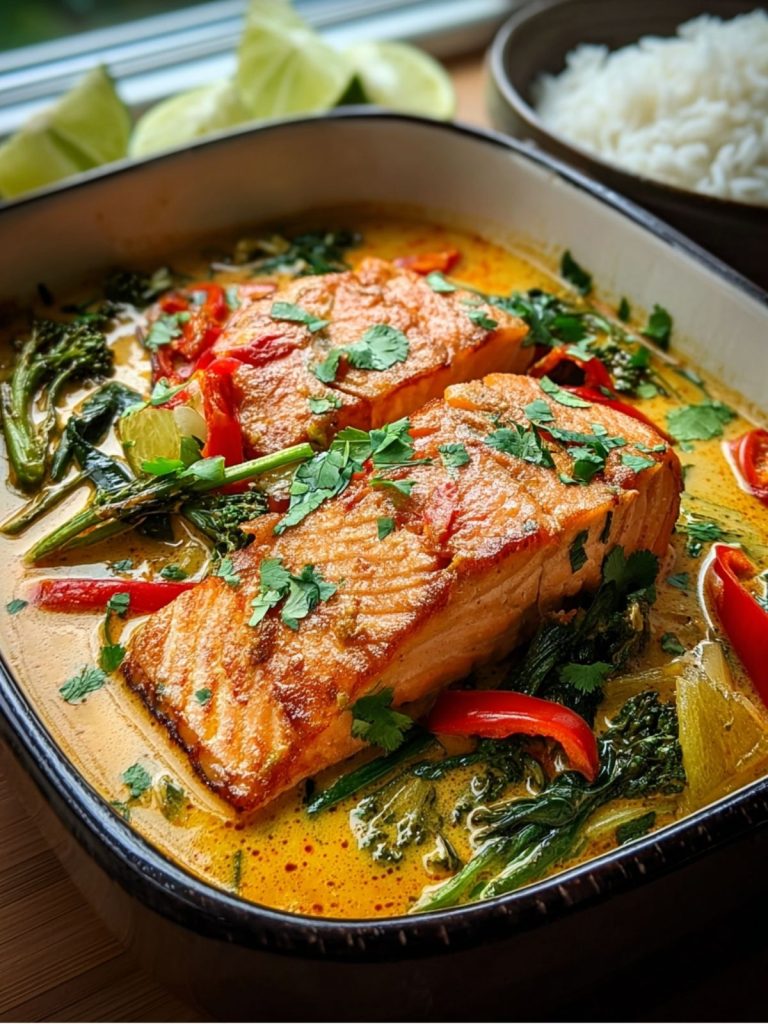
- Prep the Ingredients: Start by cutting your salmon fillets into bite-sized chunks, ensuring even cooking. Chop the red bell pepper into thin slices and slice the zucchini if you’re using them.
- Heat the Oil: In a large, heavy-bottomed skillet , heat a tablespoon of coconut oil over medium heat. Swirl the oil gently around the pan to coat the bottom, enhancing the tropical aroma.
- Sear the Salmon: Add the salmon chunks in a single layer, searing for 2-3 minutes on each side. Look for a golden-brown crust to form, which locks in the flavor, before removing the salmon and setting it aside.
- Prepare the Curry Base: In the same skillet , add the minced garlic and grated ginger. Sauté for about 30 seconds until fragrant. in Stir the Thai red curry paste, noticing its rich, earthy aroma as it blends with the garlic and ginger.
- Combine the Liquids: Pour in the coconut milk and low-sodium broth, stirring well to create a smooth, creamy sauce. Add in the fish sauce or soy sauce, fresh lime juice, and brown sugar, seasoning the curry to taste.
- Add Vegetables and Simmer: Gently introduce the sliced red bell pepper, snap peas or green beans, and zucchini to the curry. Let them simmer for 5-7 minutes until tender yet crisp.
- Return Salmon and Finish: Carefully place the seared salmon back into the skillet , allowing it to absorb the rich flavors of the curry. Toss in a handful of fresh spinach or Thai basil at the last minute for a burst of color and flavor.
- Serve and Garnish: Serve the curry over jasmine rice or rice noodles. Garnish with fresh cilantro or Thai basil and lime wedges for an extra hint of freshness. For those who enjoy an added kick, top with sliced red chili or crushed peanuts.
Expert Cooking Tips
- I always pat the salmon dry with paper towels before seasoning to ensure a perfect sear.
- Use a non-stick skillet or well-seasoned pan to prevent salmon from sticking.
- Heat the pan properly before adding oil to achieve a consistent sear.
- Cook the curry base over medium heat to avoid burning the garlic and ginger.
- Whisk the coconut milk slowly to prevent separation and maintain creaminess.
- Don’t overcrowd the salmon chunks in the pan; this helps achieve a good crust.
- Add lime juice at the end for a burst of freshness and to brighten the flavors.
- Taste the curry sauce and adjust salt or sugar accordingly before serving.
Storage Tips
- Store leftovers in an airtight container in the refrigerator for up to 3 days.
- To freeze, portion the curry into sealed bags, removing excess air to prevent freezer burn.
- Reheat gently on the stovetop over low heat to maintain texture and avoid overcooking.
- If frozen, thaw overnight in the refrigerator before reheating.
- Use a microwave with a cover to reheat, stirring halfway to ensure even warming.
- Avoid refreezing once the curry has been thawed to ensure food safety.
- Always check the smell and texture before consuming stored leftovers to ensure freshness.
Variations and Substitutions
- For dairy-free, use coconut cream instead of regular coconut milk for a richer flavor.
- Swap zucchini with broccoli for a different texture and nutritional profile.
- Replace salmon with firm tofu for a vegetarian option with similar texture retention.
- Use gluten-free soy sauce instead of fish sauce for gluten-sensitive diets.
- Incorporate pineapple chunks for a sweet, tropical twist on the traditional flavors.
- Add a spoonful of almond butter to the curry base for a nutty depth of flavor.
- Shredded carrots can replace bell peppers to introduce natural sweetness and variety.
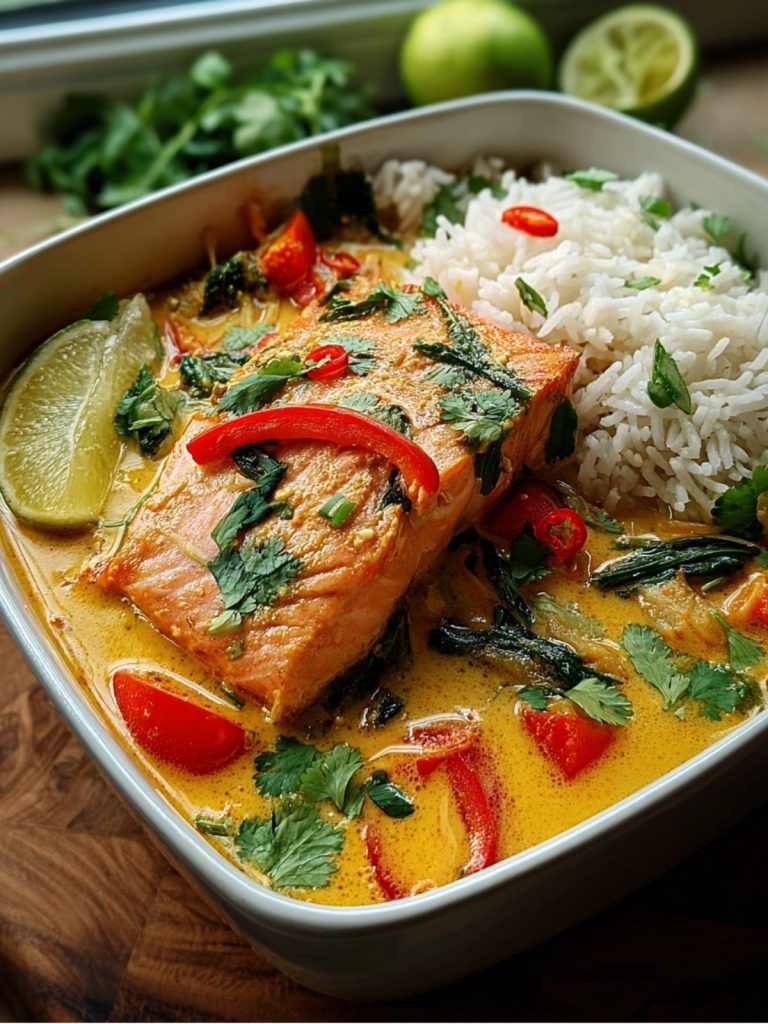
What to Serve with Thai Coconut Salmon Curry?
- Jasmine Rice: Its fluffy texture absorbs the curry sauce beautifully, adding subtle floral notes and balancing the richness of the coconut milk.
- Quinoa: Offers a nutty flavor and hearty texture, providing a protein-packed, gluten-free alternative that complements the curry’s robust taste.
- Steamed Broccoli: Adds vibrant color and a crunch that enhances the creamy curry, providing a nutritional boost with essential vitamins and minerals.
- Mixed Green Salad: A refreshing choice to lighten the meal, with zesty citrus dressing to contrast the coconut’s richness.
- Roasted Sweet Potatoes: Their natural sweetness and caramelized edges pair well with the savory curry, creating a harmonious flavor combo.
- Naan Bread: Perfect for scooping up every bit of the delicious curry sauce, adding a chewy texture that’s delightful with every bite.
- Cucumber Raita: This yogurt-based side cools down the palate, offering a creamy contrast and crunch from cucumbers.
- Spicy Mango Chutney: Provides a sweet and spicy contrast to the curry, enhancing its exotic flavor profile with a fruity kick.
- Basmati Rice: Its long grains hold up well under saucy dishes, and the fragrant aroma elevates the flavor dimension of the meal.
- Garlic Roasted Carrots: They build a bridge between the curry’s savory flavors and the sweetness of carrots, with a touch of umami from garlic.
FAQs
Use fresh salmon fillets and avoid overcooking; sear for crisp skin before adding to the curry.
Absolutely! Add more or less red curry paste according to your taste preference.
Simmer with coconut cream instead of milk; natural reduction will thicken the sauce effectively.
Use soy sauce or tamari for a similar umami taste without the fishy flavor.
Incorporate honey or a dash of sugar, tasting until desired sweetness is achieved without overpowering.
- 0 Facebook
- 2 Pinterest
- 0 Email
- Copy Link
- 2 shares
Deliciously Easy Thai Coconut Salmon Curry Recipe: A Flavorful Experience
Ingredients
Instructions
- Prep the Ingredients
Start by cutting your salmon fillets into bite-sized chunks, ensuring even cooking. Chop the red bell pepper into thin slices and slice the zucchini if you’re using them.
- Heat the Oil
In a large, heavy-bottomed skillet, heat a tablespoon of coconut oil over medium heat. Swirl the oil gently around the pan to coat the bottom, enhancing the tropical aroma.
- Sear the Salmon
Add the salmon chunks in a single layer, searing for 2-3 minutes on each side. Look for a golden-brown crust to form, which locks in the flavor, before removing the salmon and setting it aside.
- Prepare the Curry Base
In the same skillet, add the minced garlic and grated ginger. Sauté for about 30 seconds until fragrant. Stir in the Thai red curry paste, noticing its rich, earthy aroma as it blends with the garlic and ginger.
- Combine the Liquids
Pour in the coconut milk and low-sodium broth, stirring well to create a smooth, creamy sauce. Add in the fish sauce or soy sauce, fresh lime juice, and brown sugar, seasoning the curry to taste.
- Add Vegetables and Simmer
Gently introduce the sliced red bell pepper, snap peas or green beans, and zucchini to the curry. Let them simmer for 5-7 minutes until tender yet crisp.
- Return Salmon and Finish
Carefully place the seared salmon back into the skillet, allowing it to absorb the rich flavors of the curry. Toss in a handful of fresh spinach or Thai basil at the last minute for a burst of color and flavor.
- Serve and Garnish
Serve the curry over jasmine rice or rice noodles. Garnish with fresh cilantro or Thai basil and lime wedges for an extra hint of freshness. For those who enjoy an added kick, top with sliced red chili or crushed peanuts.